In a small, humid apartment in Hsinchu, an engineer named Lin watches a steady amber light flicker on his workstation. It is 3:00 AM. Outside, the world’s most advanced semiconductor fabrication plants—the "fabs"—hum with a mechanical heartbeat that keeps the modern world alive. If Lin’s city stops breathing, the global economy suffers a massive stroke. Your smartphone becomes a glass brick. Your car becomes a driveway ornament. The AI servers that manage your bank account go dark.
For decades, the safety of Lin’s apartment and the machines he tends has relied on a delicate, whispered promise from Washington known as "strategic ambiguity." It is the art of saying maybe. It is a calculated fog where the United States refuses to say whether it would actually send warships if an invasion crossed the Taiwan Strait. This fog was designed to keep Beijing from attacking and Taipei from declaring total independence. It was a masterpiece of diplomatic gray.
Then came the sledgehammer.
Donald Trump didn’t just step into the fog; he started charging rent for it. To the traditional foreign policy establishment, his approach to Taiwan feels like a betrayal of a sacred, nuanced script. To the man himself, it looks like a simple business renegotiation. He has reimagined a geopolitical lifeline as an insurance premium.
The Cost of the Shield
Imagine you have lived in a house for forty years under a handshake agreement with a powerful neighbor. The neighbor hints they will protect you if a bully shows up at your door, provided you don't provoke the bully. But one morning, the neighbor knocks and asks why you aren't paying for the security guards. He points out that your house is 9,500 miles away from his, and your successful electronics business is "stealing" his customers.
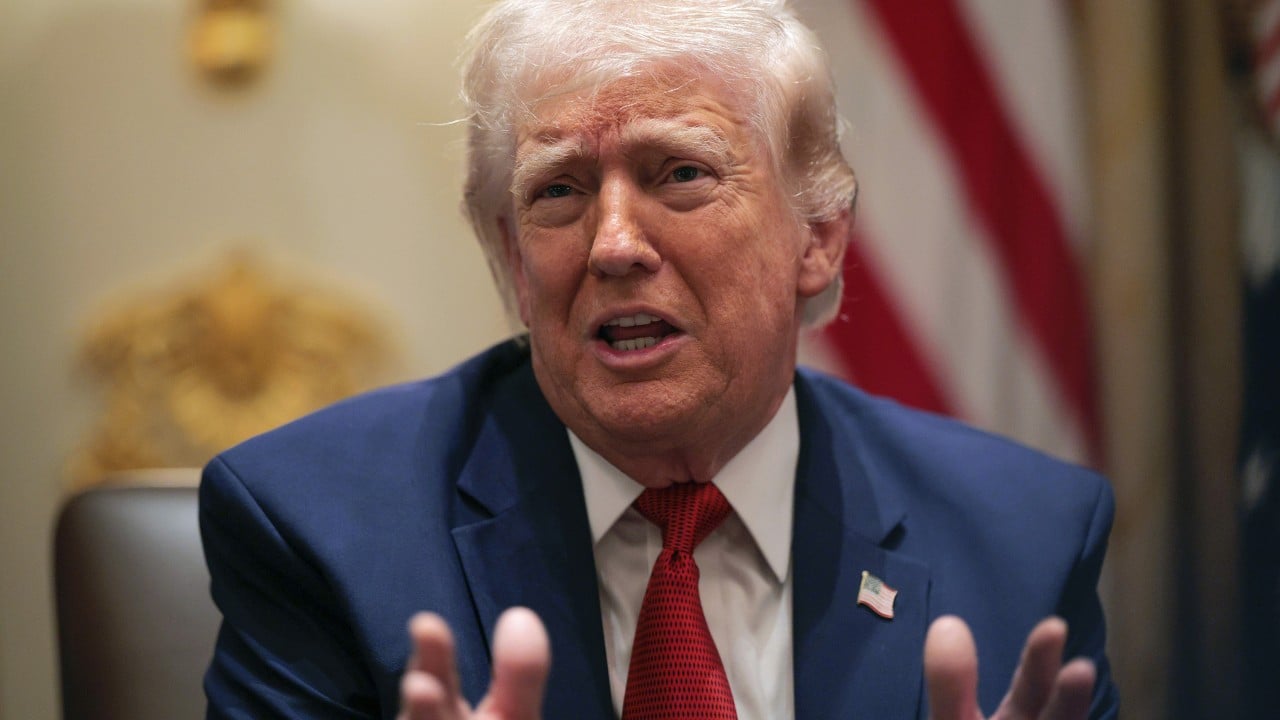
This is the visceral shift in the narrative. Trump’s recent rhetoric treats Taiwan not as a democratic outpost or a "beacon of liberty," but as a high-tech competitor that should be paying for protection. "Taiwan should pay us for defense," he remarked in a high-profile interview. "You know, we’re no different than an insurance company. Taiwan doesn’t give us anything."
The shockwaves from these words didn't just hit the halls of the Legislative Yuan in Taipei; they rattled the stock market. When the man who might hold the nuclear codes suggests the "insurance policy" is up for review, the value of the "insured" assets begins to tremble. It turns a geopolitical certainty into a transactional variable.
Stealing the Crown Jewels
There is a specific grievance fueling this fire: silicon.
The United States once led the world in chip manufacturing. Today, Taiwan Semiconductor Manufacturing Company (TSMC) produces roughly 90% of the world’s most advanced chips. In the narrative of "America First," this isn't seen as a triumph of a close ally. It is seen as a heist.
"They did take about 100% of our chip business," Trump claimed. From a strictly historical perspective, this is a simplification that ignores the decades of American companies choosing to outsource manufacturing to save costs. But in the world of persuasive storytelling, the "theft" narrative is powerful. It frames Taiwan as a taker rather than a partner.
If you believe your partner stole your business, you are far less likely to risk your sailors' lives to protect their factory. This is the "transactional ambiguity" that is replacing the "strategic" version. It’s no longer about whether the U.S. can defend Taiwan, but whether the return on investment justifies the cost.
The Invisible Stakes
We often talk about Taiwan in terms of "chips" and "sovereignty," but those are cold, hard words. The invisible stakes are the lives of 23 million people living on an island that is roughly the size of Maryland.
Consider the psychological weight of being a bargaining chip. For a young student in Taipei, the debate isn't about trade deficits or GDP percentages. It is about whether the person in the White House views their existence as a moral imperative or a line item on a balance sheet.
Strategic ambiguity was a soft blanket. It was frustrating, but it was warm. Transactional ambiguity is a cold neon light. It exposes the reality that in a world of shifting powers, no alliance is permanent, and no promise is free.
The Leverage of Uncertainty
Some argue that this isn't just chaos—it’s a different kind of chess. By demanding payment and accusing Taiwan of "stealing" the chip industry, Trump creates massive leverage. He is telling Beijing, "I might not care enough to stop you," while telling Taipei, "Give me a better deal if you want me to stay."
It turns the entire Pacific into a giant negotiation room.
But the risk of this strategy is that it relies on everyone being a rational actor. Deterrence works when the "bully" believes the "neighbor" will actually show up. If the bully thinks the neighbor is just haggling over the price of the guard dog, they might decide to kick the door down before the check clears.
The complexity of the semiconductor supply chain makes this even more precarious. You cannot simply "take back" the chip business by snapping your fingers. A fab takes five years and tens of billions of dollars to build. It requires a specific ecosystem of chemicals, water, and highly specialized labor that exists nowhere else on Earth like it does in Taiwan.
The New Math of War
Under the old rules, the math was about "Capabilities vs. Intent."
Now, the math is about "Protection vs. Profit."
If the United States pivots to a model where allies must "pay to play," it changes the very nature of global leadership. It suggests that the American umbrella only opens for those who help balance the American checkbook.
For the tech industry, this is a nightmare of uncertainty. If you are Apple, Nvidia, or AMD, you are looking at a future where your most vital components are manufactured in a zone where the security guarantees are being renegotiated in real-time on social media. It forces a frantic, expensive scramble to build factories in Arizona or Ohio—factories that, even when finished, will still be years behind the current Taiwanese standard.
The Human Heart of the Machine
Back in Hsinchu, Lin finishes his shift. He walks out into the morning air, grabbing a coffee from a 7-Eleven. He knows that his work powers the world. He knows that his hands help build the "brains" of the 21st century.
He also knows that he is living in the middle of a poker game where the stakes are his home, his family, and his future.
The shift from strategic to transactional isn't just a change in policy. It is a change in the soul of the relationship. It moves us away from a world of shared values and into a world of shared invoices.
We used to ask: "What are we willing to die for?"
The new question is: "What are we willing to pay for?"
The answer to that question will determine whether the amber light on Lin’s workstation keeps flickering, or whether the entire world goes dark. It is a gamble of breathtaking proportions, played with cards that are being rewritten as they are dealt.
The silence of the Hsinchu morning is heavy. It is the silence of a world holding its breath, waiting to see if the next hand is a bluff or a total collapse of the table.
In this new era, the fog hasn't lifted. It has just become much more expensive to breathe.