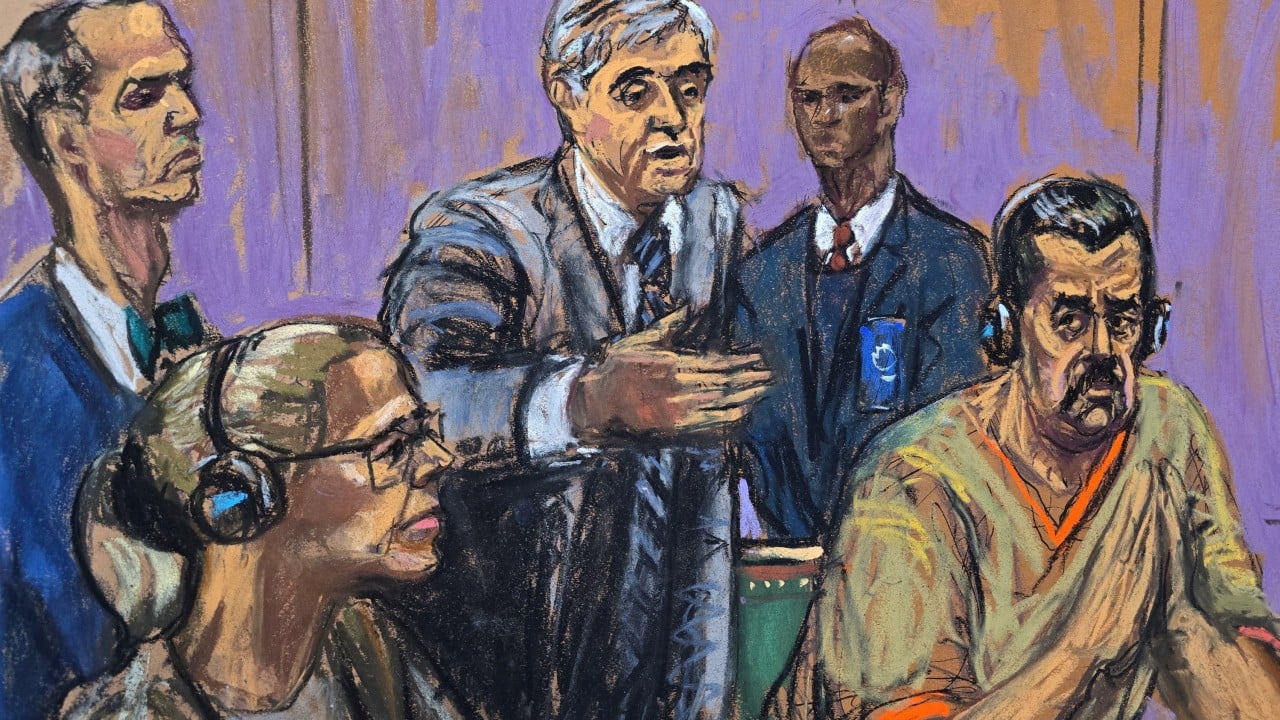
The long-standing standoff between Washington and Caracas reached a definitive, violent breaking point with the shock apprehension of Nicolas Maduro by U.S. special operations forces. While the immediate headlines focus on the courtroom drama unfolding in a federal building, the underlying reality is a calculated geopolitical earthquake. This was not a random grab. It was the culmination of years of federal indictments, multi-million dollar bounties, and a deteriorating internal security apparatus that finally blinked. Maduro’s appearance before a judge marks the first time a sitting head of state from the Western Hemisphere has been forcibly removed to face trial in the United States since Manuel Noriega in 1989.
The logistical execution of the capture suggests a deep compromise within the Venezuelan military, specifically the Dirección General de Contrainteligencia Militar (DGCIM). For Maduro to be extracted from his inner sanctum, the "rings of security" designed to protect him had to fail simultaneously. This points to a strategic betrayal from within the Miraflores Palace, likely incentivized by the very U.S. sanctions that have strangled the Venezuelan economy for a decade.
The Indictment That Finally Stuck
The U.S. Department of Justice didn't just stumble into this prosecution. The legal framework was laid years ago, centering on allegations of "narco-terrorism" and the "Cartel of the Suns." The core of the government’s case rests on the assertion that the Venezuelan leadership transformed the state into a transit point for thousands of tons of cocaine destined for American streets. This wasn't merely about corruption or skimming off the top of oil contracts. It was about the systematic integration of the military into global drug trafficking networks to fund a regime that had lost its ability to generate legitimate revenue.
In the courtroom, Maduro faces a mountain of evidence that federal prosecutors have been quietly building through cooperation from former insiders like Cliver Alcalá and Hugo "El Pollo" Carvajal. These men were once the pillars of the Bolivarian Revolution. Now, they are the primary witnesses for the prosecution. Their testimonies provide a granular look at how the Venezuelan state supposedly coordinated with the FARC and other paramilitary groups to ensure the safe passage of narcotics.
Why the Extraction Succeeded Now
Timing is everything in clandestine operations. For years, Maduro remained untouchable, shielded by a combination of Russian intelligence support, Cuban security details, and a loyal domestic military. However, the global energy shift and the waning influence of his primary international patrons created a window of vulnerability. Russia's focus on its own regional conflicts reduced its capacity to provide the high-level electronic surveillance that previously alerted Maduro to potential threats.
Furthermore, the economic desperation within Venezuela reached a point where loyalty could no longer be bought with devalued bolivars. The U.S. State Department’s $15 million bounty on Maduro’s head became a more attractive retirement plan for high-ranking generals than staying on a sinking ship. We are seeing the result of a "pressure cooker" strategy. By cutting off every legal avenue for the regime to function, the U.S. forced the internal elements to choose between collective ruin or a single, high-value betrayal.
The Breakdown of the Inner Circle
Reports indicate that the extraction occurred during a brief window when Maduro’s Cuban security detail was being rotated. This 20-minute lapse in protocol allowed a small, elite unit to breach the perimeter with minimal resistance. It suggests that the "how" of the capture was less about brute force and more about surgical intelligence. If the military had fought back with the ferocity they often display during street protests, the extraction would have turned into a bloodbath. The lack of a major firefight confirms that the order to stand down came from the very top of the Venezuelan defense hierarchy.
Legal Precedents and Sovereignty Debates
The legal community is currently embroiled in a fierce debate over the extraterritorial reach of U.S. law. Critics argue that the "capture and trial" of a foreign leader sets a dangerous precedent that undermines the principle of sovereign immunity. They point out that if the U.S. can snatch a leader it deems a criminal, what stops other nations from doing the same to American officials?
However, the DOJ's position is that sovereign immunity does not extend to "criminal acts committed outside the scope of official duties," specifically drug trafficking and terrorism. This is the "Noriega Doctrine" updated for the 21st century. The prosecution argues that Maduro ceased being a legitimate political leader the moment he utilized state resources to facilitate a criminal enterprise. It is a thin legal line, but one the U.S. courts have historically been willing to walk when national security interests are invoked.
The Role of International Law
The International Criminal Court (ICC) had already been investigating Maduro for crimes against humanity. By bringing him to a U.S. federal court instead of The Hague, Washington is asserting its own primacy in the region. This move bypasses the often-sluggish international legal systems, opting instead for a faster, more direct form of accountability that aligns with American domestic law. It is a move that signals the end of "soft diplomacy" in the Caribbean basin.
A Nation in Flux
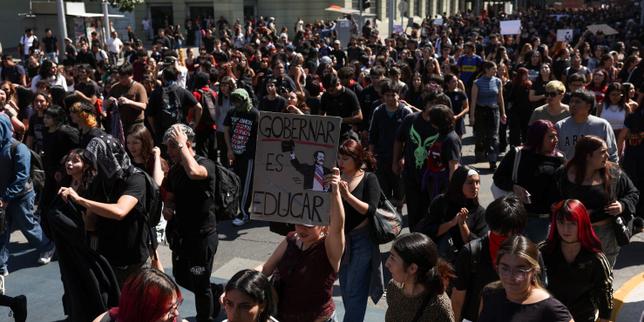
On the streets of Caracas, the reaction is a volatile mix of euphoria, terror, and confusion. For the millions who fled the country, Maduro's capture represents a chance for a homecoming. For those who remain, it is a moment of extreme danger. The "Colectivos," the armed pro-government civilian groups, remain a wildcard. Without a central figurehead to direct them, these groups could either dissolve or turn into localized insurgencies, making the transition to a post-Maduro era incredibly messy.
The interim leadership—a fragile coalition of opposition figures—is now tasked with preventing a total civil collapse. They must move quickly to secure the country’s gold reserves and the remaining assets of PDVSA, the state oil company. If they fail to provide immediate stability, the vacuum left by Maduro will be filled by the very cartels he was accused of leading.
The Geopolitical Fallout
China and Russia have officially condemned the capture, calling it an "act of piracy." But their rhetoric masks a more pragmatic reality. Both nations are heavily invested in Venezuelan oil and minerals. Their primary concern is not the fate of Maduro the man, but the repayment of the billions in debt he owes them. The U.S. will likely have to negotiate with Beijing and Moscow to ensure they don't sabotage the transition.
This is the hidden cost of the capture. To stabilize Venezuela, the U.S. might have to make concessions elsewhere on the global stage. It is a high-stakes trade-off. Bringing a notorious leader to justice is a moral and legal victory, but the resulting power vacuum in a country with the world's largest oil reserves is a massive strategic risk.
The Courtroom as a Battlefield
As the trial begins, expect a defense strategy focused on "political persecution." Maduro's lawyers will likely argue that the entire case is a fabrication designed to facilitate a regime change that the U.S. could not achieve through democratic or economic means. They will challenge every piece of evidence, every witness, and the very jurisdiction of the court.
The prosecution, meanwhile, will rely on "the paper trail." In the age of digital finance, even the most clandestine transactions leave a footprint. They will present encrypted messages, bank records from offshore accounts, and satellite imagery of clandestine airstrips. This trial will not be a quick affair. It will be a grueling, months-long autopsy of a failed state.
The Burden of Proof
The government must prove beyond a reasonable doubt that Maduro had direct knowledge and control over the drug shipments. Being the head of a corrupt state is not enough; they need to link him to specific acts. This is why the testimony of "El Pollo" Carvajal is so critical. As the former head of military intelligence, he knows where the bodies are buried—and where the ledgers are kept.
The Economic Aftermath
Venezuela’s economy is a charred remains of its former self. Hyperinflation has rendered the currency useless, and the infrastructure is crumbling. The capture of Maduro does not automatically fix these problems. In fact, the immediate uncertainty could make things worse. Foreign investors are wary of entering a country where the legal status of previous contracts is now in limbo.
The U.S. Treasury Department will likely need to issue a series of general licenses to allow humanitarian aid and essential services to flow back into the country. This is the "Marshall Plan" scenario that many have discussed for years, but the implementation will be a logistical nightmare. Rebuilding a country that has been systematically looted for two decades requires more than just a change at the top; it requires a total overhaul of the institutional framework.
The Ghost of Panama
Looking back at the Noriega case provides a somber lesson. While the removal of the dictator eventually led to a stable democracy in Panama, the immediate aftermath was marked by violence and economic disruption. Venezuela is much larger, more complex, and more heavily armed. The "surgical strike" that captured Maduro was the easy part. The hard part is managing the 30 million people left in the wake of his departure.
The U.S. military presence in the region remains at a heightened state of readiness. They are not just watching the borders; they are watching the sea lanes. Any attempt by remnant elements of the regime to launch a counter-strike or to move large quantities of assets out of the country will be met with immediate force. This is no longer a diplomatic dispute. It is a controlled demolition of a political system.
The judge’s gavel in that federal courtroom is now the most powerful instrument in Latin American politics. Every word spoken on the record will be scrutinized by every leader in the hemisphere. The message is clear: the shield of sovereignty has its limits, and for the U.S. Department of Justice, those limits end where the narcotics trade begins.
Would you like me to analyze the specific legal motions filed by Maduro's defense team during his initial hearing?