Wuhan just gave the world a reality check that Silicon Valley and Beijing didn’t want you to see. Imagine sitting in the back of a sleek, driverless car, cruising through heavy traffic, when the "brain" of the vehicle suddenly goes dark. The car doesn't pull over. It doesn't find a safe spot to park. It just stops. Right there. In the middle of a live lane. This isn't a scene from a sci-fi thriller; it’s exactly what happened when a massive system failure hit Apollo Go, Baidu's flagship autonomous ride-hailing service.
Hundreds of vehicles turned into literal roadblocks. Passengers were trapped inside as manual controls remained locked or non-existent, watching helplessly through the glass as frustrated human drivers honked and swerved around them. It was a mess.
People want to talk about "innovation" and "smart cities," but they rarely talk about what happens when the cloud crashes. If you’re betting your morning commute on a server farm hundreds of miles away, you’re gambling with your time and safety. Wuhan's recent gridlock proves that while the software is impressive, the infrastructure behind it is dangerously fragile.
When the Cloud Fails the Street
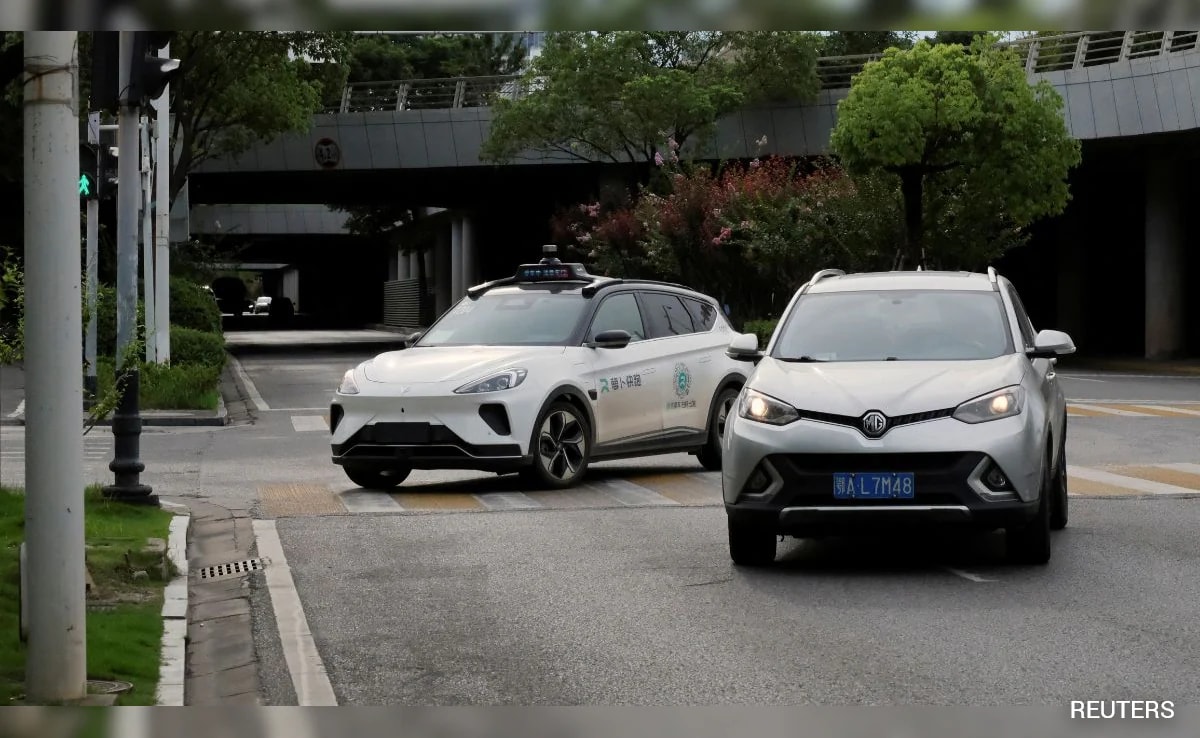
The outage wasn't just a glitch. It was a systemic collapse. Reports from local commuters and social media clips showed dozens of Apollo Go vehicles—white SUVs with spinning LiDAR sensors—sitting motionless across major intersections. In one instance, a robotaxi stopped dead in the middle of a bridge, causing a tailback that lasted for over an hour.
The problem with autonomous vehicles (AVs) right now is their umbilical cord to the network. These cars aren't truly "autonomous" in the way we think. They rely on high-definition maps, real-time traffic data, and remote assistance operators who can take over if the AI gets confused. When the connection drops or the central server encounters a critical bug, the car defaults to its most "conservative" safety protocol. Usually, that means hitting the brakes.
Stopping in the middle of a busy Chinese thoroughfare isn't safe. It’s a hazard. Human drivers expect movement. When a car stops for no apparent reason without hazard lights or a driver to wave others past, accidents happen. Baidu’s tech is supposed to be the gold standard in China, yet it couldn't handle a routine system update or server hiccup without paralyzing a district.
The Human Cost of Driverless Convenience
Think about the passengers. You’re in a vehicle with no steering wheel or pedals. You can’t drive it out of harm's way. You can't even open the doors easily in some models if the electronic locks are tied to the system state. During the Wuhan outage, passengers reported being "held hostage" by the tech. They couldn't end the ride because the app was unresponsive. They couldn't move the car. They were just... there.
I've seen this play out in San Francisco with Cruise and Waymo, but the scale in Wuhan is different. Wuhan is the world's largest laboratory for robotaxis. There are over 500 Apollo Go cars roaming the streets. When 10% of them fail simultaneously, you don't just have a few annoyed customers. You have a municipal crisis.
Local residents are already fed up. Before this outage, "Radish Run" (the literal translation of Apollo Go's Chinese name, Luobo Kuaipao) was already under fire. Professional drivers—taxi and Didi drivers—are losing their livelihoods to these machines. They see every stalled robotaxi as a "told you so" moment. They aren't wrong. If a human driver stalls, they push the car to the shoulder. If a robotaxi stalls, it waits for a technician who might be miles away.
Why Technical Redundancy is a Myth
Engineers love to talk about "redundancy." They claim that if one system fails, another kicks in. But the Wuhan incident shows that some points of failure are single-threaded. If the authentication server goes down, the car can't verify its next move. If the GPS signal is jammed or the 5G network lags, the car loses its confidence.
The AI is trained for the 99% of "normal" driving. It’s the 1%—the edge cases, the server crashes, the weird weather—that kills the dream. Honestly, we’re treating the public like beta testers without their consent.
We need to stop calling these cars "self-driving." They are "network-dependent" vehicles. That distinction matters. If your laptop crashes, you lose a document. If your car’s operating system crashes at 40 mph, you lose your life or cause a multi-car pileup. The industry is rushing to scale because the capital burn is insane, and they need to prove profitability. Safety is a secondary metric to "miles driven."
Local Pushback and the Economic Reality
The tension in Wuhan is palpable. It’s a blue-collar city. Thousands of people rely on driving to pay their rent. When the government cleared the path for Baidu to dominate the streets, they didn't account for the social friction.
- Job Displacement: Traditional taxi drivers have seen their incomes drop by 30-50% in areas where Apollo Go operates.
- Traffic Congestion: Robotaxis are notoriously "timid." They take longer to turn, they stop for plastic bags, and they drive significantly slower than the flow of traffic.
- Lack of Accountability: Who do you sue when a driverless car causes a phantom jam? Baidu? The software developer? The city?
The outage magnified these frustrations. It turned a technological "oopsie" into a political flashpoint. If autonomous tech is going to survive, it can't just be "as good" as a human. It has to be ten times better and a hundred times more reliable. Right now, it's a fickle guest on our roads.
How to Protect Yourself as a Passenger
If you're going to use these services—whether it's Apollo Go in China or Waymo in the US—you need to change how you think about the ride. Don't treat it like a standard taxi. Treat it like an experimental flight.
First, check your route. Avoid taking robotaxis if you're headed to a high-stakes meeting or the airport with a tight window. The risk of a "network event" or the car getting stuck behind a double-parked truck is too high.
Second, know the emergency exits. Every one of these vehicles has a physical door release. Find it the moment you sit down. Don't wait for a power failure to wonder how the latch works.
Third, keep your phone charged. If the car's internal screen goes dark, your phone is your only link to the company's support line. You’ll need it to prove you’re stuck and to demand a remote unlock.
Stop Buying the Hype
The narrative that driverless cars are "just around the corner" is a lie told to keep stock prices up. The Wuhan outage is a glaring reminder that we haven't solved the basic problem of reliability. We've built brilliant machines that are still slaves to a fragile cloud.
Until these cars can operate completely offline—meaning they can navigate, make safety decisions, and reach a destination without a single packet of data from a central server—they are not ready. They are a novelty at best and a liability at worst.
Next time you see a robotaxi, don't look at it as the future. Look at it as a rolling computer that could "blue screen" at any moment. If you're in one, stay alert. If you're behind one, give it plenty of space. The software might be smart, but the street is unforgiving.
Demand better from the companies putting these things on your streets. Hold the city planners accountable for the gridlock they’ve invited. Don't let the "cool factor" of a steering-wheel-less car blind you to the fact that, right now, the tech is fundamentally broken when it matters most. Focus on reliable transit options that don't depend on a server in a different time zone. Stay safe, stay skeptical, and keep your hands near the manual release.