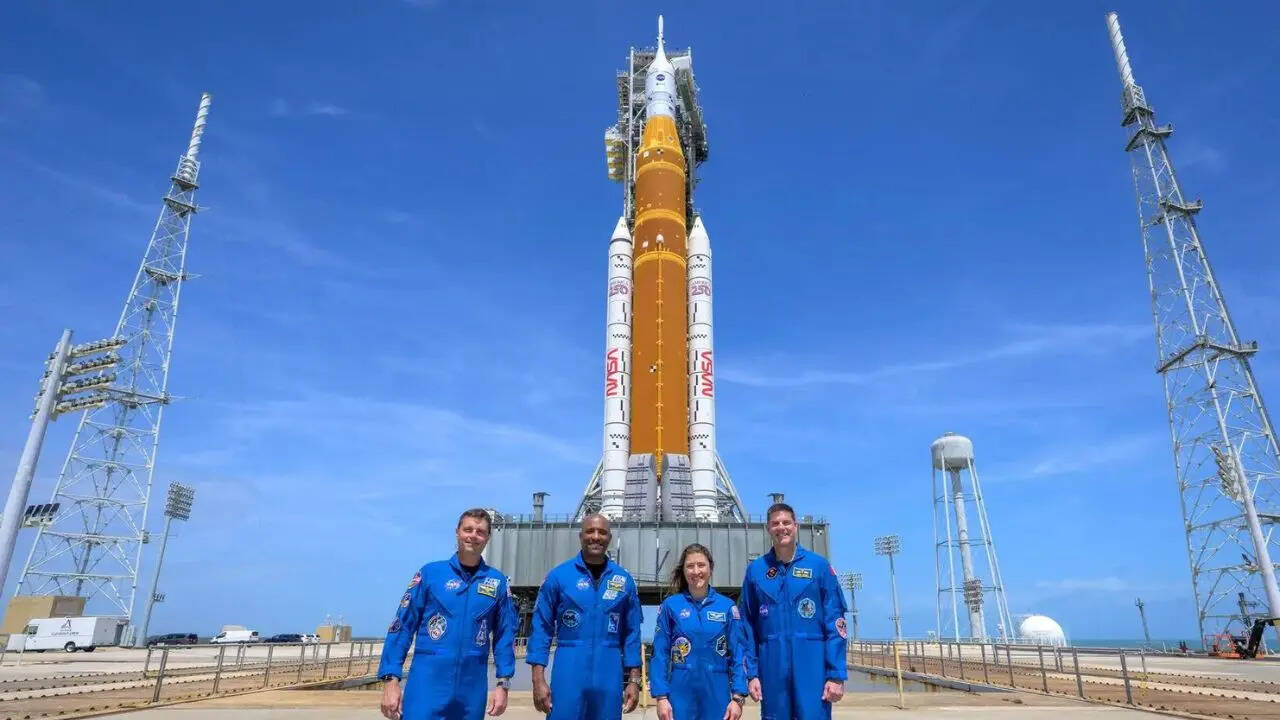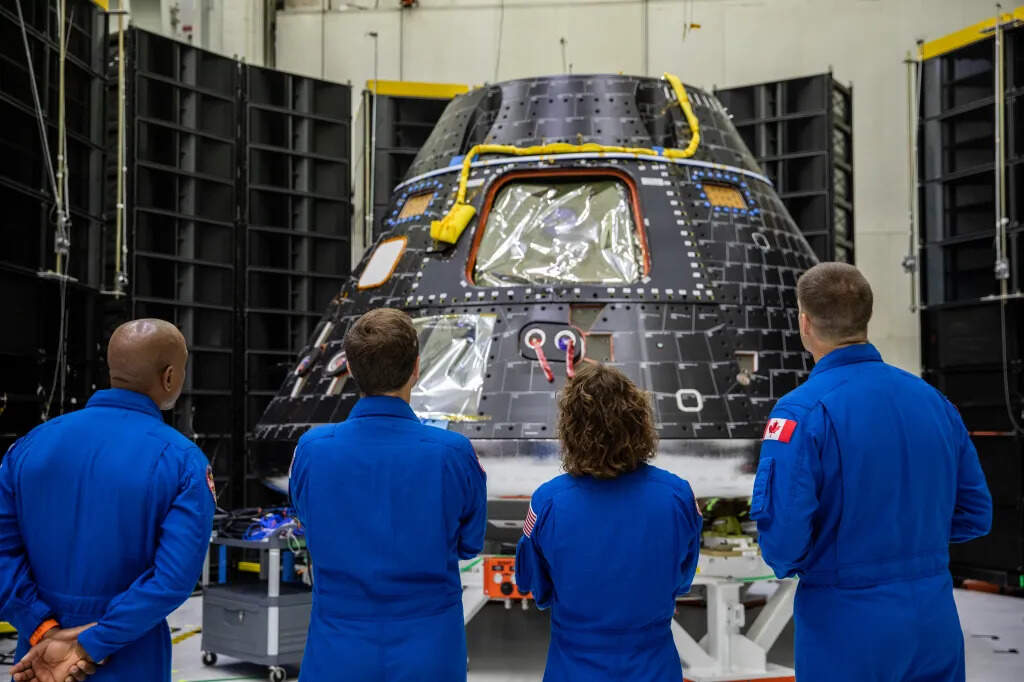
The four astronauts of Artemis II will not spend their final night on Earth in a state of high-tech glamor. While the public imagines a scene of sleek monitors and futuristic briefings, the reality is a stark, utilitarian ritual designed to mitigate the smallest biological risks. These final hours are defined by a concept NASA calls "L-1"—the last full day before liftoff—and it is governed by an unforgiving schedule of medical isolation, high-calorie fueling, and psychological hardening. The mission to loop around the Moon depends as much on the integrity of the crew’s immune systems as it does on the liquid oxygen fueling the Space Launch System.
The Biological Firewall
NASA’s Flight Crew Health Stabilization Program is the invisible architect of the pre-launch experience. For Reid Wiseman, Victor Glover, Christina Koch, and Jeremy Hansen, the night before launch is the culmination of a weeks-long quarantine. This isn't just about avoiding the common cold. In the cramped, closed-loop life support system of the Orion capsule, a minor viral infection can escalate into a mission-ending medical emergency. For a different look, consider: this related article.
The "Quarantine Quarters" at Kennedy Space Center are functional rather than comfortable. The crew eats meals prepared by a controlled kitchen staff to prevent foodborne illness. There are no last-minute trips to local restaurants or casual handshakes with technicians. Every person they interact with has been medically screened and cleared. This period of isolation serves a dual purpose: it protects their bodies while forcing a mental shift away from the distractions of Earth and toward the cold mechanics of the mission.
The Logistics of the Last Supper
Popular culture often focuses on the "last meal" as a sentimental feast. In reality, the night-before dinner is a calculated nutritional event. The goal is low-residue intake. NASA flight surgeons prioritize foods that are easily digestible and unlikely to cause gastrointestinal distress during the high-pressure environment of ascent. Related analysis on the subject has been provided by Mashable.
While historical crews famously ate steak and eggs—a tradition started by Alan Shepard—modern nutritionists focus on energy density and fiber control. The crew needs to be fueled for a launch window that might require them to sit strapped into their seats for hours during a hold, yet they must avoid anything that could lead to discomfort once the G-forces begin to climb. It is a meal of utility, eaten in a room filled with the people who will be the last to see them on the ground.
Sleep as a Mission Parameter
The most difficult task on the night before a Moon mission is the most basic: sleeping. The adrenaline of an impending 8.8 million pounds of thrust is a powerful stimulant. NASA uses aggressive "circadian shifting" to prepare the crew. For weeks leading up to L-1, the astronauts have been adjusting their internal clocks to match the launch window and the subsequent flight shifts.
By the night before, their bodies are effectively programmed to sleep during the day and wake in the middle of the night. This ensures that when they walk out to the Astrovan at 2:00 AM, they are at their peak cognitive performance. Sleep isn't a luxury; it is a line item on the flight manifest. If an astronaut cannot rest, the flight surgeon has the authority to intervene, though most rely on the sheer discipline of their training to shut down their minds.
The Suit Room Echo
Long before the sun rises over the Florida coast, the crew enters the Operations and Checkout Building. This is where the ritual becomes tactile. The process of "suiting up" in the Orion Crew Vestibule Pressure Suits is a slow, methodical dance. Every seal is checked, every comms link is tested, and every oxygen flow rate is verified.
This isn't just a technical check. It is the moment the astronauts transition from being humans to being components of a larger machine. There is a specific silence in the suit room. It is interrupted only by the hiss of portable cooling units and the quiet murmurs of the suit technicians. These technicians are often the same individuals who have worked with the crew for months; they know the idiosyncrasies of each astronaut's fit. A stray hair or a microscopic piece of lint on a neck ring seal can cause a pressure leak at 100,000 feet.
The Walkout and the Weight of History
The walk from the suit room to the elevator is the only time the public sees the crew on launch day. To the cameras, it looks like a triumphant parade. To the crew, it is the first time they feel the humidity and the salt air of the Cape before being sealed into the controlled atmosphere of the spacecraft.
They carry "vent boxes," portable life support units that circulate air through their suits to prevent overheating. The transition from the air-conditioned building to the transport vehicle is a reminder of the harsh environment they are about to enter. The Artemis II crew carries the added weight of being the first humans to see the lunar far side since 1972. They are not just following a checklist; they are breaking a fifty-year hiatus in deep space exploration.
Why Rituals Matter in High Risk Environments
Critics often dismiss NASA’s pre-launch traditions—like the card game played until the commander loses, or the specific breakfast menu—as mere superstition. They are wrong. In high-reliability organizations, rituals serve as cognitive anchors. They signal to the brain that a period of extreme stress is beginning and that the body must respond with the precision of its training.
When the Artemis II crew sits down for their final briefing on the night before liftoff, they aren't looking for new information. They are looking for the familiar. The familiarity of the sequence reduces the "cognitive load," allowing them to save their mental energy for the unexpected variables that inevitably occur when sitting on top of a rocket.
The Cold Reality of the Pad
By the time the crew reaches Launch Complex 39B, the sun has usually not yet risen. The SLS rocket is bathed in xenon spotlights, surrounded by a cloud of venting oxygen. The gantry is a skeleton of steel and pipes, vibrating with the power of the fueled vehicle.
The "Closeout Crew" meets them at the White Room—the small chamber at the end of the crew access arm. These are the last humans the astronauts will touch. The Closeout Crew helps them into their seats, tightens their five-point harnesses, and clears the cabin of any debris. There is no room for sentiment here. The communication is clipped and professional. Once the hatch is closed and the seals are tested, the four astronauts are truly alone.
The Psychological Pivot
The final night is less about saying goodbye and more about the finality of the mission. Most astronauts describe a moment where the fear of the unknown is replaced by a profound focus on the immediate task. This "narrowing of the field" is what allows a person to function while sitting on a controlled explosion.
For the Artemis II crew, the night before is the last time they will feel the pull of Earth’s gravity as a constant, comforting force. Within twenty-four hours, they will be accelerating toward a velocity of 25,000 miles per hour. The transition from the quiet of the quarantine quarters to the violence of the ascent is the most jarring shift a human can experience.
The Hidden Cost of the Countdown
We focus on the hardware because the hardware is impressive. We ignore the psychological toll of the countdown because the astronauts are trained to look unshakable. But the night before a mission like Artemis II is an exercise in profound discipline. It is the act of a human being voluntarily stepping away from the safety of the biosphere and into a vacuum where every breath is provided by a machine.
The success of the mission rests on the shoulders of individuals who have spent their final night on Earth being treated like biological cargo—protected, monitored, and isolated. This isn't a failure of the "human element"; it is the only way the human element survives the journey.
Check the seals, watch the clock, and wait for the dawn.