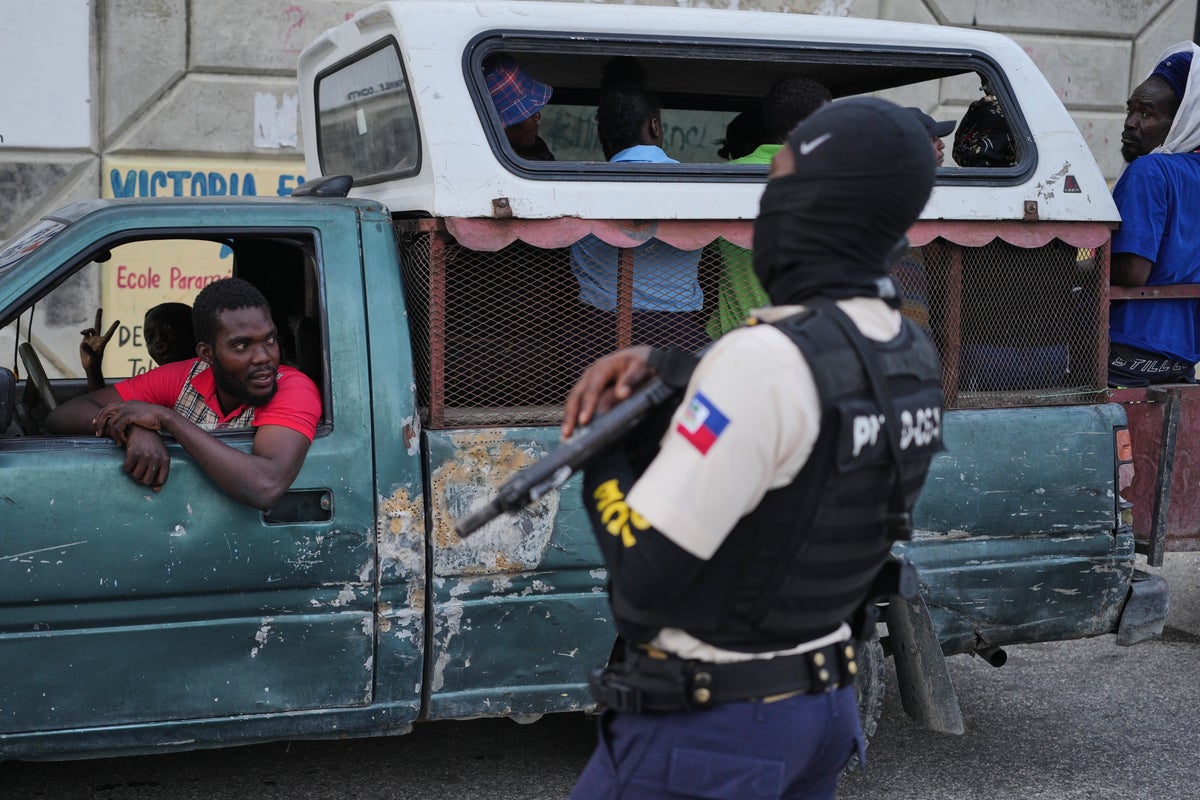
The images coming out of Port-au-Prince and the surrounding Artibonite region aren't just heartbreaking. They're a structural failure of every international safeguard we pretend exists. We see bodies left in the dirt and smoke rising from neighborhoods that used to be full of life. It’s a gut-wrenching reality that goes beyond mere "unrest." This is a calculated, brutal campaign for territory. When gangs torch a town like Pont-Sondé or storm the streets of the capital, they aren't just fighting. They're erasing the possibility of a normal life for millions of people.
If you've been following the news, you know the situation is dire. But the headlines often miss the "why" behind the specific surge in violence we’re seeing right now. It isn't just random chaos. It’s a power vacuum that started at the top and trickled down until the streets became the primary battlefield.
The Brutal Reality on the Ground
Living in Haiti right now means navigating a maze of invisible borders. One block is controlled by the "G9" alliance. The next belongs to "G-Pep." For the average person, crossing the wrong street can be a death sentence. We’re talking about a level of violence that includes the systematic use of arson to displace entire populations.
When a gang decides to take a town, they don't just walk in. They burn it. They want the residents gone so they can control the transit routes. If you control the roads, you control the food. You control the fuel. You control the money. It’s a siege economy, and the civilian population is the primary victim. Organizations like Médecins Sans Frontières (Doctors Without Borders) have repeatedly sounded the alarm about their facilities being overwhelmed by gunshot victims. In many cases, people can't even reach the hospital because the roads are blocked by burning tires or armed teenagers.
The sheer scale is hard to wrap your head around. The United Nations Integrated Office in Haiti (BINUH) reported thousands of killings in just the first half of the year. These aren't just statistics. These are shopkeepers, students, and parents. When you see reports of bodies left in the streets, it’s often because it’s too dangerous for anyone to retrieve them. The police are outgunned. The government is a shell.
How the Power Vacuum Became a Death Trap
You can't understand the current bloodshed without looking at the collapse of the state. Ever since the assassination of President Jovenel Moïse in 2021, Haiti hasn't had a functional, elected leadership. No elections. No clear path forward. This wasn't just a political crisis; it was a green light for organized crime.
Gangs in Haiti have always had ties to the political and business elite. They were used as "muscle" during elections or to suppress protests. But something shifted. The gangs realized they didn't need the politicians anymore. They became the power. They have the guns, many of which are smuggled in from the United States, and they have the territorial control.
The Transitional Presidential Council was supposed to fix this. It was supposed to pave the way for a Kenyan-led Multinational Security Support (MSS) mission. But let’s be real. A few hundred or even a few thousand foreign police officers can't solve a problem this deep-rooted. The gangs have had years to build their arsenals and fortify their positions. They’ve formed a "Viv Ansanm" (Living Together) coalition that, ironically, is united only in its effort to prevent any outside intervention from succeeding.
The Artibonite Massacre and the Strategy of Terror
The recent violence in the Artibonite region, particularly the massacre in Pont-Sondé, shows a terrifying evolution in gang tactics. This area is the breadbasket of Haiti. It’s where the rice is grown. By attacking this region, the Gran Grif gang isn't just killing people; they're strangling the country’s food supply.
Eyewitness accounts describe a level of cruelty that’s hard to stomach. People were gunned down while trying to flee. Houses were set ablaze with families still inside. This isn't "warring gangs" in the traditional sense. It’s an insurgent force executing a scorched-earth policy against its own people.
The international community's response has been, frankly, sluggish. Sanctions have been placed on gang leaders like Jimmy "Barbecue" Chérizier, but sanctions don't stop bullets in real-time. The MSS mission is underfunded and understaffed. It lacks the heavy equipment needed to take back neighborhoods that have been turned into fortresses.
Why the Current Strategy is Failing
We keep seeing the same cycle. A spike in violence leads to international hand-wringing. A small amount of aid is sent. A few more police are promised. Then the news cycle moves on.
The problem is that we’re treating this as a security issue when it’s a systemic collapse. You can't have security without a justice system. You can't have a justice system without a government people actually trust. Right now, most Haitians feel abandoned by their own leaders and the world.
The gangs know this. They use social media to project power and recruit. They post videos of their exploits, creating a brand of "revolutionary" struggle that masks their purely criminal intent. They tell the youth that the state has nothing for them, but the gang offers a gun, a salary, and a sense of belonging. It’s a seductive message in a country where the economy has flatlined.
What Needs to Change Immediately
If we want to see an end to bodies in the streets, the approach has to be more aggressive on two fronts: the flow of weapons and the flow of money.
- Stop the Iron River: Most of the high-powered rifles used by Haitian gangs come from Florida. It’s a straight line from US gun shops to the ports of Port-au-Prince. Without a serious, coordinated effort to crack down on this smuggling, any security mission is just a band-aid.
- Target the Financiers: Gangs need money for ammunition and loyalty. That money often flows through legitimate-looking businesses or is tied to the kidnapping industry. Freezing the assets of the "white-collar" criminals who fund these gangs is just as important as arresting the guys on the street.
- Real Support for the PNH: The Haitian National Police (PNH) are the ones dying on the front lines. They need better pay, better equipment, and, most importantly, the assurance that their families are safe while they’re on duty. Many officers have deserted because their own homes were attacked by the very gangs they were fighting.
The situation in Haiti isn't a lost cause, but it’s a desperate one. It requires more than just "monitoring the situation." It requires a level of commitment that matches the severity of the suffering. Every day the world waits is another day that a neighborhood is burned and more lives are lost to the pavement.
Support the organizations actually doing the work on the ground. Groups like Haitian Bridge Alliance and GFMER are providing direct relief to those displaced by the fires. Pressure your representatives to support legislation that targets arms trafficking to the Caribbean. Don't let the headlines become background noise. The people of Haiti deserve a country where the streets are for commerce and community, not for casualties of a war they never asked for.