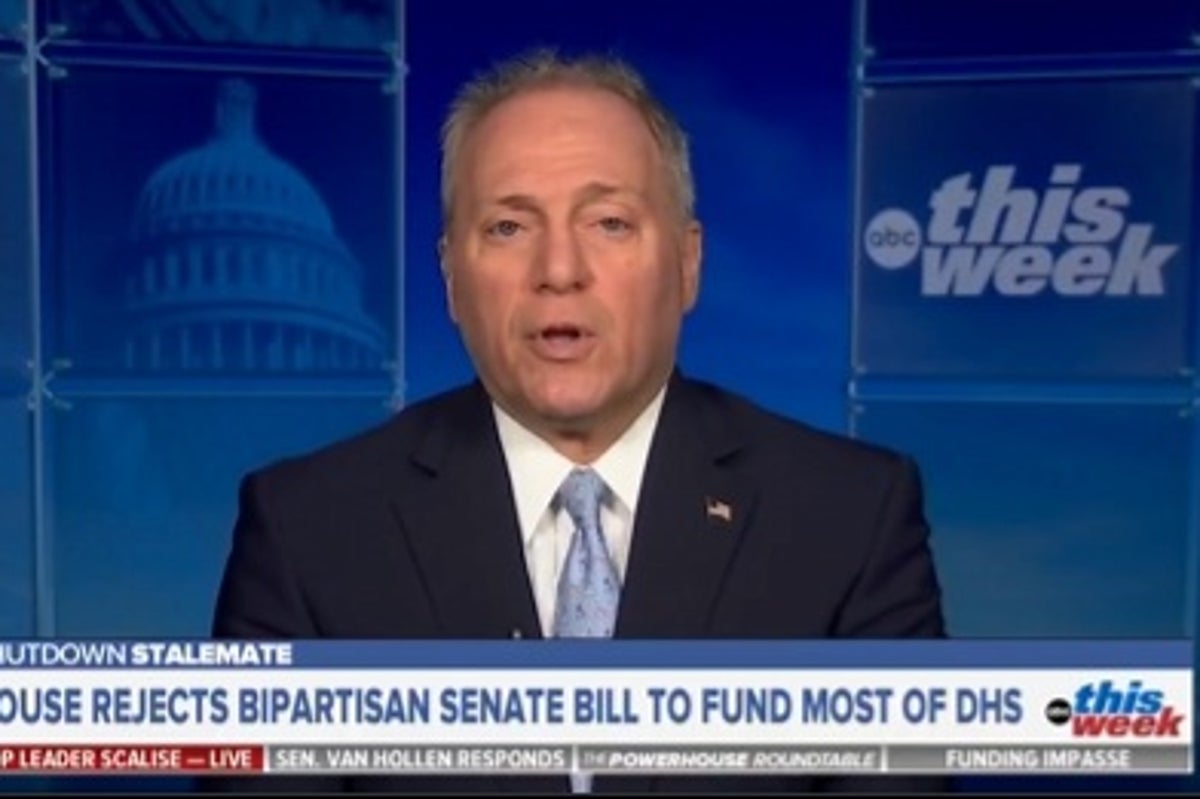
The departure of Congress from Washington D.C. during a looming shutdown is not a logistical error or a simple scheduling conflict. It is a calculated exercise in political leverage. When House and Senate leadership fail to reconcile a spending deal and subsequently allow members to board flights back to their home districts, they are engaging in a high-stakes game of chicken with the federal budget. This cycle repeats because the institutional mechanics of Congress now prioritize constituent optics and primary-voter management over the functional requirement of passing twelve individual appropriations bills on time.
The immediate impact is a paralyzed bureaucracy. While leadership defends these recesses as necessary breaks for members to hear from their districts, the reality is that the legislative clock continues to tick toward a fiscal cliff. This maneuver relies on the assumption that the "other side" will blink first under the pressure of a shuttered government.
The Architecture of a Planned Crisis
Washington does not stumble into shutdowns. It designs them. The process of funding the government has evolved from a standard administrative task into a recurring theatrical performance. Since the mid-1990s, the "power of the purse" has been transformed into a blunt-force instrument used to extract policy concessions that could never pass through the traditional legislative process.
When a Republican leader defends "skipping town" before a deal is struck, they are often signaling to their caucus that they will not be bullied into a compromise by the mere threat of a deadline. In the modern congressional landscape, staying in the Capitol to negotiate is often viewed by hardline factions as a sign of weakness. Leaving town is a way to project confidence. It tells the opposing party and the White House that the current offer is so unacceptable that the majority would rather let the clock run out than continue talking.
This strategy is reinforced by the way modern campaigns are funded. Small-dollar donors, who now drive a significant portion of party fundraising, respond to perceived combativeness. A headline about a representative "standing their ground" and returning home to "the real world" is far more lucrative for a campaign war chest than a dry report on a bipartisan subcommittee meeting.
The Senate House Divide
The friction isn't just between Democrats and Republicans. It is frequently a structural war between the House of Representatives and the Senate. The House, with its two-year terms and smaller, more ideologically homogeneous districts, tends to be more volatile. The Senate, designed to be the "cooling saucer," operates on a six-year cycle and requires a 60-vote threshold for most actions, necessitating some level of bipartisanship by default.
When the House passes a spending bill packed with "poison pill" policy riders—provisions unrelated to funding that are designed to satisfy a specific ideological base—the Senate almost always rejects it. This creates a stalemate. If the House leadership refuses to take up the Senate's more moderate version, the gears of government grind to a halt.
By leaving town during this impasse, leadership effectively freezes the status quo. They are gambling that the public outcry over a shutdown will be directed at their opponents. This is why you see both sides frantically spinning the narrative in the hours before a recess begins. It is a race to define who is "unreasonable" before the members disappear from the Capitol steps.
The True Cost of the Continuing Resolution
Because Congress consistently fails to pass the twelve individual bills that fund various departments, they rely on Continuing Resolutions (CRs). These are short-term patches that keep the government running at previous year’s spending levels. While a CR avoids a shutdown, it is a catastrophic way to manage a global superpower’s finances.
Under a CR, agencies cannot start new projects. They cannot sign new contracts. They cannot plan for the long term. It is a state of suspended animation. For the Department of Defense, this means delays in modernization. For the Department of Health and Human Services, it means an inability to pivot resources toward emerging public health threats. The defense of leaving town is, in many ways, a defense of the CR culture—a culture where "keeping the lights on" is celebrated as a victory, even as the building's foundation continues to crumble.
The Myth of District Work Periods
Leadership often frames these departures as "district work periods." They argue that representatives need to be among the people they serve to understand the impact of federal policy. In practice, these periods are often dominated by high-end fundraising events and closed-door meetings with political donors.
The disconnect between the rhetoric of "listening to the people" and the reality of leaving a shutdown on the table is vast. If a private sector CEO walked away from a merger negotiation an hour before the deadline to attend a gala in another city, shareholders would demand their resignation. In Congress, this behavior is protected by the party structure. The seniority system and committee assignments are controlled by leadership, meaning rank-and-file members have little incentive to rebel against a schedule that favors political posturing over legislative results.
Historical Precedent and the Shift in Norms
For decades, the "regular order" was the standard. Committees would deliberate, bills would be marked up, and the budget would be settled well before October 1st. The shift toward the current "crisis-recess" model began in earnest during the 104th Congress. It was then that the idea of using a total government shutdown as a strategic weapon became a viable part of the political playbook.
Since then, the duration and frequency of these standoffs have increased. The psychological barrier has been broken. A shutdown is no longer seen as an unthinkable failure of governance; it is viewed as a standard negotiating tactic. This normalization is what allows a leader to stand before a microphone and justify an empty chamber while the national debt interest grows and federal workers prepare for furloughs.
The Invisible Casualties of Political Absence
The focus during these periods is usually on high-profile impacts: National Parks closing, passport delays, or the suspension of non-essential services. However, the most damaging effects are often the ones that don't make the evening news.
Small businesses that rely on federal contracts face immediate cash-flow crises. Federal employees, many of whom live paycheck to paycheck, are forced to navigate the uncertainty of whether they will be able to pay rent or mortgages. Even when back pay is eventually authorized, the stress and the disruption to personal finances are never fully compensated.
Furthermore, the "leave town" strategy signals to international markets and foreign adversaries that the American legislative process is fundamentally broken. It erodes the perceived stability of the U.S. dollar and the reliability of the U.S. government as a partner. When the people responsible for the world's largest economy decide that a flight home is more important than a functioning budget, the world takes notice.
The Mechanics of the Blame Game
The defense of a recess is the opening salvo in the blame game. By leaving, a party is essentially saying, "We have done our part; the ball is in their court." This creates a vacuum of information that each side fills with highly curated messaging.
- The House Strategy: Pass a bill that is dead on arrival in the Senate, then leave, claiming the Senate is the obstructionist body.
- The Senate Strategy: Pass a "clean" bill that the House refuses to vote on, then leave, claiming the House is held hostage by extremists.
- The Executive Strategy: Threaten a veto to force a better deal, then use the bully pulpit to frame the entire Congress as incompetent.
This triangular finger-pointing is only possible when the members are not in the same building. Physical presence requires at least the appearance of negotiation. Absence allows for pure, unfiltered propaganda.
Breaking the Cycle of Planned Failure
If the goal were truly to avoid a shutdown, the solution is simple: a "no budget, no recess" rule. Several proposed pieces of legislation would mandate that if a spending deal is not reached by a certain deadline, members are prohibited from leaving the Capitol, and their pay is withheld.
Unsurprisingly, these proposals rarely gain traction. The current system serves the interests of those in power. It allows for the maintenance of an eternal campaign cycle where the "crisis" is the product being sold to the voters. To fix this, the incentive structure must change. The political cost of leaving town must be made higher than the political cost of staying and making a difficult compromise.
Until the public rejects the defense of these departures, leadership will continue to use them. They will continue to fly away from the mess they helped create, leaving the American taxpayer to wait for the next scheduled "crisis" to resolve itself. The empty desks in the House and Senate chambers are not a sign of a break in the action; they are the most honest representation of how modern governance actually works.
Check the flight logs of your representatives the next time a deadline approaches. You will see exactly where their priorities lie.


