In a cramped, neon-lit office in Central, a junior analyst named Chen watches a progress bar crawl across his screen. For three years, Chen’s value was defined by his ability to parse thousands of lines of chaotic financial data, scrub them clean, and arrange them into a coherent narrative for his directors. He was the human filter. Today, the filter is a sequence of code. What used to take Chen forty-eight hours of caffeine-fueled labor now happens in forty-eight seconds.
Chen isn’t being fired. Not yet. But his desk feels smaller. The air in the office feels thinner. He is witnessing the quiet, mathematical thinning of the Hong Kong workforce—a phenomenon that KPMG recently quantified with chilling precision.
According to their latest survey of 400 executives, nearly a quarter of Hong Kong firms—24 percent—are preparing to widely adopt Artificial Intelligence within the next two years. That number sounds like progress. It sounds like efficiency. But for the people sitting in those chairs, it sounds like a countdown.
The Math of Human Erasure
Business is often treated as a series of spreadsheets, but at its core, it is a collection of heartbeats. When a firm decides to "optimize," those heartbeats become overhead. KPMG’s data reveals a stark divergence in how we view the future. While 24 percent of companies are diving head-first into AI, a staggering 92 percent of executives believe that AI will inevitably lead to smaller headcounts.
Think about that gap.
Even the companies that aren't ready to use the technology yet are already mentally clearing out the desks. The expectation of loss has preceded the arrival of the tool. In the boardrooms of the city's largest banks and logistics hubs, the conversation has shifted from "How can we do more?" to "How can we do this with fewer of them?"
Consider a hypothetical mid-sized law firm in Admiralty. Let’s call it Lee & Associates. For decades, they employed a dozen paralegals to handle discovery—the grueling process of reading through mountains of evidence. With AI, a single senior partner and one technician can do the work of those twelve. The "associates" in the firm’s name start to look like ghosts. This isn't a futuristic "Terminator" scenario; it is a simple matter of subtraction.
The Productivity Trap
There is a seductive lie often told in corporate retreats: that technology frees us to do more "meaningful" work. We are told that by offloading the grunt work to an algorithm, we will finally have time for the "high-level strategy" and "creative thinking" that makes us human.
It’s a beautiful thought. It’s also largely a myth.
The reality is that most businesses don't want more strategy. They want the same output for less cost. If an employee becomes 50 percent more productive because of AI, the business rarely gives them 50 percent more creative projects to fill the time. Instead, the business realizes it only needs half as many employees to maintain the status quo.
The pressure in Hong Kong is unique. Here, the work culture is a pressure cooker of speed and precision. When you introduce a tool that never sleeps, never takes a lunch break at a cha chaan teng, and never asks for a raise, the human worker becomes the bottleneck. We are the slow link in the chain.
Why Hong Kong is the Litmus Test
Hong Kong has always been a city of reinvention. From a fishing village to a manufacturing hub to a global financial titan, it knows how to pivot. But this pivot is different. Previous shifts replaced muscles with machines. This shift replaces the mind.
KPMG’s report highlights that the drive toward AI is strongest in sectors like finance, professional services, and logistics—the very pillars of the Hong Kong economy. These aren't just jobs; they are the middle-class dream. When a quarter of these firms move to AI-driven models, they aren't just changing their software; they are rewriting the social contract.
The executives surveyed aren't villains in a Dickensian novel. They are pragmatists. They see the soaring costs of office space in the most expensive city on Earth. They see the difficulty of finding specialized talent. To them, AI is a release valve.
But for the worker, that valve feels like a leak.
The Skill Gap is a Canyon
There is a frantic rush to "upskill." We are told to learn to prompt, to learn to manage the machines, to become the "AI-augmented professional."
But let’s be honest about what that feels like. It feels like being told to build a bridge while the ground is shaking beneath your feet.
The KPMG findings suggest that while firms expect headcounts to drop, they struggle to find people who actually know how to steer these new systems. We are in a strange, liminal space where the old jobs are dying faster than the new ones are being defined.
Take "Sarah," a hypothetical marketing manager. She spent ten years mastering the nuances of consumer psychology in the Greater Bay Area. Now, her company uses a generative tool to churn out hundreds of ad variants based on real-time data. Her "expertise" has been reduced to clicking "approve" or "disapprove." She is no longer the creator; she is the curator of a machine’s imagination. Her value has plummeted because the barrier to entry for her job has been lowered to the cost of a monthly subscription.
The Hidden Emotional Tax
We rarely talk about the psychological erosion that comes with this transition. When you know that 24 percent of your peers are being replaced by an invisible hand, your relationship with your work changes. You stop looking at your career as a ladder and start looking at it as a life raft.
This anxiety manifests in subtle ways. It’s the late-night emails sent just to prove you’re still "active." It’s the reluctance to take a vacation because you’re afraid the office will realize they got along just fine without you while the AI covered your shifts.
The KPMG report isn't just a collection of percentages. It is a map of a changing psyche. The move toward smaller headcounts is a move toward a more isolated professional life. As the desks around us disappear, the communal spirit of the office—the shared gripes over bad coffee, the spontaneous brainstorming in the elevator—evaporates.
Survival in the Age of Logic
So, where does the human go?
If the machine is the master of logic, the human must become the master of the illogical. The machine can predict a market trend, but it cannot understand the stubborn, irrational pride of a family business owner who refuses to sell. It can write a contract, but it cannot navigate the delicate, unspoken politics of a boardroom negotiation where the real decisions happen in the pauses between sentences.
The 24 percent of firms moving toward AI are looking for certainty. They want a predictable ROI. They want a world where inputs lead to guaranteed outputs.
Our only defense is our unpredictability. Our empathy. Our ability to care about things that don't have a data point.
The Cost of the Empty Chair
We must look closely at what happens when the "smaller headcounts" become a reality. A city is defined by its density. Hong Kong thrives on the friction of people moving together, working together, competing together. If we optimize away the people, we risk optimizing away the soul of the city.
The KPMG data is a warning, but not in the way most people think. The danger isn't that the machines will take over. The danger is that we will become so focused on the efficiency of the machine that we forget why we were working in the first place.
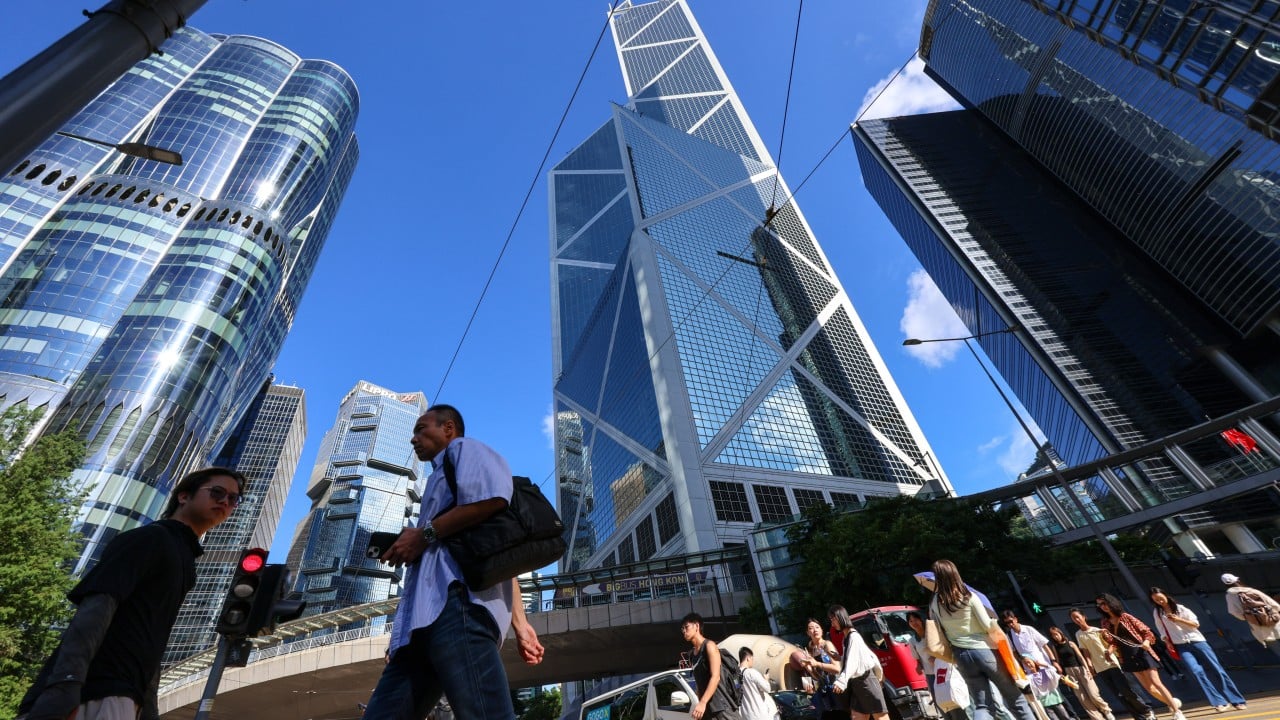
Chen finishes his task. The bar hits 100 percent. The report is perfect. It is better than anything he could have written himself. He sends it to his boss and looks out the window at the skyline of Hong Kong, a forest of glass and steel built by human hands.
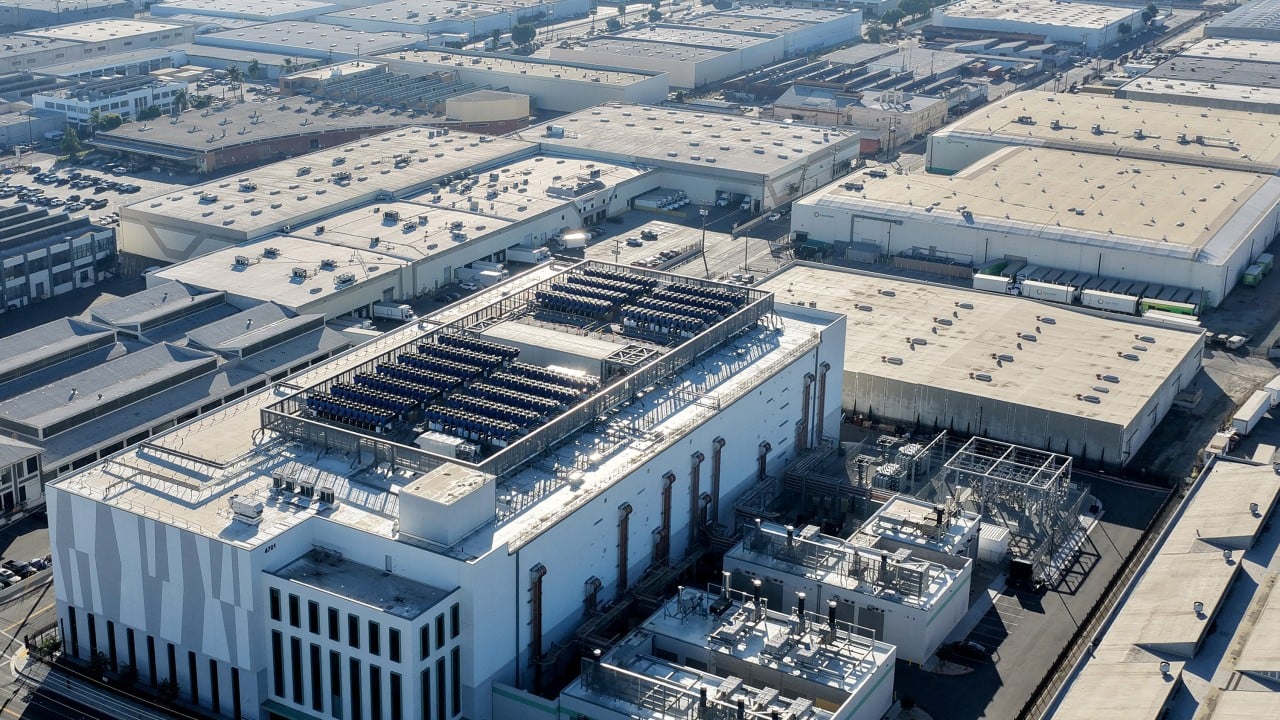
He wonders if, in ten years, those buildings will be full of servers instead of people. He wonders if the lights will still be on if there’s no one left to see them.
He picks up his bag, walks past a row of empty desks, and steps into the humid evening air, feeling the weight of being a ghost in a world that is learning to do without him.