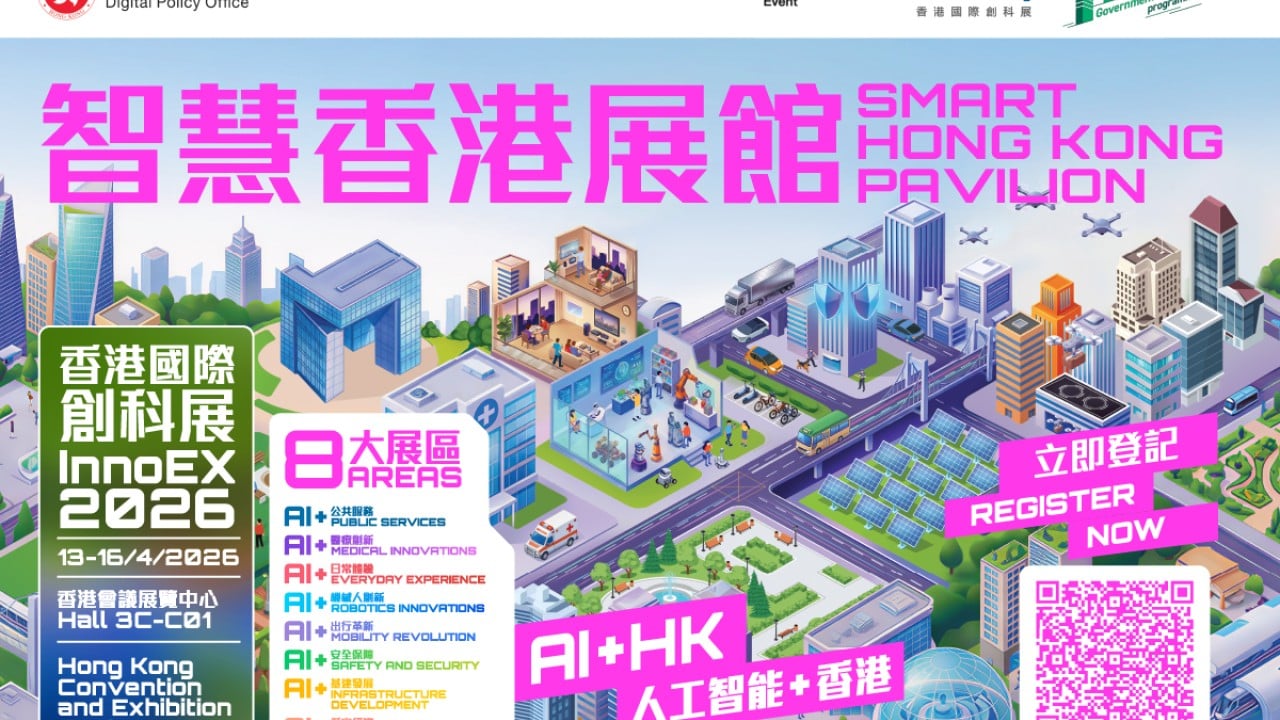
The humidity in Hong Kong doesn’t just sit on your skin; it carries the weight of seven million lives pressed into a few hundred square kilometers. Standing on the mezzanine of the Convention and Exhibition Centre during InnoEX 2026, you can feel that weight. Below, the Smart Hong Kong Pavilion hums with a mechanical vibration. It isn't the loud, clanking industry of the past. It’s the sound of a city trying to learn how to breathe.
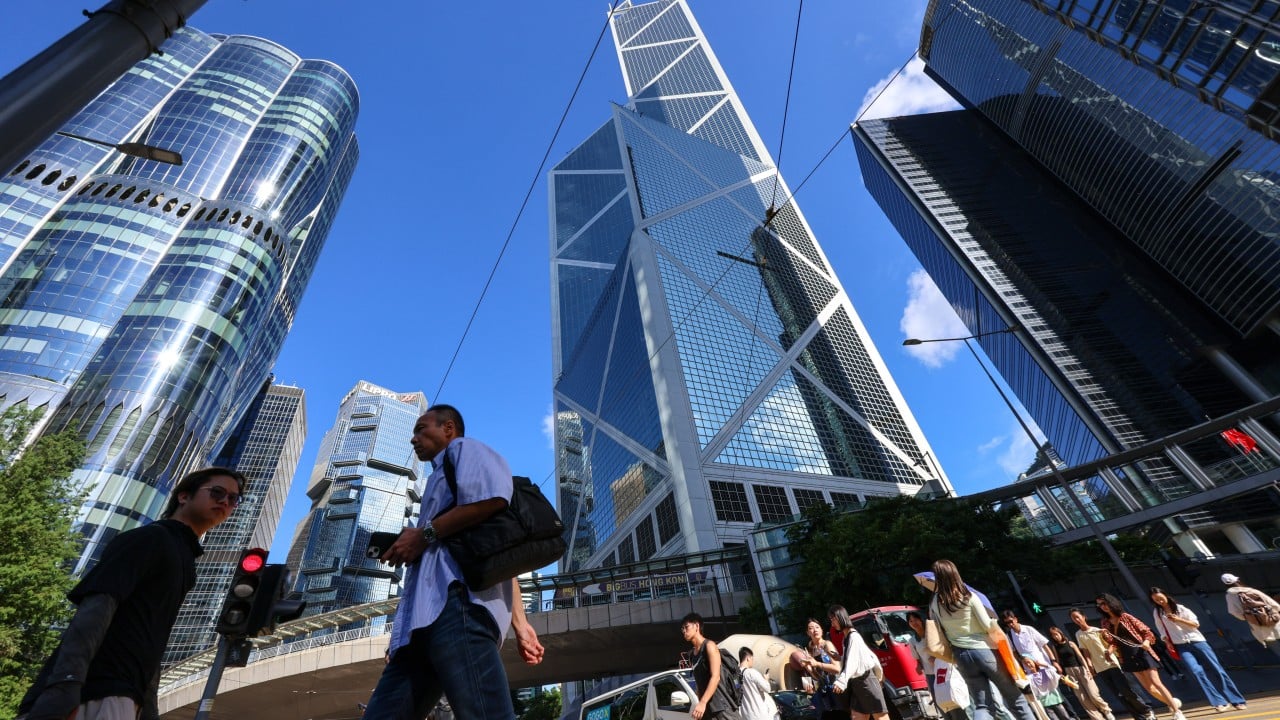
We have spent decades building upward, stacking glass and steel until the sky became a narrow ribbon. But the higher we built, the more we lost sight of the individual. In the standard press releases, you’ll hear about "urban efficiency" and "smart infrastructure." Those words are hollow. They don’t capture the anxiety of an elderly woman named Mei living on the 32nd floor of a public housing estate in Kwun Tong, wondering if the elevator will hold or if the heat will become unbearable before the air conditioning kicks in.
Mei is a hypothetical resident, but her problems are the definitive pulse of this city. The innovations showcased at the pavilion this year aren't gadgets. They are an attempt to answer a desperate question: How do we stop a megacity from becoming a machine that grinds its people down?
The Ghost in the Sensors
For years, the "Smart City" was a collection of cameras and dashboards that mostly served the people who ran the dashboards. It felt distant. Cold. In the 2026 pavilion, that perspective has shifted. The focus has moved from the bird’s-eye view to the street-level experience.
Consider the way we move. Hong Kong’s transit system is a marvel, yet it remains a source of constant friction. We’ve all been there—trapped in a sea of bodies at Admiralty station, eyes fixed on a glowing screen, waiting for a train that is thirty seconds late. The new AI-driven traffic management systems on display aren't just about shaving seconds off a commute. They are about cognitive load. When the city flows better, the people inside it are less frayed.
One of the most striking demonstrations involves a digital twin of the Kowloon district. It’s a shimmering, translucent map that reacts in real-time to everything from a burst water pipe to a sudden spike in humidity. In the past, if a water main broke in Mong Kok, the response was reactive. Chaos ensued. Now, the system predicts the stress points before the pavement even cracks. It’s like watching a nervous system anticipate a wound.
This is the shift from management to care.
The Quiet Safety of the Algorithm
The stakes are highest where they are least visible.
In the back corner of the pavilion, away from the flashy robotics, lies the heart of the 2026 initiative: public safety and elderly care. This is where the technology becomes intimate. Hong Kong is aging faster than almost any other city on earth. By 2030, a third of the population will be over sixty-five.
Imagine Mei again. She lives alone. Her children work long hours in Central. In the old version of the "smart city," she might have been given a wearable panic button she’d forget to charge. In the 2026 vision, the apartment itself watches over her.
Non-intrusive sensors—not cameras, but thermal and motion detectors—track the rhythm of her life. If the kettle doesn't boil at 8:00 AM, or if the bathroom light stays on for four hours, the system knows. It doesn’t scream; it alerts a community care worker. This isn't surveillance. It’s a digital safety net. It’s the city acting as a proxy for a family that can’t always be there.
The technology is complex, involving edge computing and high-speed low-latency networks, but the result is simple. It’s the difference between a fall being a tragedy and a fall being an incident.
The Air We Share
Climate is the one thing no amount of money can truly hide from. In the canyons of Central, the "urban heat island" effect makes the air feel like a physical blow. The 2026 Pavilion devotes a massive section to the "Green Tech" initiative, which sounds like a corporate buzzword until you see the reality of it.
They are showcasing a new type of architectural skin—cooling materials inspired by the scales of desert ants. These aren't just fancy tiles. When applied to the sides of our aging skyscrapers, they reflect heat while allowing the building to "sweat" out internal warmth.
Walking through the mock-up of a "Cool Street," the difference is visceral. It’s five degrees cooler than the "Standard Street" just ten feet away. Five degrees is the margin between a pleasant walk and a heat stroke. It’s the margin between a city that is livable and a city that is a kiln.
The struggle is that these solutions are expensive. They require a total rethink of how we value property. Is a building’s worth defined by its square footage, or by its impact on the temperature of the block? The pavilion pushes for the latter. It’s a hard sell in a city run by real estate moguls, but the data on the screens is undeniable. The heat is coming. We either adapt our walls or we burn.
The Friction of Trust
Everything at InnoEX 2026 relies on a single, fragile resource: data.
This is where the excitement usually dies and the suspicion begins. Why should Mei trust the government with her movement patterns? Why should a logistics company share its route data with a centralized AI?
The pavilion addresses this through a series of "Transparency Modules." They’ve moved away from the "black box" algorithms of the early 2020s. Now, there’s a push for decentralized data storage—technologies like blockchain (used here for security, not speculation) that ensure the data is used for its intended purpose and nothing else.
But even with the best encryption, the human element remains skeptical. You can see it in the eyes of the visitors. They look at the facial recognition gates and the smart lampposts with a mix of awe and trepidation. We are building a city that knows us. That is a terrifying thought if you don't trust the entity doing the knowing.
The success of Smart Hong Kong isn't going to be measured in gigabytes per second. It will be measured in the lack of fear. If the citizens feel that the technology is a tool they own, rather than a leash they wear, the city wins.
The Smallest Victories
The most impressive part of the exhibition isn't the autonomous taxis or the drone delivery pads. It’s a small, handheld device designed for street cleaners.
For decades, the people who keep Hong Kong's streets pristine have been the invisible backbone of the city. They work in brutal conditions, often in their sixties or seventies, pushing heavy carts through steep alleys. The new smart-cart system uses power-assist technology and GPS-optimized routing to reduce the physical strain by forty percent.
It’s a tiny detail. It won't make the headlines in the financial papers. But it represents a shift in philosophy. When we talk about a "Smart City," we usually mean making life easier for the person in the penthouse. We rarely mean making life dignified for the person sweeping the gutter.
In that small piece of hardware, the 2026 Pavilion finds its soul. It suggests that intelligence isn't just about being clever; it’s about being observant. It’s about noticing the people we’ve spent a century ignoring.
The light outside the Convention Centre is beginning to fade into that bruised purple hue unique to a Hong Kong evening. The neon signs are flickering to life, reflected in the harbor. Inside, the machines continue to pulse, calculating, predicting, and adjusting.
We often think of progress as a straight line toward a gleaming, sterile future. But standing here, surrounded by the hum of the pavilion, you realize it’s more like a heartbeat. It’s messy. It’s constant. It’s a struggle to keep the rhythm steady while the world outside gets louder.
The smart city isn't a destination we will eventually reach. It’s the ongoing effort to ensure that when the 32nd-floor elevator opens in Kwun Tong, Mei steps out into a world that is ready for her. It’s the promise that in a city of millions, no one is truly lost in the code.
The humidity is still there when you walk out the doors, but for a moment, the air feels just a little bit lighter.