The global economy is currently undergoing a violent restructuring that defies forty years of established trade theory. For decades, the mantra was simple: capital and technology flow where they are most efficient. Efficiency was the only god that mattered. But today, a fierce collision between artificial intelligence and national security has shattered that consensus. Washington and Beijing are no longer interested in the lowest price per transistor; they are obsessed with the physical location of the motherboard. This shift represents the end of the "borderless" era and the rise of a fragmented, high-stakes arms race where software is the weapon and geography is the shield.
We are seeing the birth of Computational Mercantilism. This isn't just a trade spat. It is a fundamental rewiring of how nations value progress. In the past, if a company in one country developed a better way to ship grain or build cars, the rest of the world eventually bought that expertise. AI changed the math. Because AI scales with an intensity that creates "winner-take-all" dynamics, letting a rival gain a slight lead in compute power is now viewed as a permanent strategic defeat.
The End of Comparative Advantage
For a century, David Ricardo’s theory of comparative advantage ruled the world. The idea was that countries should focus on what they produce most effectively and trade for the rest. If Taiwan makes the best chips and the US makes the best software, everyone wins by trading.
That logic has collapsed.
Security hawks in the West now argue that if you rely on a competitor for the foundational components of your intelligence, you don't have a trade partner—you have a master. AI is not a commodity like steel or oil. It is a multi-use engine that powers everything from drone swarms to financial markets. Consequently, governments are moving to "onshore" every segment of the supply chain, regardless of the cost.
The result is a massive, taxpayer-funded duplication of effort. The US is pouring billions into the CHIPS Act, while Europe and China scramble to build their own internal foundries. This is economically "inefficient" by 1990s standards. It creates redundant factories and higher prices for consumers. Yet, in the eyes of modern policymakers, the cost of efficiency is now outweighed by the price of vulnerability.
The Algorithmic Iron Curtain
We are witnessing the emergence of two distinct technological stacks. On one side, a Western ecosystem built on open-source frameworks but guarded by strict export controls on high-end hardware. On the other, a Chinese ecosystem forced into rapid self-reliance, developing its own instruction sets and manufacturing techniques to bypass sanctions.
This division creates a massive problem for global corporations. A decade ago, a tech giant could build one product for the entire world. Now, they must build "sanitized" versions for different jurisdictions. This fragmentation kills the network effects that made the internet so profitable. When data cannot cross borders and models cannot be shared, the pace of innovation slows down.
The Hidden Cost of Sovereignty
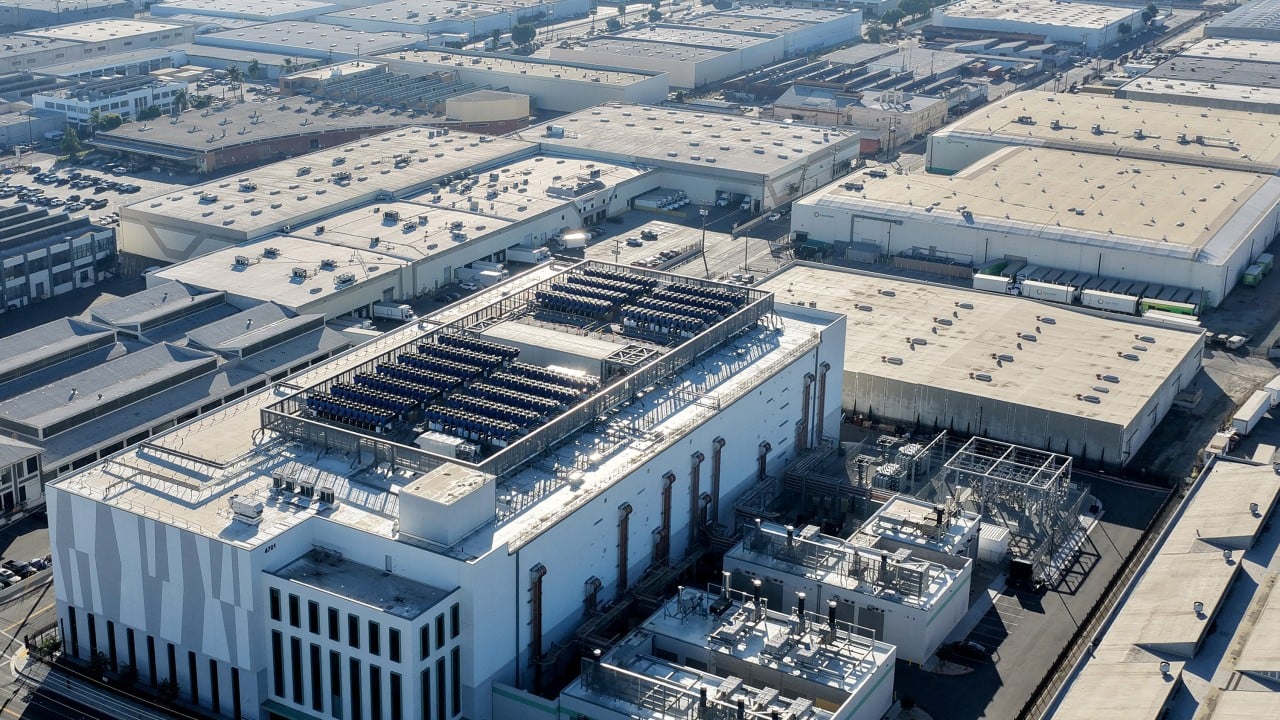
While politicians brag about bringing manufacturing home, they rarely discuss the energy bottleneck. AI requires an obscene amount of electricity. Transitioning from a global, distributed network to a localized one means every major power must now solve the energy crisis within their own borders.
- Data Center Density: AI training clusters require ten times the power of traditional servers.
- Grid Stability: Localized AI hubs are putting unprecedented strain on aging national power grids.
- Water Usage: Cooling these massive facilities requires millions of gallons of water, often in regions already facing drought.
A country can build all the chip factories it wants, but without the power to run them, the silicon is just expensive sand. This reality is forcing a strange alliance between tech billionaires and nuclear energy advocates, as the "sovereign AI" dream hits the hard wall of physics.
Neutrality is No Longer an Option
Smaller nations are being forced to pick a side. In the old world, a country like Singapore or the UAE could sit in the middle, using American software and Chinese hardware. Those days are over.
The US has begun using "entity lists" and "foreign direct product rules" to ensure that if a country wants access to the most powerful AI models, they must purge their networks of "untrusted" equipment. It is a digital version of the Cold War's "with us or against us" diplomacy. This creates a massive barrier for developing nations. If they choose the wrong stack, they might find themselves locked out of half the global market.
The Myth of Self Sufficiency
Despite the trillions being spent, total independence is a lie. The supply chain for a single high-end AI chip involves over a thousand steps and crosses dozens of borders. No single nation possesses the raw materials, the precision chemicals, the lithography machines, and the talent simultaneously.
The push for economic orthodoxy to break is, in many ways, an attempt to do the impossible. We are trying to apply 19th-century notions of "territory" to 21st-century flows of information. Even if the US builds the factories, it still needs neon from Eastern Europe and cobalt from Africa. Even if China develops its own lithography, it still needs Western-designed software architecture to remain competitive in the global market.
Why Markets are Failing to Adjust
Wall Street and global investors are still priced for the old world. They expect margins to stay high and trade to remain fluid. They are ignoring the "Geopolitical Tax." Every time a government bans an export or subsidizes a domestic competitor, the ROI on global tech drops.
We are entering a period of lower growth and higher friction. The "peace dividend" of the post-Cold War era has been spent. In its place is a new reality where the state is the primary actor in the economy, and the market is merely a tool of national policy.
The obsession with "sovereign AI" is more than a trend; it is a permanent change in the weather. The world is getting smaller, the walls are getting higher, and the price of staying at the top is about to become much, much higher. If you are waiting for things to "return to normal," you are looking at a map of a world that no longer exists.
Move your capital out of firms that rely on "unrestricted global access" and into those that control their own domestic power and supply chains.