Wall Street analysts love to complicate things. They’ll talk about "geopolitical risk premiums" and "supply-side elasticity" until your eyes glaze over. But the reality of the global oil market is much simpler than the suits at Goldman Sachs want you to believe. If the US decides to pull back on sanctions against Iran and Russia, the price of crude oil is going to fall off a cliff.
It isn’t a matter of "if" but "how fast." In similar updates, read about: The Sabotage of the Sultans.
Right now, we're living in an artificial economy. The global energy market is held together by political tape and aggressive enforcement from the Treasury Department. When you remove those barriers, you aren't just adding a few barrels here and there. You're opening the floodgates. Experts in foreign affairs have been sounding the alarm on this for months, yet the average person still wonders why their gas prices are so sticky. The answer lies in the millions of barrels currently trapped behind a wall of legal red tape.
The Massive Ghost Fleet Hiding in Plain Sight
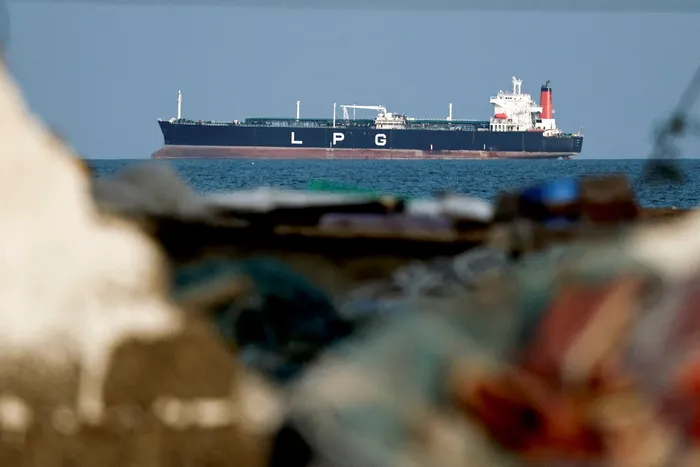
Most people don't realize that Iran and Russia haven't actually stopped producing oil. They’ve just gotten really good at hiding it. There’s a "ghost fleet" of aging tankers circling the globe, turning off their transponders and swapping oil in the middle of the ocean to bypass US restrictions. NBC News has provided coverage on this important issue in great detail.
It’s a massive, inefficient, and expensive shadow market.
When you lift sanctions, that inefficiency disappears. Suddenly, Iran can move its roughly 1.5 million barrels of daily exports through legitimate channels without paying massive "risk discounts" to middleman traders in Malaysia or China. Russia, currently constrained by the G7 price cap, would no longer have to rely on a ragtag fleet of shadow vessels that are basically floating environmental disasters.
Efficiency equals lower prices. It's that simple. If these two nations can sell their oil on the open market like everyone else, the cost of shipping and insurance drops. That savings gets passed down. We're talking about a potential influx of 2 to 3 million barrels per day hitting a market that is already struggling with slowing demand from China.
Why OPEC Can't Stop the Bleeding
You might think Saudi Arabia and the rest of the OPEC+ cartel would just cut production to keep prices high. They’ve tried that. It didn’t work as well as they hoped.
The problem is that OPEC+ is already cutting deep. They’re exhausted. If the US welcomes Iran and Russia back into the fold, the internal tension within the cartel will likely reach a breaking point. Why would the UAE or Kuwait keep their pumps turned off while Tehran and Moscow grab all the market share? They won't.
I’ve watched this play out before. When the market gets oversupplied, the "every man for himself" mentality takes over. You end up with a price war. Remember 2020? Or 2014? It’s a race to the bottom. If sanctions drop, the "softening" of the market won't be a gentle landing. It’ll be a high-speed collision with reality.
The Real Numbers Behind the Shift
Let's look at the actual data. Iran has the technical capacity to ramp up to nearly 4 million barrels per day within months of a deal. They have millions of barrels just sitting in offshore storage, waiting for a legal buyer. Russia, despite the war in Ukraine, has remained remarkably resilient. Their production has stayed around 9.5 million barrels per day, but they are selling it at a steep discount to India and China.
If those sanctions go away, the "Urals" discount—the gap between Russian oil and the global Brent benchmark—narrows. This sounds like it would help Russia, and it does. But for you, it means the overall global price moves down because the world’s largest buyers aren't competing for a limited pool of "sanction-free" oil anymore.
The Political Reality Nobody Wants to Admit
Politicians talk about energy independence, but they’re terrified of what happens if they actually let the market run wild. Lifting sanctions is a double-edged sword. On one hand, you get $2.50 gas and happy voters. On the other hand, you hand a massive financial lifeline to your biggest geopolitical rivals.
It's a trade-off. The Biden administration, and whoever follows in 2026, has to balance the cost of living against national security. But from a purely economic standpoint, the "Foreign Affairs Expert" consensus is right. The sanctions are a dam. If you break the dam, the water flows.
What This Means for Your Portfolio
If you're holding heavy positions in US shale or big oil companies like Exxon and Chevron, a lifting of sanctions is your worst nightmare. US shale is expensive to get out of the ground. It needs oil to stay above $60 or $70 a barrel to really make sense. Iran and Russia? They can produce at $20 or $30 and still keep the lights on.
A flooded market kills the American energy boom. We’ve seen rigs go dark the moment the price dips. If you're an investor, you need to watch the headlines out of Vienna and Washington closer than the earnings reports. A single signature on a diplomatic treaty could devalue your energy stocks overnight.
How to Prepare for the Shift
Don't wait for the official announcement to move. The market prices these things in early.
- Watch the spreads. If you see the gap between Brent and WTI narrowing, it’s a sign the market is anticipating more global supply.
- Diversify away from pure-play drillers. If the market softens, the companies that own the pipes and the refineries usually fare better than the ones doing the digging.
- Keep an eye on China. If China’s economy stays sluggish while sanctions are lifted, we aren't just looking at "soft" prices. We're looking at a total collapse.
The era of $100 oil is over for now. The world is swimming in the stuff, and the only thing keeping it expensive is a set of signatures in Washington D.C. If those pens start moving, your fuel costs are going down, and the energy sector is in for a very rude awakening.
Check your energy sector exposure now. If your portfolio is 20% or more in upstream oil and gas, you’re essentially betting that the US will keep these sanctions forever. That’s a risky bet to make in an election cycle where inflation is the number one complaint from voters.