If you’re heading to the airport this Monday, don’t be surprised if the person checking your ID or managing the bins isn't wearing the standard blue TSA uniform. President Trump has officially ordered Immigration and Customs Enforcement (ICE) agents to deploy to major American hubs to help manage the chaos of security lines. It’s a move that’s already sparking heated debates over traveler privacy, federal overreach, and whether this actually fixes the wait times or just creates a new kind of bottleneck.
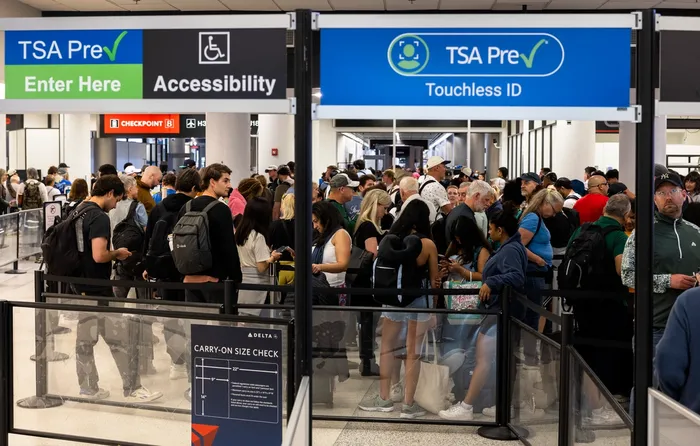
The logic from the White House is straightforward. TSA is stretched thin. Travel volume is hitting record highs. By pulling ICE personnel from their traditional roles and placing them in "non-enforcement" capacities at checkpoints, the administration claims it can keep the lines moving. But if you’ve spent any time in a Newark or LAX security queue lately, you know that adding more boots on the ground doesn't always mean the line moves faster.
The Reality of ICE at the Checkpoint
Most people hear "ICE" and immediately think of deportation raids or border operations. That’s their primary directive. However, starting Monday, you’ll see them in a role that’s more "customer service with a badge." They won't be performing the actual X-ray screening—that requires specific certification they don't have. Instead, they’ll be handling the "soft" tasks. Think queue management, document checking, and directing traffic.
It’s a Band-Aid solution for a massive staffing gap. TSA has struggled with retention for years. Low pay, high stress, and the constant barrage of angry travelers make it a tough gig. By shifting ICE agents, the government is basically "borrowing from Peter to pay Paul." These agents are being pulled away from their core missions to stand in a terminal and tell people to take their laptops out of their bags. It’s a weird use of highly trained federal law enforcement resources.
What This Means for Your Privacy
There’s a massive elephant in the room here. When an ICE agent looks at your boarding pass and ID, what are they actually doing with that data? The administration insists these agents are there strictly for "operational support." They say it isn’t a backdoor way to run immigration checks on domestic flyers.
But let’s be real. ICE agents are trained to spot discrepancies that a standard TSA agent might miss. Even if they aren't officially "on the hunt," their presence changes the vibe of the airport. For international travelers or those with complicated visa statuses, this adds a layer of anxiety that a vacation shouldn't have. If an agent sees something "suspicious" while they’re supposed to be just directing traffic, they aren't just going to ignore it. They’re still federal officers.
Why TSA Staffing is Such a Mess Right Now
We have to look at why we’re even in this position. TSA isn't just short on people; they’re short on morale. According to recent data from the American Federation of Government Employees (AFGE), the union representing TSA workers, the agency has faced a "revolving door" of employees.
The pay raises approved by Congress helped, but they didn't solve the burnout. When travel surges happen, like the ones we’ve seen throughout 2025 and into 2026, the system buckles. Using ICE agents is a loud, visible way for the administration to say they’re doing something, even if the long-term fix requires actually fixing the TSA's internal culture and pay structure.
Navigating the Monday Morning Rush
If you’re flying out this week, your strategy shouldn't change much, but your patience level needs to. Here is how to handle the new "hybrid" security environment:
- Arrive earlier than usual. Even with extra hands, the first few days of a new inter-agency rollout are always clunky. Agents from different departments have different protocols. Communication will likely be a mess for the first 48 hours.
- Have your physical ID ready. Don't rely solely on digital IDs if you're in a city where ICE is deploying. They may be more sticklers for traditional documentation during this transition.
- Keep it moving. Don't stop to ask the ICE agents about their specific orders or start a political debate. It won't help you get to your gate faster, and it definitely won't help the person behind you.
The Cost of Moving Agents Around
Every ICE agent standing at an airport terminal is an agent not working on human trafficking cases, worksite enforcement, or border security. This shift isn't free. There’s a massive "opportunity cost" here. The administration is betting that the public’s frustration with long airport lines is a bigger political liability than a temporary dip in ICE’s core enforcement activities.
It’s a gamble. If a major ICE investigation stalls because the lead agents were busy telling people to take their shoes off in O'Hare, the blowback will be significant. On the flip side, if wait times drop from 60 minutes to 15, the administration gets a "win" they can point to.
Will This Actually Speed Things Up?
Probably not as much as you'd hope. The bottleneck at security usually isn't the guy checking IDs. It’s the number of open X-ray lanes and the speed of the scanners. Adding ten people to manage the line doesn't matter if there are only two belts running. Unless these ICE agents are also trained to operate the tech—which they aren't—the "throughput" remains the same.
You might see more "pre-screening" or faster document checks, but the physical reality of the X-ray machine is the ultimate gatekeeper. This move is more about optics and "crowd control" than it is about technical efficiency.
What to Watch For Next
Keep an eye on the major "Category X" airports—places like ATL, JFK, and DFW. These are the likely spots for the heaviest ICE presence. If you see a sea of different uniforms, don't panic. It's just the new normal for the foreseeable future.
The administration hasn't given an end date for this "temporary" assistance. Usually, in government speak, "temporary" can mean months or even years. If this "pilot program" goes well, we might see a permanent inter-agency task force designed specifically for peak travel seasons.
Before you head to the gate, check your airline's app for real-time wait updates. Most apps are now integrating TSA data more accurately than the physical signs in the terminal. If the line looks long, it probably is, regardless of who is standing at the front of it.
Expect some confusion, some friction, and a lot of social media posts showing agents in the wrong place. The best way to deal with it is to be the most prepared person in the line. Pack your liquids correctly, wear shoes that slip off easily, and have your boarding pass pulled up before you hit the front. Whether it’s a TSA agent or an ICE agent, they just want you to move through so they can get to the next person. Be that person who moves through without a hitch.