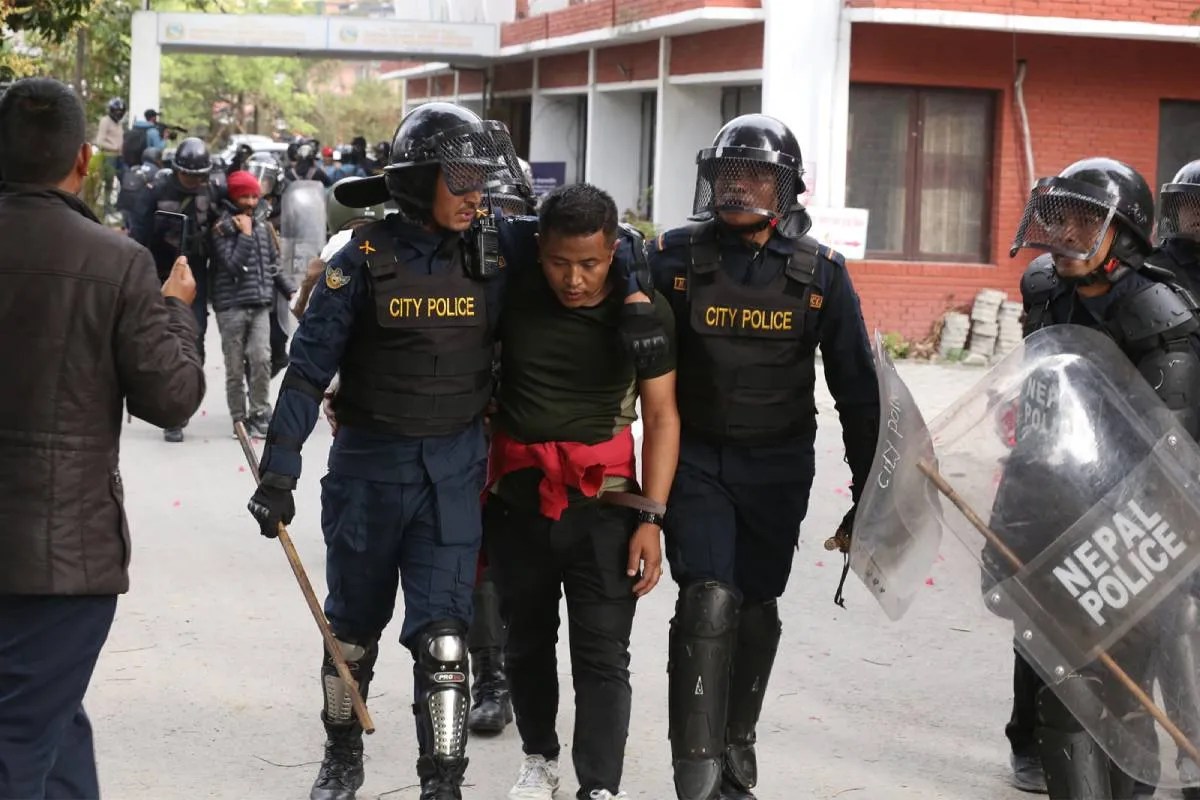
You’ve probably seen them. They aren't wearing the blue TSA uniforms or the crisp white shirts of airline pilots. Instead, they’re in tactical vests with "ICE" or "CBP" emblazoned across the back, moving through the terminal with a purpose that has nothing to do with checking your 3.4-ounce shampoo bottle.
If you feel like there are more federal agents at the airport lately, you aren't imagining things. It's a shift that reflects a messy intersection of border policy, stretched resources, and a massive spike in travel volume. While the TSA handles the scanners, Immigration and Customs Enforcement (ICE) and Customs and Border Protection (CBP) are increasingly visible in domestic spaces. This isn't just about catching people overstaying visas. It’s a response to a system that’s currently redlining.
Why ICE is Suddenly Everywhere Near Your Gate
Most people assume ICE stays at the border or conducts raids in neighborhoods. That's a dated view. The Department of Homeland Security (DHS) has been shifting personnel to major transit hubs because that's where the data points to the highest risk. Airports are no longer just travel points. They've become processing centers.
The surge in personnel is tied to a specific mandate: "all-hands-on-deck." When the southern border sees a spike in arrivals, the ripple effect reaches Hartsfield-Jackson in Atlanta or O'Hare in Chicago within hours. ICE agents are being pulled from interior enforcement duties to assist with transport, identification, and security oversight at major airports. It's not a permanent reassignment for everyone, but the temporary duty assignments (TDAs) are becoming the norm.
The Security Line Crunch and Safety Concerns
It's easy to look at a sea of uniforms and feel a sense of security. But the reality is more complicated. The TSA is struggling with its own staffing shortages, and security lines are ballooning in cities like Denver and Seattle. When wait times hit two hours, the risk profile of the airport changes. Tempers flare, and security becomes more about crowd management than threat detection.
That's where ICE and CBP step in, often in roles that aren't technically theirs. They're helping to maintain a presence that acts as a deterrent for non-travel-related crimes while the TSA focuses on the X-ray machines. This "layered security" is a fancy way of saying everyone is doing a bit of everything. It's a stopgap, not a solution.
Beyond the Headlines: The Reality of What ICE Does at Airports
If you're a traveler, you're likely not the target of an ICE agent's attention unless you're arriving from an international flight and have a red flag on your manifest. But for those on the "no-fly" or "selectee" lists, the presence of ICE is a constant. They aren't just there to check passports. They’re there to execute warrants and coordinate with the FBI’s Joint Terrorism Task Force.
The friction happens when ICE's mission to enforce immigration law collides with the rights of domestic travelers. There have been recorded instances of ICE agents asking for identification from people on domestic flights, which has sparked a wave of legal challenges and privacy debates. It’s a gray area. While the Fourth Amendment protects against unreasonable searches, the "border search exception" gives federal agents a lot of leeway within 100 miles of any US border—which includes most major airports.
The Financial and Human Cost of More Agents
This isn't just about security. It's about a massive budget that's being diverted. Every ICE agent at an airport is an agent who isn't working on human trafficking cases or investigating child exploitation. The DHS budget for the 2024-2025 fiscal year has seen significant shifts, with billions allocated for "border security and enforcement" while "mission support" programs take a backseat.
What the Numbers Actually Say
Data from the DHS and the Bureau of Labor Statistics (BLS) shows a 5% to 10% increase in federal law enforcement presence at "Category X" airports—the busiest ones in the country—over the last 18 months. This coincides with a 20% jump in international arrivals and a nearly 15% increase in "enforcement actions" taken at transit hubs.
These enforcement actions aren't always arrests. They can be secondary screenings, document seizures, or denied entries. For the average traveler, this means a slower process. Even if you aren't the one being pulled aside, the resources required for a single "enforcement action" can tie up a gate or a security lane for an hour or more. It’s a logistical nightmare that airlines are quietly fuming about.
Addressing the Misconception: Are ICE Agents Doing TSA Work?
Let's clear this up: No, an ICE agent isn't going to pat you down at the X-ray machine or check your boarding pass at the gate for a flight from New York to LA. Their jurisdiction is different. They focus on the legal status of individuals and the legality of goods entering or leaving the country.
However, their presence is often used as a "force multiplier." When the TSA is overwhelmed, seeing an ICE agent nearby keeps people from trying anything stupid. It’s a psychological tactic as much as it is a tactical one. But this "security theater" doesn't necessarily make the airport safer. In fact, some experts argue that having too many agencies with overlapping jurisdictions can lead to communication breakdowns.
The Legal Grey Zone of Domestic Interrogations
One of the most controversial aspects of ICE's airport presence is the "request" for identification on domestic flights. Technically, you aren't required to show an ICE agent your ID for a domestic flight if you've already cleared TSA. But in practice, most people comply because they don't want to miss their flight.
Legal advocacy groups like the ACLU have been documenting these encounters. Their advice is usually simple: Ask if you're being detained and if you're free to leave. If the agent says yes, you can walk away. But in the high-stress environment of an airport terminal, few people have the confidence to challenge a federal agent in a tactical vest. This power dynamic is exactly what the DHS relies on to maintain control.
Impact on International Travelers
If you're traveling on a visa or a green card, the presence of ICE is a much bigger deal. The "border search exception" allows agents to search your phone, laptop, and luggage without a warrant. In 2023, the number of electronic device searches at US ports of entry reached record highs, and airports are the primary site for these searches.
It's not just about what's in your bag. It's about what's on your cloud storage. The legal battle over whether a password can be compelled is still raging in the courts, with different circuits coming to different conclusions. For now, the safest bet for any traveler is to assume that anything on their device could be subject to federal scrutiny.
How to Navigate the New Airport Reality
So, what does this mean for your next trip? It means the "two hours before a flight" rule is no longer just a suggestion. It’s a requirement. The increased federal presence isn't making things faster. It's making them more deliberate.
Practical Steps for Your Next Flight
- Check the flight manifest and terminal updates through your airline's app. If there's a heavy security presence, they'll often send a notification.
- Know your rights. You have the right to remain silent and the right to an attorney if you're being detained. You don't have to consent to a search of your electronic devices, though agents can seize them for later inspection.
- Keep your documents organized. Even on a domestic flight, having a valid Real ID or passport can save you a lot of time if you're questioned by federal agents.
- Don't engage in "security theater" yourself. Avoid jokes about security, and be prepared for more questions than usual.
The reality of US airports in 2026 is that the line between "domestic travel" and "border enforcement" is blurring. Whether you agree with the policy or not, the presence of ICE is a permanent fixture of the modern travel experience. It's a response to a world that feels increasingly unstable, and for now, the federal government is betting that more uniforms equal more safety.
Before you head to the terminal, make sure your Real ID is up to date and your devices are encrypted. If you're traveling internationally, consider leaving non-essential data at home. The goal is to get through the gate with as little friction as possible. Plan for the extra time, stay calm, and keep your documents ready. Your flight will leave with or without you, and no amount of complaining about the security line will change the federal mandate at the gate.