Russia recently pulled 198 nuclear specialists out of Iran following a series of strikes near Iranian atomic facilities. While public statements frame this as a standard safety precaution, the reality points to a massive crack in the Moscow-Tehran alliance. Russia is not just protecting its people. It is actively signaling to the West that its commitment to Iran's nuclear ambitions has strict limits.
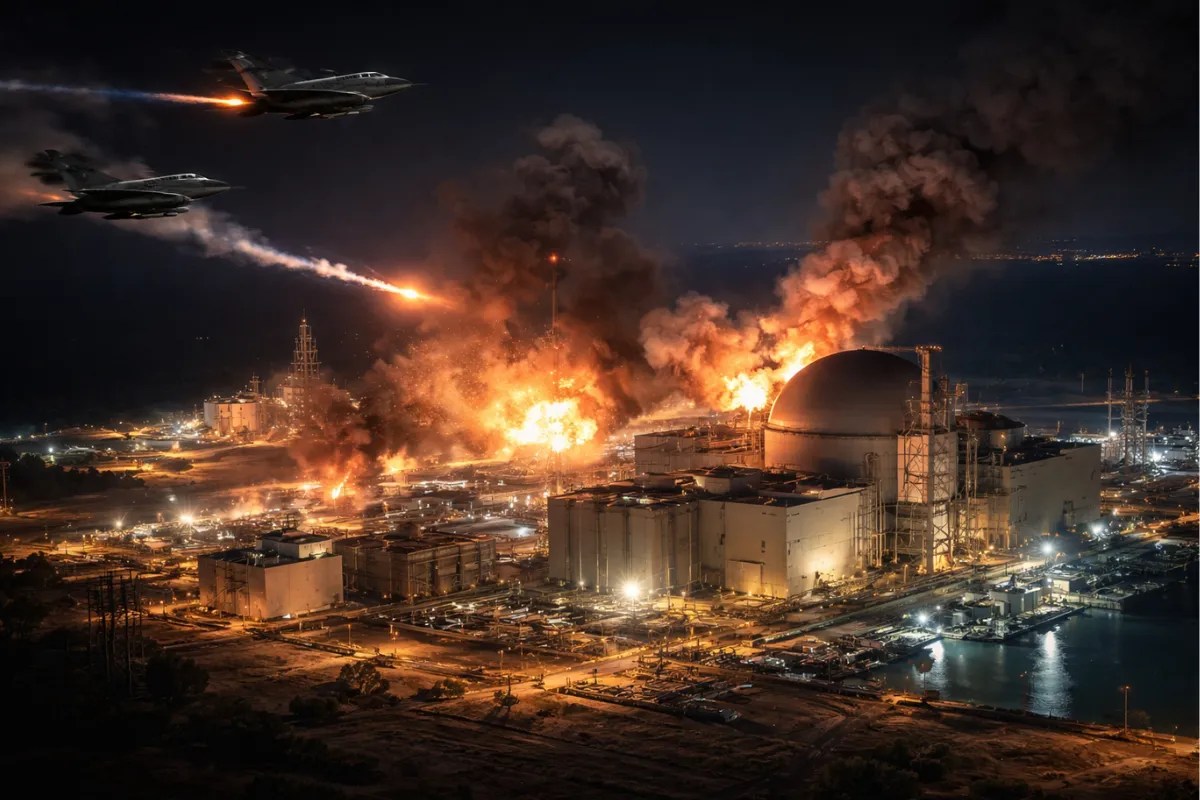
The immediate trigger was a set of precision strikes that landed dangerously close to Iran's nuclear infrastructure. Moscow watched the telemetry, assessed the vulnerability of its top-tier scientists, and made a swift, unsentimental decision to get them out.
But to understand the true gravity of this withdrawal, we have to look past the immediate panic.
The Myth of the Unbreakable Axis
For the past few years, defense analysts have painted Russia and Iran as an inseparable block. Iran supplies the drones that strike Ukrainian cities. Russia provides diplomatic cover at the UN and promises advanced air defense systems. It looks like a perfect marriage of convenience.
It is not.
The relationship is purely transactional, and transactions fail when the cost of doing business gets too high. By pulling nearly 200 of its brightest nuclear minds out of the country, Russia is admitting that it cannot protect its own assets inside Iranian borders.
Consider the specialized nature of these workers. They are not easily replaced laborers. They are engineers trained in Soviet-era and modern Russian nuclear physics, specifically adapted to Iran's unique energy grid and enrichment facilities. Leaving them there risked losing irreplaceable human capital.
Worse for Tehran, the evacuation serves as a massive psychological blow. It tells the world that when the pressure increases, Russia will choose self-preservation every single time.
Decoding the Bushehr Vulnerability
Much of the international focus stays locked on Natanz and Fordow, the underground enrichment sites where Iran spins its centrifuges. But Russia's primary footprint is at Bushehr.
Bushehr is a unique beast. It is a light-water reactor that originally started with German designs in the 1970s before being completed by Russian state corporation Rosatom decades later. It sits on the coastline, making it a much softer target than the facilities buried deep under mountains.
If Bushehr is hit, the consequences are not just political. They are environmental.
- Proximity to water: A strike on a running reactor on the Persian Gulf could cause catastrophic ecological damage, poisoning waters that multiple nations rely on for desalination.
- Supply chain paralysis: The plant relies heavily on Russian-supplied fuel rods and technical maintenance. Without Russian experts on site, operations become a high-wire act without a net.
- Air defense failures: The fact that Russia felt the need to evacuate suggests they have zero confidence in Iran's ability to intercept modern stealth aircraft or ballistic missiles targeting the site.
Iran has spent billions claiming its skies are defended by Russian-made S-300 systems and its own domestic copies. Russia's retreat proves those claims are hollow.
A History of Calculated Abandonment
To anyone who has watched Moscow's foreign policy for more than a week, this should come as no surprise. Russia has a long history of leaving its partners in the lurch when the math no longer works in its favor.
Look back to the 1990s and early 2000s. Russia routinely delayed the construction of Bushehr to use it as a bargaining chip with the United States and Europe. When Moscow needed economic concessions or sanctions relief from the West, progress at Bushehr would mysteriously slow down. When relations soured, construction picked back up.
This is simply the latest chapter in that playbook.
By pulling these specialists now, Vladimir Putin sends a dual message. To Israel and the United States, he is saying: We are stepping out of the line of fire; do not hit our people if you decide to go after the regime. To Iran, the message is darker: You are on your own if this escalates into a full-scale war.
The Secret Technical Reality of Iran's Nuclear Grid
Let us look at the raw physics of what happens when you remove 198 specialized engineers from a operational nuclear environment.
A nuclear reactor is not a car you can simply turn off and walk away from. It requires constant monitoring of thermal dynamics, neutron flux, and coolant pressure. Russian experts do not just sit in offices reading charts. They manage the heavy telemetry and software systems that keep the reactor stable.
If Iran attempts to run these facilities at full capacity without Russian oversight, the risk of operational failure spikes.
Iran possesses highly capable scientists of its own. They are brilliant, resourceful, and have kept a complex program running under decades of crippling sanctions. But they are trained on specific enrichment protocols. The heavy engineering required to keep a massive power reactor like Bushehr running safely without the original manufacturer's support is a different discipline entirely.
If Moscow refuses to send these experts back, Iran faces two brutal choices. They can scale back operations and lose face, or they can push forward and risk a mechanical disaster that could mirror Chernobyl or Fukushima.
What This Means for Global Oil and Security
The ripple effects of this Russian withdrawal go far beyond the borders of Iran.
The energy markets are incredibly twitchy. Any sign that a major conflict is brewing near the Persian Gulf sends insurance rates for oil tankers through the roof. By signaling that a conflict is likely enough to warrant a mass evacuation, Russia has inadvertently added a risk premium to global oil prices.
Then there is the issue of nuclear proliferation.
If Iran feels completely abandoned by its primary superpower patron, its leadership might decide they have nothing left to lose. The argument inside Tehran's hardline circles has always been that only a fully realized nuclear weapon can guarantee the survival of the Islamic Republic.
With Russian technicians gone and the threat of strikes looming, the voices demanding that Iran cross the 90 percent enrichment threshold and build a bomb will only grow louder.
The Intelligence Failure Nobody is Mentioning
There is another angle to this story that the mainstream press has entirely missed. How did Russia know exactly when to pull its people out?
Evacuating 198 people on short notice requires logistics, aircraft, and precise timing. It is not something done on a sudden hunch. It points to a massive intelligence network operating at the highest levels.
There are only two ways Russia got the information necessary to make this call:
- Backchannel communication: Western or Israeli intelligence warned Moscow directly that strikes were imminent and gave them a window to get their personnel out to avoid a direct confrontation between superpowers.
- Signal interception: Russian electronic intelligence picked up the distinct signatures of an impending strike package and acted autonomously.
Either scenario should terrify the Iranian regime. If it was the former, it proves that Russia is cooperating with Iran's enemies behind closed doors. If it was the latter, it proves that Iran's own communications are totally compromised, and they cannot hide their vulnerabilities from anyone.
The Coming Breakdown
Do not expect a public shouting match between Moscow and Tehran over this. Both sides need to maintain the illusion of a united front against Western hegemony. Iran cannot afford to look isolated, and Russia cannot afford to lose its primary supplier of cheap loitering munitions.
But behind closed doors, the trust is shattered.
Iran now knows that Russia views them as expendable. Moscow knows that Iran's nuclear sites are a liability that could drag Russia into a wider war it is currently ill-equipped to fight.
The engineers are sitting in Moscow or operating from remote terminals far away from the Persian Gulf. They are safe. The infrastructure they left behind is not.
If you want to know how close we are to a regional explosion, do not listen to the speeches at the UN or the press releases from state media. Watch the flights leaving Tehran. When the Russian planes stopped flying in, the countdown clock ticked closer to zero.
The next move belongs to Iran. They can either scale back their enrichment to entice their partners back, or they can push ahead in total isolation. History shows that cornered regimes rarely choose the path of de-escalation.