The headlines are predictable. They are safe. They are lazy. "200,000 flee Lebanon for Syria," the UNHCR reports, and the collective media apparatus sighs in synchronized tragedy. They want you to see a humanitarian vacuum. They want you to see a desperate, one-way exodus driven by the localized flashpoint of Israeli airstrikes.
They are missing the tectonic shift under their feet.
What we are witnessing in March 2026 isn't just a "flight from danger." It is the brutal, systematic collapse of the post-2011 humanitarian model. For a decade, the narrative was that Lebanon was the "host" and Syria was the "hellscape." That binary is dead. When 200,000 people—mostly Syrians who originally fled to Lebanon years ago—decide that a country still technically in a state of civil war is safer than a collapsing "democracy" next door, you aren't looking at a refugee crisis. You are looking at the total bankruptcy of Lebanese sovereignty and the terrifying normalization of the Syrian status quo.
The Myth of the Safe Haven
The "lazy consensus" suggests these people are running from bombs. Sure, bombs are a compelling motivator. But look at the data the NGOs won't highlight. Lebanon has been a pressure cooker for years. Inflation is a terminal disease there. The Lebanese Pound isn't currency; it’s colorful wallpaper.
I have spent years tracking the movement of displaced populations across the Levant. I’ve seen the "battle scars" of aid workers who tried to maintain the illusion that Lebanon could sustain its refugee population. It couldn't. The Lebanese government, paralyzed by sectarian gridlock, has spent the last three years making life a living hell for Syrians. They restricted work permits. They conducted midnight raids. They blamed the "refugee burden" for their own systemic corruption.
The 200,000 people who crossed the border in March didn't just "flee." They were pushed by a decade of structural xenophobia and pulled by a grim realization: Assad’s Syria, with all its mukhabarat and ruins, offers a perverse kind of stability that a disintegrating Lebanon cannot.
Syria Is Not Recovering It Is Just Winning
Let’s dismantle the next delusion. Some analysts—the ones who like to whisper in the halls of Dubai hotels—suggest this return indicates Syria is "ready" for repatriation.
Wrong.
Syria is a graveyard with a gatekeeper. These 200,000 people are not returning to a "recovering" nation. They are returning to a country where the Syrian Arab Army and its allies have simply outlasted the world's attention span. The UNHCR numbers are being used by the Damascus regime as a PR victory. They see these 200,000 people as leverage.
When you see a mother carrying her child across the Masnaa crossing, she isn't thinking about "repatriation strategies." She is calculating the cost of bread. In Beirut, that bread is priced in a currency that devalues while she waits in line. In Damascus, the bread is subsidized by a regime that will demand her sons for the military in exchange for that loaf.
It’s a choice between dying of hunger in a "free" country or living in a cage where the feeder still works.
The Aid Industry’s Great Failure
Why didn't the $10 billion+ in international aid funneled into Lebanon since 2011 prevent this? Because the aid industry is addicted to "resilience" buzzwords while ignoring the reality of state failure.
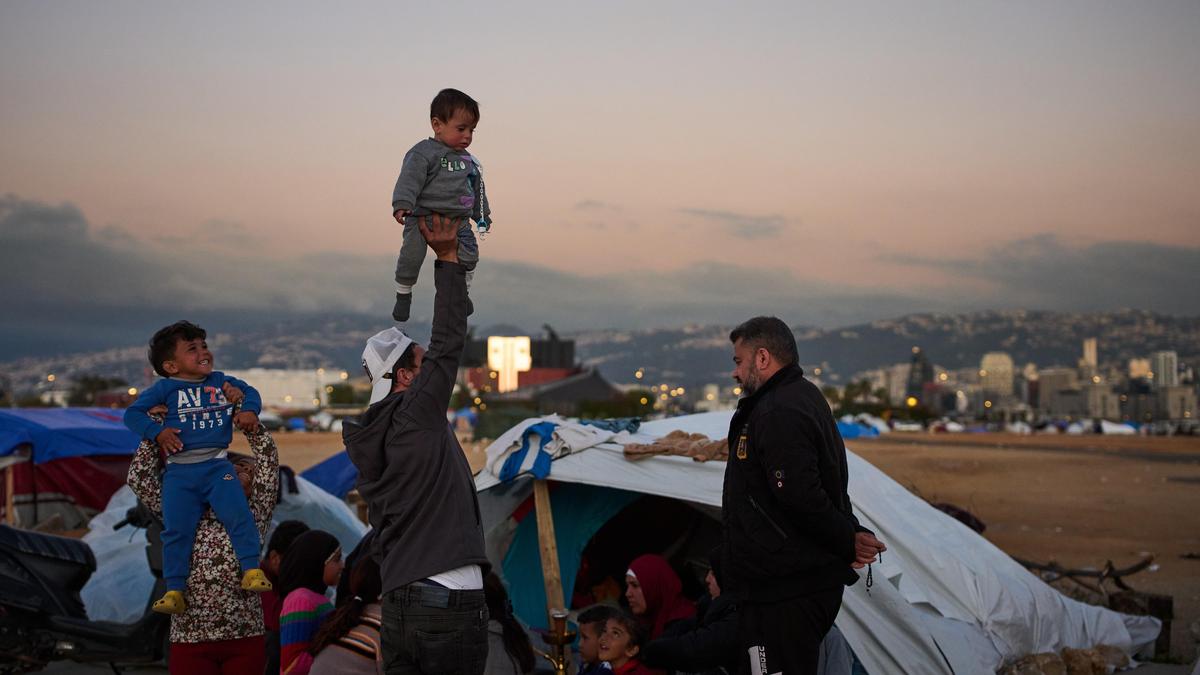
The UNHCR and its partners built a "tapestry"—if I were allowed to use that banned word, which I'm not—of temporary fixes. They built tented settlements that became permanent slums. They funded schools that Lebanese locals weren't allowed to attend, fueling a resentment that has now boiled over into the violence we see.
The displacement we saw in March is the bill coming due. The international community tried to use Lebanon as a warehouse for human beings. They thought they could pay the Lebanese government enough to keep the "problem" away from Europe’s borders. But you can't buy stability in a country where the central bank is a Ponzi scheme.
The Demographic Trap
Let’s talk about the math nobody wants to touch.
Lebanon's population is roughly 5.4 million. At the start of the year, it was estimated they hosted 1.5 million Syrians. That’s the highest refugee-per-capita ratio in the world. When the Israeli-Hezbollah conflict escalated in the south, the fragile social contract snapped.
The 200,000 who left aren't just "refugees." They are the labor force. They are the construction workers, the farmers, and the cleaners. Their "flight" is a massive capital flight of human labor. Lebanon’s economy, already in a coma, just lost its heartbeat.
Meanwhile, Syria gains a population it can tax, conscript, and use as a shield against further international sanctions. "Look," the regime says, "the people are coming back. Lift the Caesar Act." It’s a cynical, brilliant play.
What People Also Ask (And Why They Are Wrong)
"Is it safe for refugees to return to Syria now?"
This is the wrong question. Safety is relative. Is it "safe" to stay in a Lebanese basement while the IAF targets a Hezbollah launcher next door? No. Is it "safe" to return to a village in Homs where you might be disappeared by the secret police? Also no. The 200,000 aren't looking for safety; they are looking for the slowest way to die.
"Will this stop the migration to Europe?"
Quite the opposite. Syria cannot absorb these people. The infrastructure is dust. The water is contaminated. These 200,000 are just stopping in Syria to catch their breath before they realize the only way out is the Mediterranean. March was the prologue. The summer sailing season will be the main event.
"Can the UN intervene?"
The UN is a logistics company with a flag. They can hand out blankets and track numbers. They cannot stop a sovereign state like Lebanon from becoming a failed state, and they cannot stop a dictator like Assad from reaping the benefits of his neighbor's collapse.
The Hard Truth of the Levant
Stop looking at the March numbers as a temporary spike. This is the new regional order.
The "host" countries are broken. The "source" countries are consolidated. The people in the middle are being crushed between a rock and a hard place, and they’ve decided the hard place at least has a roof, even if that roof is in a war zone.
We are seeing the end of the "Refugee Crisis" as a discrete event and the beginning of "Permanent Displacement" as a regional lifestyle. If you think 200,000 is a big number, wait until the Lebanese state stops paying its soldiers entirely. Then you’ll see what a real exodus looks like.
The era of the "safe third country" is over. There are no safe countries left in the Levant. There are only countries that haven't finished burning yet.
Pack your bags or buy a weapon. Those are the only two strategies left in Beirut.
The UNHCR didn't report a migration. They reported a surrender.