The rules of engagement just broke. While most of the world was watching for a slow de-escalation in the Middle East, the reality on the ground—and in the water—shifted toward a much more dangerous script. The recent U.S. strikes on military targets in Isfahan, coupled with Iran’s aggressive seizure of a fully loaded oil tanker off the coast of Dubai, isn't just another round of "tit-for-tat." It's a fundamental breakdown of the maritime safety norms that have kept the global economy breathing for decades.
You've probably seen the headlines about drones and missiles. But the real story is about the sheer audacity of the geography. Isfahan is the heart of Iran's military-industrial complex. Targeting it is a massive statement of reach. Conversely, hitting a tanker right off Dubai—one of the world's most sensitive transit hubs—is a direct threat to the wallet of every person on the planet. When the Strait of Hormuz gets twitchy, gas prices don't just go up; the entire supply chain holds its breath.
The Isfahan Reality Check
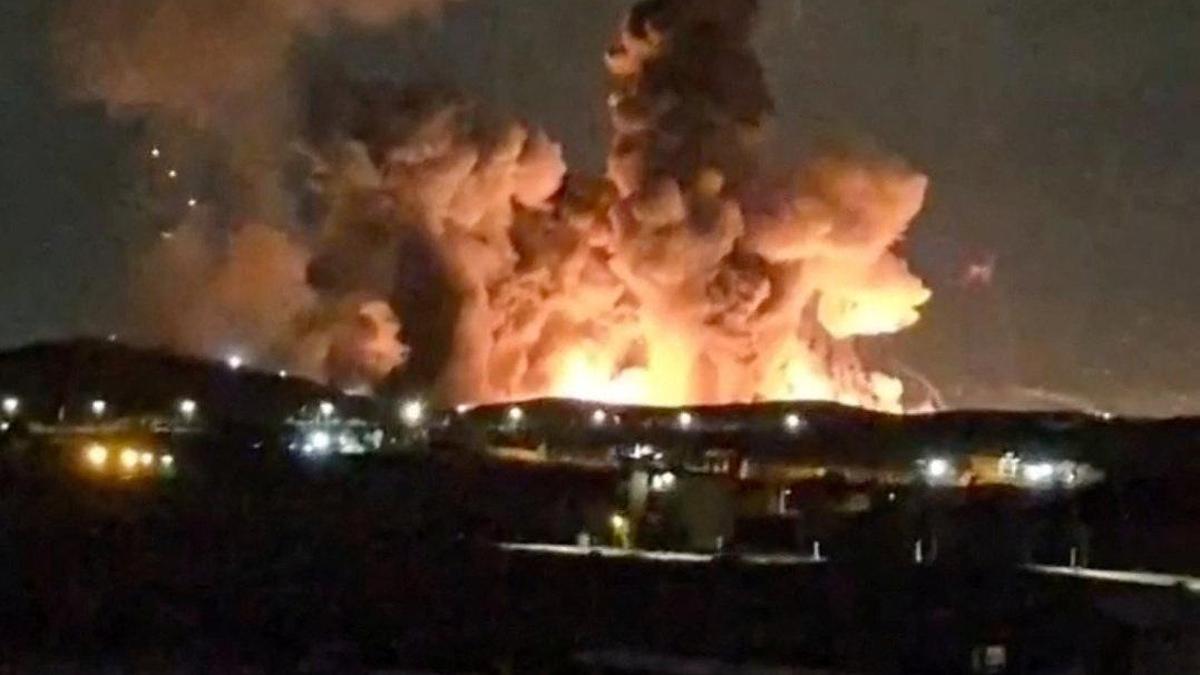
Isfahan isn't some backwater outpost. It houses the Khatam al-Anbiya Air Defense Academy and critical facilities linked to Iran’s nuclear program and drone production. When U.S. assets—reportedly using high-precision standoff munitions—hit these sites, they weren't just aiming for buildings. They were aiming for the Iranian government’s sense of internal security.
For years, there was a quiet understanding. You hit our proxies, we hit your assets in the Levant. That's over. By striking within the Iranian heartland, the U.S. has signaled that the "ring of fire" strategy—where Iran stays safe while its partners fight—is no longer a viable shield.
The technical precision of these strikes matters too. Reports indicate that Iranian radar systems in Isfahan, specifically those protecting the Natanz nuclear site, were the primary targets. This wasn't a carpet-bombing run. It was a surgical removal of the "eyes" of the Iranian defense system. If you can't see the threat coming, you can't stop the next one. That's the psychological pressure being applied here.
Why the Dubai Tanker Seizure is Different This Time
While the smoke was still clearing in Isfahan, the IRGC (Islamic Revolutionary Guard Corps) made their move off the coast of Dubai. This wasn't a random boarding. The vessel was a fully loaded Suezmax tanker, carrying over a million barrels of crude.
Most people think these seizures are about "legal disputes" over oil ownership. That's the PR version. The reality is that the tanker is a floating pawn. By grabbing a ship so close to the United Arab Emirates, Iran is telling the Gulf states that their American security guarantees are paper-thin.
- Proximity matters. Dubai's waters are supposed to be a safe zone. If a ship can be snatched there, it can be snatched anywhere.
- Cargo is leverage. A million barrels of oil is a $80 million hostage.
- The crew is caught in the middle. These sailors aren't combatants, yet they're being used as human shields in a high-stakes geopolitical poker game.
The insurance markets are already reacting. Lloyds of London and other major insurers don't like uncertainty. When the "war risk" premium goes up, the cost of everything from your morning coffee to your next car goes up with it. We're looking at a potential 15% to 20% spike in shipping costs if this corridor stays "hot" for more than a month.
The Nuclear Elephant in the Room
We have to talk about Natanz. It’s located near Isfahan, and it’s the center of Iran’s uranium enrichment. While the U.S. strikes reportedly avoided the nuclear facilities themselves, they hit the air defenses surrounding them.
That is a very specific type of threat.
It says, "We can get to you whenever we want."
The International Atomic Energy Agency (IAEA) has been sounding the alarm for months about Iran’s stockpile of 60% enriched uranium. That’s a skip and a jump away from weapons-grade. By neutralizing the defenses in Isfahan, the U.S. is essentially stripping the armor off Iran’s most prized asset. It’s a move designed to force Iran back to the negotiating table, but it’s a gamble that could just as easily trigger a "breakout" scenario where Iran decides their only safety lies in actually having a nuclear deterrent.
Breaking the Proxy Cycle
For a long time, the U.S. tried to play a game of whack-a-mole with groups like the Houthis in Yemen or militias in Iraq. It didn't work. The drones kept flying. The missiles kept launching.
The shift we're seeing now is a move toward "Direct Attribution."
If a drone made in Isfahan hits a U.S. base in Jordan or a ship in the Red Sea, the response now goes back to the source. It’s a more honest form of warfare, honestly. No more pretending that these groups are acting entirely on their own. But it’s also much more dangerous. When two sovereign nations start hitting each other’s soil and sovereign vessels, the path to a full-scale regional war becomes a lot shorter.
What Happens to Global Oil Supply
The Strait of Hormuz handles about 20% of the world's total oil consumption. If Iran decides to fully close the strait—or even just make it too expensive to insure ships—we aren't just talking about a price hike. We're talking about a global energy shock.
- China is the wild card. They buy a massive amount of Iranian oil. If the U.S. strikes continue to escalate, does Beijing step in to protect their supply?
- Saudi Arabia's silence. The Saudis have been trying to diversify their economy and move away from constant conflict. They're caught between wanting Iran's influence neutralized and fearing the fallout of a war on their doorstep.
- The U.S. Strategic Petroleum Reserve. It's at historic lows. Washington doesn't have the same "cushion" it had ten years ago to stabilize prices if things go south.
How You Should Read the Situation
Don't get distracted by the "all-out war" rhetoric you see on social media. Neither side actually wants a total conflict. The U.S. doesn't want another 20-year quagmire, and the Iranian leadership knows a full-scale war would likely end their reign.
Instead, look at the geography of the strikes.
When the U.S. hits Isfahan, they're telling the Iranian military that their "home base" is vulnerable. When Iran grabs a tanker off Dubai, they're telling the world that the global economy is a hostage. It's a fight for leverage.
The immediate concern for you isn't a missile hitting your backyard. It's the "stealth inflation" caused by these maritime disruptions. If you're invested in energy stocks or commodities, this volatility is your new baseline.
If you want to track where this goes next, stop looking at the political speeches. Watch the "tanker tracking" data. If ships start diverting around the Cape of Good Hope instead of risking the Persian Gulf, you'll know the situation has truly spiraled. You should also keep a close eye on the "war risk" insurance premiums for the Persian Gulf; they are the most honest indicator of how dangerous the water actually is.
Check the daily reports from the U.S. Naval Institute or the UK Maritime Trade Operations (UKMTO). They provide the raw data on incidents without the political spin. If the frequency of "harassment" incidents off the UAE coast increases, expect the U.S. to move more carrier strike groups into the North Arabian Sea. That’s the signal that the "holding pattern" is over and the next phase of the conflict has begun.