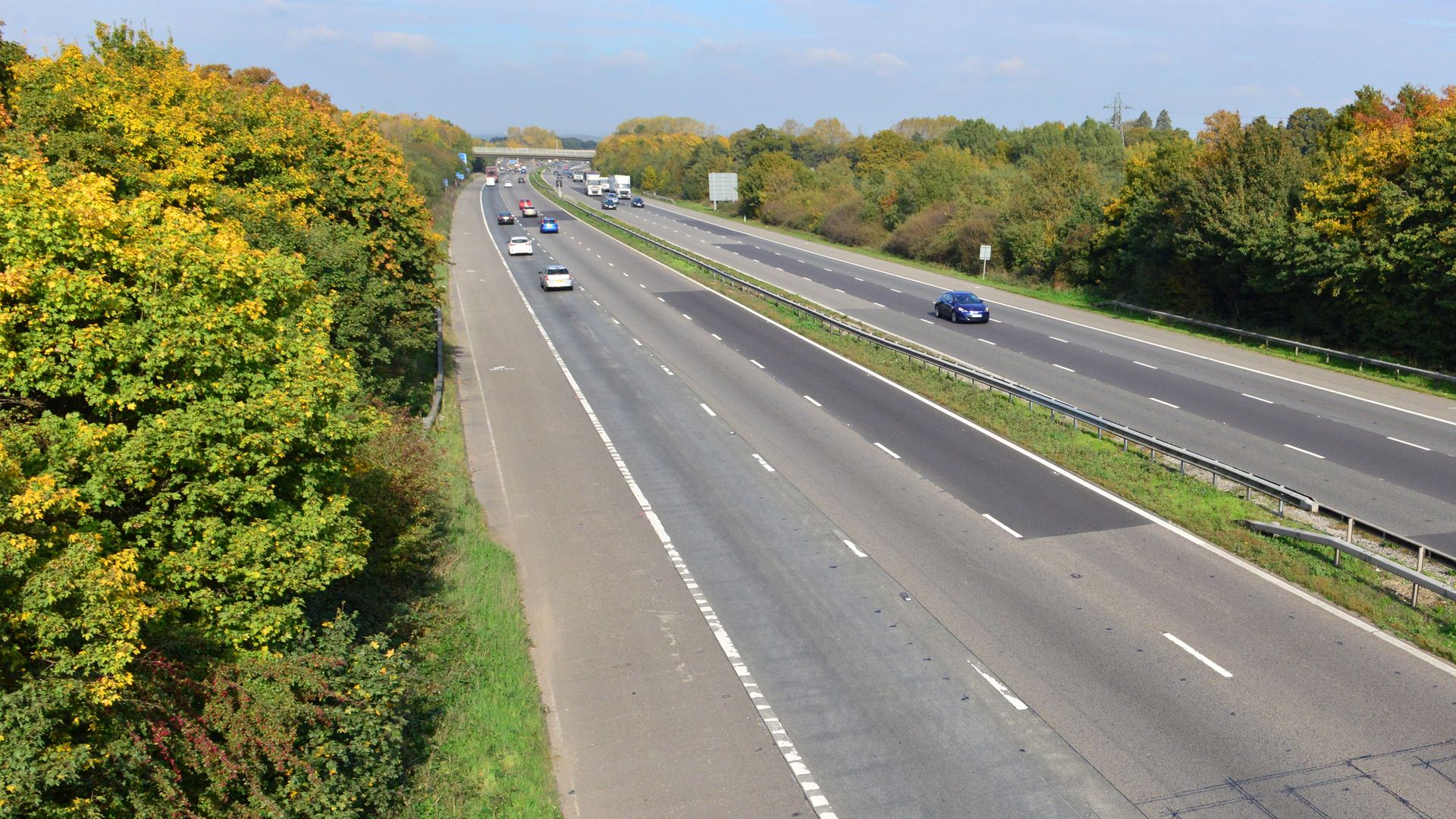
The fatal collision between a motorized vehicle and a horse-drawn pony and trap is not an isolated tragedy but a predictable outcome of divergent kinetic energy profiles and archaic infrastructure integration. When a modern vehicle, engineered for high-velocity displacement, shares a dual-carriageway or rural arterial road with a non-motorized vessel, the safety margin reaches near-zero levels. This specific incident involving a young girl and a man highlights a systemic failure to reconcile 19th-century transit methods with 21st-century logistics.
The Physics of Asymmetric Impact
To understand why these collisions result in high mortality rates, one must analyze the Kinetic Energy Differential. A standard passenger vehicle traveling at 60 mph possesses significantly higher momentum than a pony and trap moving at 10-12 mph.
$$E_k = \frac{1}{2}mv^2$$
In this equation, the velocity ($v$) of the motorized vehicle is squared, meaning even small increases in speed exponentially increase the force of impact. The pony and trap offer zero structural reinforcement. Unlike modern cars equipped with crumple zones, side-impact bars, and SRS airbags, a trap is a rigid or semi-rigid wooden and metal frame. Upon impact, the energy is transferred directly to the occupants and the animal.
The Visibility-Reaction Gap
The secondary mechanism of failure is the Perception-Reaction Time (PRT) Bottleneck. Drivers on high-speed rural roads develop a cognitive bias toward a "fluid traffic flow," expecting all objects in their lane to maintain a minimum velocity threshold.
- Closing Speed Paradox: A driver traveling at 70 mph approaching a vehicle at 60 mph has a closing speed of 10 mph. Approaching a trap at 10 mph creates a closing speed of 60 mph.
- Visual Recognition Lag: The human brain requires a specific interval to categorize an "atypical" silhouette. A horse and trap do not fit the standard rear-light profile of a car, often leading to a "looked-but-failed-to-see" (LBFTS) error where the driver perceives the object but fails to calculate the closing speed until they have breached the Point of No Return.
Infrastructure Incompatibility and Spatial Risk
The road network serves as the hardware upon which transit software runs. In many regions, particularly in the UK and Ireland where these incidents frequently occur, the infrastructure is a legacy system.
The Conflict of Multi-Modal Usage
The "Three Pillars of Rural Road Risk" define why these specific geographies are lethal:
- Geometric Constraints: Rural roads often lack hard shoulders or "slow-vehicle" turnouts. This forces the pony and trap to occupy the primary lane, creating a bottleneck that encourages high-risk overtaking maneuvers by motorized traffic.
- Surface Friction and Animal Behavior: Tarmac is optimized for rubber tires, not hooves. A horse startled by the acoustic signature of a high-performance engine or a heavy goods vehicle (HGV) has limited traction. Any lateral movement by the animal—a "spook"—instantly shifts the trap into the path of oncoming or trailing traffic.
- Lighting and Signage Deficits: While motorized vehicles are governed by strict lighting regulations (lumen output, reflector positioning), horse-drawn carriages often operate under ambiguous or poorly enforced standards. If a collision occurs at twilight or night, the lack of an active power source on the trap reduces its visibility to the range of the trailing car's headlights, which may be less than the distance required for an emergency stop at 60 mph.
Operational Limitations of Current Safety Frameworks
Current road safety policies rely heavily on "Shared Space" philosophy, which assumes that all road users can negotiate safety through mutual awareness. This is a flawed premise when the mechanical capabilities of the users are so disparate.
The Human Factor and Regulatory Grey Zones
The man and the young girl involved in this collision represent a demographic often found in traditional or recreational carriage driving. Unlike motorized drivers, operators of horse-drawn vehicles are not required to hold a license that mandates a standardized understanding of high-speed traffic dynamics. This creates a Competency Asymmetry.
- Regulatory Loophole: In many jurisdictions, there is no mandatory "Road Worthiness" test for a trap. Structural fatigue in the axle or hitch can lead to mechanical failure at the exact moment a car is passing, leaving no escape route.
- Acoustic Masking: The noise produced by the pony’s hooves and the wooden carriage can mask the sound of an approaching vehicle from behind, particularly if that vehicle is an Electric Vehicle (EV) with a low acoustic footprint.
Quantifying the Fatalities: Why "Improvement" is Stagnant
Fatalities in this sector do not decrease at the same rate as automotive fatalities because the safety innovations are one-sided. Automotive safety has seen a 40-year trajectory of improvement (ABS, ESC, AEB). Pony and trap technology is essentially stagnant.
The Survival Probability Curve for a person in a trap drops to near zero when the impact speed of the striking vehicle exceeds 40 mph. For a child, whose bone density and body mass are lower, the survival threshold is even tighter. The lack of a roll cage or seatbelts means that the primary cause of death is often secondary impact—being thrown from the trap onto the asphalt or into stationary objects like hedgerows or stone walls.
The Role of Post-Incident Analysis
Investigations into these collisions often focus on "driver error" or "animal behavior." This is a reductive approach. A more rigorous analysis looks at The Swiss Cheese Model of Accident Causation:
- Organizational Influence: Lack of dedicated lanes for non-motorized transport.
- Unsafe Supervision: Inadequate lighting or reflective gear on the carriage.
- Preconditions for Unsafe Acts: High speed limits (60 mph) on roads known to be used by slow-moving agricultural or traditional transport.
- The Unsafe Act: A momentary lapse in driver attention or an unpredictable animal movement.
When all these holes align, a fatality is the mathematically certain result.
Strategic Interventions for Rural Road Integration
Addressing the mortality rate of horse-drawn transit requires moving beyond "awareness campaigns" toward hard-coded safety requirements and infrastructural separation.
Active Visibility Requirements
The implementation of active, battery-powered LED lighting systems on all horse-drawn carriages should be non-negotiable. These systems must mimic the light signature of slow-moving agricultural machinery (e.g., amber beacons) to trigger the correct cognitive response in motorized drivers. Passive reflectors are insufficient; they rely on the following vehicle’s light source, which is often too late to prevent a collision in high-speed environments.
Segregated Transit Corridors
In areas with high densities of traditional horse-drawn transit, the "Greenway" model must be expanded. By decoupling high-speed motorized traffic from low-speed animal traffic, the probability of a "conflict point" is removed entirely. Where segregation is impossible, the "Virtual Lane" concept—using smart signage that detects slow-moving objects and automatically lowers the speed limit for the duration of the encounter—offers a technology-driven buffer.
Kinetic Management and Speed Capping
The most immediate method to reduce the severity of these collisions is the aggressive reduction of speed limits on "mixed-use" rural arteries. A reduction from 60 mph to 40 mph reduces the kinetic energy in a potential impact by over 50%. This creates a survivable environment rather than a lethal one.
The death of a young girl and a man in this context is the result of a system that permits high-velocity machinery to operate in the same physical space as unprotected, low-velocity entities. Without structural separation or a fundamental change in lighting and speed regulations, the physics of these encounters will continue to dictate the same tragic outcomes.
The strategic priority for regional transport authorities must be the immediate audit of all high-speed rural roads used by non-motorized transport, followed by the mandatory installation of active lighting on all non-motorized vessels. Reliance on driver "caution" is a failed strategy; the physics of the closing speed gap is too unforgiving for human reaction times to bridge.