The closure of Al Aqsa Mosque during Eid al-Fitr or Eid al-Adha represents a total breakdown of the status quo governing the Jerusalem holy sites. This event is not merely a logistical shift in prayer schedules; it is a profound disruption of the delicate equilibrium between administrative control, religious obligation, and regional security. To understand the impact of such a closure, one must analyze the intersection of the Status Quo Agreement, the Density Dynamics of the Old City, and the Escalation Ladder of the Levant.
The Tripartite Framework of Holy Site Access
Access to the Al Aqsa compound is governed by three competing variables that dictate the feasibility of religious assembly. When any of these variables reach a critical threshold, the administrative body—typically a combination of the Jerusalem Waqf and Israeli security forces—faces a binary choice: managed entry or total exclusion.
- Sovereignty Assertions: The legal and symbolic claim over the site by both the Jordanian-led Waqf and the State of Israel.
- Kinetic Risk Assessment: The probability of spontaneous civil unrest triggered by high-density gatherings in confined spaces.
- The Sanctity of the Calendar: The non-negotiable nature of the Eid prayer, which serves as a peak demand period for the site’s infrastructure.
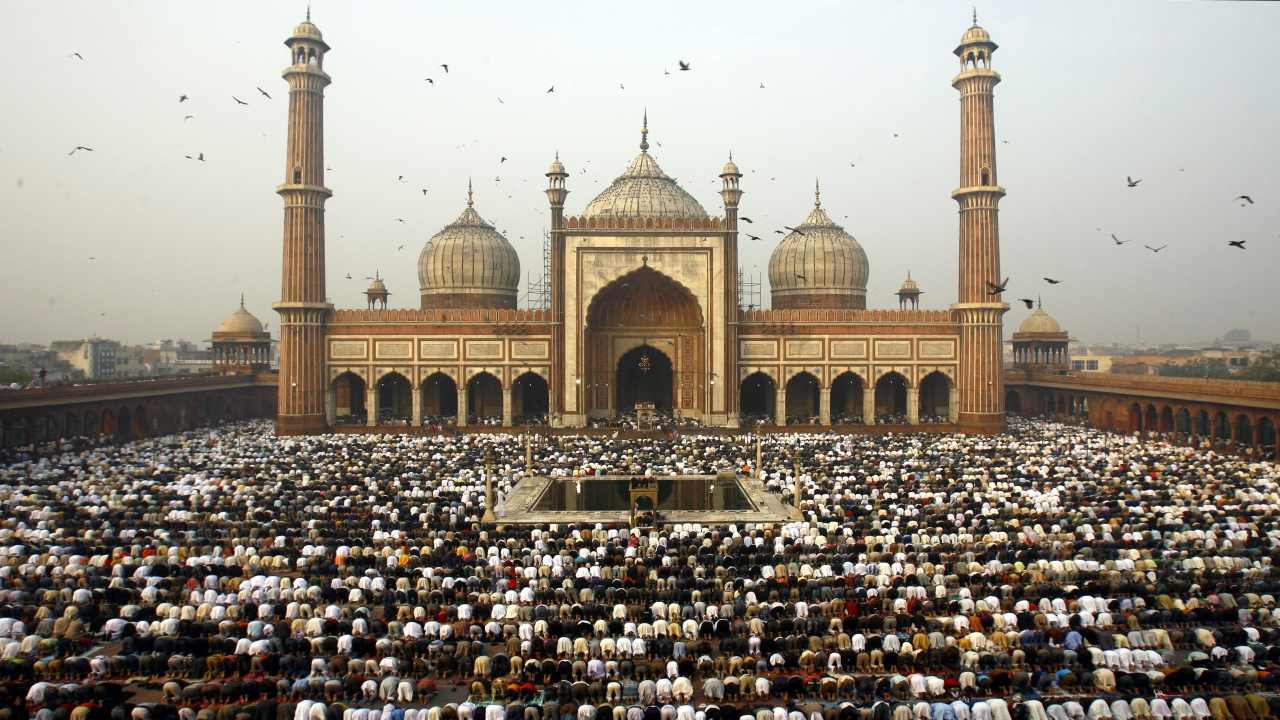
A closure during Eid represents the highest possible level of friction in this framework. Under normal operating conditions, the site accommodates between 50,000 and 200,000 worshippers for Friday prayers or holiday events. A forced closure indicates that the security apparatus has determined that the "Cost of Management" has exceeded the "Risk of Suppression."
The Mechanics of Exclusion
When a site of this magnitude is closed, the immediate effect is a displacement of thousands of worshippers into the narrow arteries of Jerusalem’s Old City. This creates a secondary security crisis. Instead of a centralized, managed crowd within the 35-acre Al Aqsa compound, the security forces face a fragmented, decentralized mass of people in the surrounding neighborhoods.
The Bottleneck Effect
The Old City’s gates—specifically Damascus Gate and Lions' Gate—act as hydraulic valves. Closing the mosque does not remove the people; it merely changes their state from "assembled" to "obstructed." This transition triggers several predictable outcomes:
- Spontaneous Street Congregations: Worshippers perform prayers at the closest possible point to the mosque, often at military checkpoints or in the middle of thoroughfares.
- Tactical Overreach: Security personnel must expand their perimeter to manage these smaller, more volatile clusters, diluting their presence and increasing the likelihood of localized confrontations.
- Information Asymmetry: In the absence of official access, rumors regarding the status of the site fill the vacuum, often accelerating the radicalization of the narrative on the ground.
Geopolitical Feedback Loops
The Al Aqsa compound is the "Nerve Center of the Levant." Changes in its status transmit immediate signals to regional actors. A closure for Eid prayers is interpreted not as a public safety measure, but as a strategic maneuver.
The Jordan-Israel-Palestine Triangle
Jordan’s role as the Custodian of the Holy Sites is codified in the 1994 peace treaty. A closure enacted without the Waqf’s explicit consent (or over their protest) undermines the diplomatic utility of this treaty. This creates a diplomatic deficit for the Israeli government, as it alienates its most stable regional partner. Simultaneously, the Palestinian Authority views the closure as an erosion of their political relevance, as they have no functional control over the site despite its central role in Palestinian national identity.
The Regional Signal
The visibility of empty prayer rugs or soldiers standing at the gates of Al Aqsa during the holiest day of the year serves as a powerful recruitment tool for non-state actors. Groups like Hezbollah or Hamas utilize these visuals to justify "Defense of the Sanctuary" narratives. The closure essentially shifts the conflict from a local policing issue to a regional ideological struggle.
The Socio-Economic Cost of Religious Stasis
The closure of the Al Aqsa compound during a major holiday has direct economic consequences for the Old City of Jerusalem. The Palestinian economy in the eastern part of the city is heavily reliant on "Religious Tourism." During Eid, thousands of families travel from across the West Bank and within the Green Line to spend money at local businesses.
- Revenue Evaporation: Small businesses, particularly in the spice, textile, and food sectors, lose their highest-grossing days of the fiscal year.
- Infrastructure Strain: Without the mosque’s facilities, the public infrastructure of the surrounding neighborhoods—waste management, water, and emergency medical services—is overwhelmed by the displaced crowd.
- Long-Term De-risking: Repeated closures lead to a "hollowing out" of the Old City, as residents and business owners move their operations to more predictable environments, further destabilizing the demographic makeup of the area.
The Absence of De-escalation Protocols
The primary failure in the current management of Al Aqsa is the lack of a pre-agreed "Crisis Mode" that allows for limited participation rather than total closure. The current strategy is a blunt instrument. In a sophisticated management system, one would expect a tiered access model based on age, residency, or pre-registration.
The reliance on total closure suggests a lack of technological or social infrastructure to manage high-risk crowds. Instead of utilizing biometric gates or staggered entry times—systems used in the Hajj in Saudi Arabia—the authorities resort to physical blockades. This indicates a preference for "Control through Denial" rather than "Control through Management."
Strategic Imperatives for Stabilizing the Site
To move beyond the cycle of closure and confrontation, a paradigm shift in the management of the Al Aqsa compound is required. This would necessitate a move toward Technocratic Neutrality, where the logistics of the site are decoupled from the politics of sovereignty.
- Joint Technical Committee: Establishing a body composed of Waqf engineers and security logistics experts to define maximum capacity thresholds and fire-safety protocols, removing the "arbitrary" label from security decisions.
- Third-Party Observation: Utilizing international observers to verify the necessity of closures, thereby reducing the "Sovereignty Friction" between Israel and Jordan.
- Defined Red-Lines: Publishing clear, objective criteria that would lead to a closure (e.g., structural damage, active weapon presence) to manage public expectations and reduce the impact of misinformation.
The current trajectory of total Eid closures is unsustainable. It maximizes resentment while only providing a temporary, tactical pause in violence. Every hour the gates remain closed during a holy day, the political capital of all involved parties—the Waqf, the Israeli government, and the Palestinian leadership—is liquidated. The long-term stability of Jerusalem depends on a move away from the binary of "Open/Closed" and toward a sophisticated, data-driven model of "Managed Participation."
Ensure that all future administrative decisions regarding the Al Aqsa compound are preceded by a joint communiqué with the Jordanian Waqf at least 48 hours before the holiday. Failure to coordinate this messaging ensures that any closure—no matter how justified by immediate intelligence—will be perceived as an act of aggression rather than a measure of safety.