Denmark’s snap election, scheduled for March 24, 2026, is not merely a domestic political contest; it is a stress test for the viability of middle-power sovereignty in an era of renewed territorial expansionism. Prime Minister Mette Frederiksen’s decision to dissolve parliament seven months early serves as a strategic defensive maneuver against a sustained diplomatic and economic assault from the United States regarding the status of Greenland. The election functions as a referendum on a fundamental shift in Danish foreign policy: the transition from a U.S.-centric security model to a strategy of European strategic autonomy.
The Tri-Border Security Dilemma
The crisis escalated in early 2026 when the second Trump administration shifted from rhetorical interest in Greenland to a formalized policy of annexation. This created a structural bottleneck for Danish defense. Greenland’s semi-autonomous status within the Kingdom of Denmark provides Copenhagen with a seat at the Arctic council but imposes a security burden it cannot meet through conventional means.
The standoff is governed by three primary strategic variables:
- The GIUK Gap Vulnerability: The maritime corridor between Greenland, Iceland, and the United Kingdom is the primary transit point for the Russian Northern Fleet. U.S. strategy posits that Danish "weakness" in monitoring this gap necessitates a transfer of sovereignty to ensure NATO's northern flank remains closed.
- The Critical Mineral Extraction Function: Greenland holds significant deposits of rare-earth elements essential for the high-technology and defense sectors. Current Greenlandic law prohibits the mining of radioactive materials (often co-located with rare earths), a restriction the U.S. administration identifies as a barrier to Western resource security.
- The Sovereign Debt of Defense: Denmark's reliance on the U.S. security umbrella has historically allowed it to maintain low defense spending relative to GDP. The U.S. demand for Greenland effectively "calls in" this debt, forcing Denmark to choose between its territorial integrity and its primary security guarantor.
The Mechanism of Political Capital: The "Rally Round the Flag" Variable
Frederiksen’s Social Democrats have observed a quantifiable bump in polling—rising toward the 28% mark—directly correlated with the intensification of U.S. pressure. This phenomenon is a classic "rally round the flag" effect, where external threats consolidate support for the incumbent. However, the internal logic of this support is fragile.
The snap election seeks to lock in this popularity before the economic costs of the standoff—specifically the 25% import taxes threatened by Washington on EU goods—begin to degrade the Danish standard of living. The cost-of-living index remains a latent threat to the government; while voters support the defense of Greenland, their tolerance for a sustained trade war with the United States is untested.
Structural Breaks in the Transatlantic Alliance
The most significant casualty of the standoff is the collapse of the "closest ally" doctrine. Frederiksen’s recent public pivot—stating that Denmark now views the Nordic countries and the EU as its primary partners—represents a permanent realignment of the Danish state.
The European Deterrence Framework
Unlike the 2019 Greenland episode, the 2026 crisis saw a coordinated European military response. The deployment of elite Danish combat units, supported by French naval assets and troops from several NATO members, created a physical tripwire. This multilateral "Arctic Sentry" approach serves a dual purpose:
- It deters unilateral U.S. action by internationalizing the conflict.
- It provides the Danish government with the domestic political cover necessary to justify increased defense spending.
The Greenlandic Independence Paradox
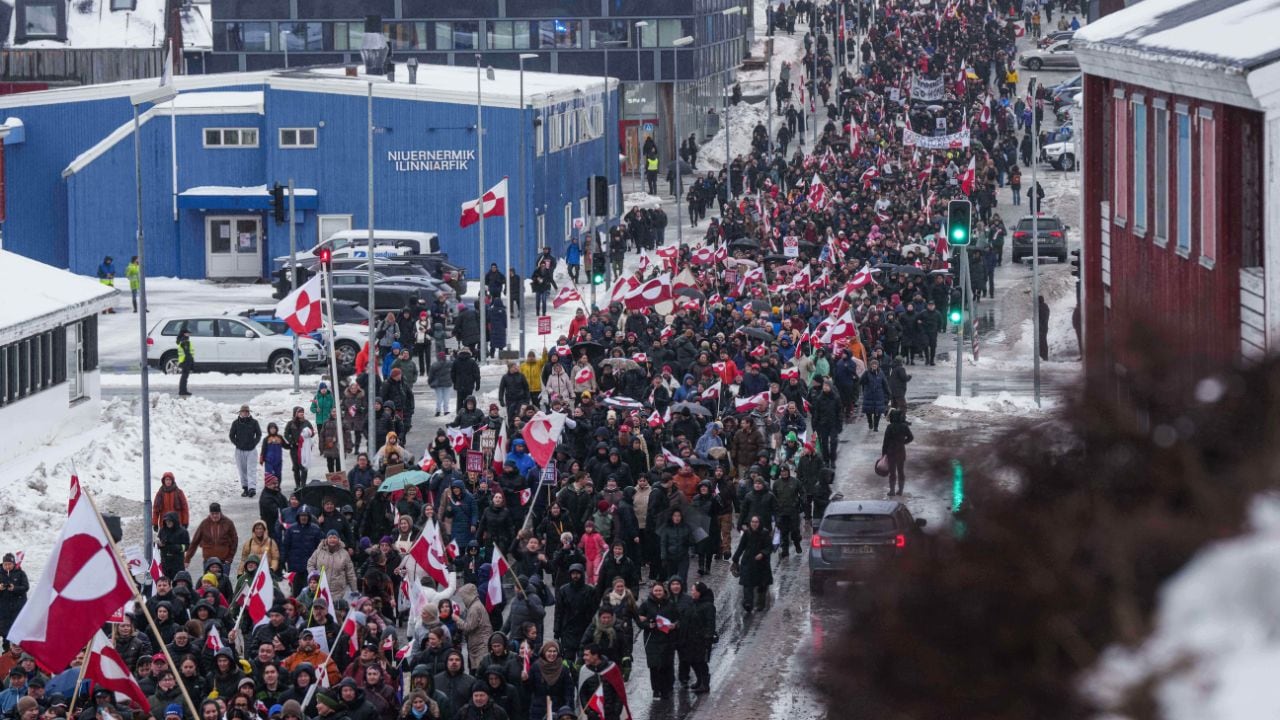
Greenlandic Prime Minister Jens-Frederik Nielsen’s declaration of "Choosing Denmark over the U.S." highlights a critical internal tension. While a majority of Greenlanders favor long-term independence, the U.S. threat has paradoxically strengthened the union with Denmark. Greenlandic leadership recognizes that Danish sovereignty is "thin"—granting high degrees of local autonomy—whereas U.S. territorial status would likely involve "thick" federal oversight and a massive expansion of military infrastructure that could override local environmental and social laws.
Strategic Forecast: The Post-Election Pivot
The March 24 election will likely return a coalition led by the Social Democrats, but with a mandate strictly redefined by the Greenland crisis. The following strategic shifts are inevitable:
- Diversification of Security Assets: Denmark will accelerate its transition to European-made defense systems (such as the F-35 repositioning and integration with French naval protocols) to reduce technical dependency on U.S. maintenance and supply chains.
- The Arctic "Iron Curtain": Greenland will likely see a permanent increase in Danish and European military presence. This "fortress" strategy is intended to make the cost of U.S. annexation—diplomatic, military, and economic—prohibitively high.
- Legislative Hardening: Expect the new Folketing to pass enhanced "National Security Investment" laws, specifically designed to block U.S. or Chinese attempts to infiltrate Greenlandic infrastructure through private equity or "charm offensive" diplomacy.
The immediate strategic play for the Danish government is to utilize the election results as a hard mandate to reject U.S. "technical talks" on an Arctic security deal. By framing the election as a clear national choice, Frederiksen removes the possibility of the U.S. negotiating with a perceived "weak" or divided leadership. The window for a negotiated transfer of Greenlandic sovereignty has closed; the future of the North Atlantic now rests on whether the U.S. is willing to collapse the NATO alliance to secure a mineral-rich island.
Would you like me to analyze the specific economic impact of the proposed 25% U.S. tariffs on the Danish pharmaceutical and green energy sectors?