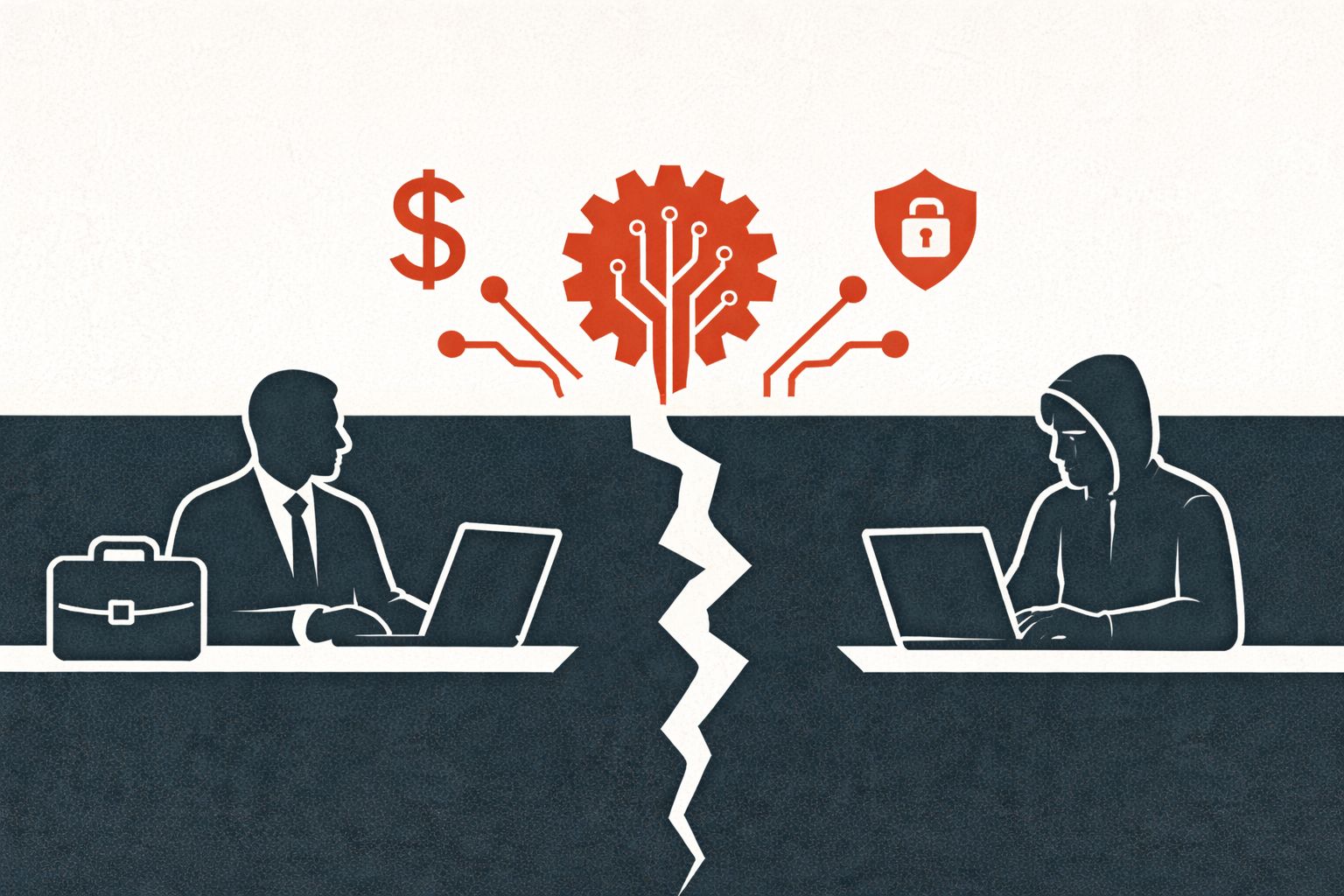
The National Transportation Safety Board (NTSB) just dropped its post-mortem on the LaGuardia runway collision, and predictably, the post-game analysis is a masterclass in missing the point. The "lazy consensus" forming among safety bureaucrats and tech vendors is that our tracking systems failed. They’ll tell you the surface surveillance didn’t trigger the right alarms. They’ll argue for more "robust" coverage and faster refresh rates.
They are wrong.
The hardware didn’t fail. The humans didn’t even "fail" in the traditional sense. What failed was the delusional belief that we can solve high-velocity, high-consequence human error with another layer of blinking lights. We are drowning in data and starving for situational awareness. The LaGuardia incident isn't a call for better sensors; it's a screaming indictment of how we’ve automated the "pilot-in-the-loop" into a state of functional paralysis.
The Surveillance Trap
Every time two pieces of aluminum touch on a taxiway, the industry retreats to its favorite security blanket: the Airport Surface Detection Equipment (ASDE-X). The NTSB report lingers on the fact that the system didn't provide a timely alert. But let’s look at the physics of a runway incursion. By the time an algorithm determines that two targets on a collision course are actually going to hit—rather than just performing a standard, tight-interval operation—the window for a meaningful kinetic response has often closed.
We’ve built a system that relies on a "god view" from the tower, which then has to be translated into a verbal command, sent over a congested radio frequency, processed by a pilot, and then physically enacted by a 70-ton machine. That latency isn't a software bug. It’s a systemic bottleneck.
Adding more sensors to LaGuardia is like putting a faster speedometer on a car with no brakes. It tells you exactly how fast you’re about to hit the wall, but it doesn't stop the impact.
Why "Alert Fatigue" is Killing Safety
If you've spent any time in a modern cockpit or a radar room, you know the sound of a system that "cries wolf." We have engineered environments where every minor deviation triggers a chime, a flash, or a synthetic voice.
When everything is an emergency, nothing is.
Safety experts talk about the "false alarm rate" as a technical hurdle. I see it as a psychological poison. If the ASDE-X system at LaGuardia had been tuned to catch every potential conflict that morning, it would have been screaming every thirty seconds due to the airport’s notoriously cramped geometry. Pilots and controllers subconsciously tune out the background noise of "safety tech" because the tech doesn't understand the nuance of a busy ramp.
We don't need more alerts. We need fewer, higher-fidelity signals that demand—rather than suggest—action.
The Myth of the "See and Avoid" Fail
The NTSB loves to point out that pilots "failed to maintain vigilance." It’s the easiest box to check. It’s also the most dishonest.
LaGuardia is a structural nightmare. It’s an airport designed for a different era of aviation, expanded beyond its logical limits, and operated at a tempo that leaves zero margin for a wandering gaze. Expecting a crew to maintain a perfect 360-degree visual scan while managing complex taxi instructions, checklists, and fuel burns in a high-density environment is a fantasy.
The Cognitive Load Problem
Consider the math of the cockpit. A pilot’s brain is a processor with a finite bandwidth.
- Radio Monitoring: Listening for their callsign amidst a literal constant stream of chatter.
- Internal Coordination: Managing the "sterile cockpit" while preparing for takeoff.
- Spatial Navigation: Finding a specific line on a concrete maze that looks like every other line.
When you add a "tracking technology" display to this mix, you aren't helping. You’re adding a fourth task. You’re asking the pilot to look down at a screen to see what’s happening outside. This is the "Head-Down Illusion." We are migrating the pilot's attention away from the window—the only place where a collision can actually be felt and avoided—and into a digital representation of reality.
We’ve seen this in the maritime industry with ARPA (Automatic Radar Plotting Aid). Sailors started having "radar-assisted collisions" because they were so focused on the blips on the screen that they stopped looking at the actual ship steaming toward them. Aviation is sprinting toward the same cliff.
Stop Trying to "Fix" the Technology
The conversation shouldn't be about how to make ASDE-X better. It should be about how to make the airport environment less reliant on it.
If we want to stop collisions at LaGuardia, we have to stop pretending it’s a technology problem. It’s a geometry and procedure problem.
The Contrarian Solution: Radical Simplification
Instead of spending $50 million on a new sensor suite, try these three things that actually work:
- Physical Segregation: If the taxiway intersections are too tight for the turn radii of modern jets, stop trying to "manage" the risk with software. Change the flow. If that means fewer flights per hour, so be it. But the industry hates that answer because it hits the bottom line.
- Direct-to-Pilot Data Links: Why is a controller the middleman for a surface alert? If the ground radar sees a collision, the alert should bypass the tower and go directly to the brakes or a cockpit HUD. The "voice-command-loop" is a 1940s solution to a 2026 problem.
- Tactile Cues: Use "smart" lighting—Runway Status Lights (RWSL)—that turn red physically on the pavement. It requires no interpretation. It requires no screen time. It’s a binary signal: Red means stop.
The Downside of My Argument
I’ll be the first to admit: radical simplification is expensive and slow. It requires moving concrete, not just updating code. It requires the FAA to admit that some airports are simply too small for the volume they handle. It’s much cheaper for a regulator to blame a "tracking failure" or "pilot error" than to admit the infrastructure itself is the hazard.
But until we stop looking for a "digital fix" for a "physical space" problem, we are just waiting for the next NTSB report to be written.
The Data Gap Nobody Talks About
The NTSB report mentions "failed to prevent." This implies that the technology is an active participant in safety. It’s not. Technology is an observer.
We have millions of data points on where planes are, but zero data points on where the pilot thinks they are. This is the "Mental Model Gap." A tracking system knows the plane is at Taxiway Romeo. The pilot thinks they are at Taxiway Sierra. The tracking system sees the plane is moving. The controller thinks the plane is holding.
None of the current tech bridge this gap. We are tracking metal, not intent.
Imagine a scenario where the ground system didn't just track the transponder, but cross-referenced the pilot's cleared taxi route with their actual steering input in real-time. If the pilot turns left when the clearance was right, the system triggers an immediate, localized "Wrong Turn" alert. This isn't "tracking"; this is "intent validation." We have the tech for this today—it's in every high-end consumer GPS—yet it’s noticeably absent from the "cutting-edge" aviation safety net.
The Industry’s Addiction to Incrementalism
The reason we keep having this conversation is that the aviation industry is addicted to incremental upgrades. It’s easier to sell a "software patch" than to redesign a terminal. It’s easier to mandate a new training module for pilots than to fix a blind spot in a tower’s line of sight.
The LaGuardia collision wasn't a failure of technology. It was a victory of complexity over common sense. We’ve built a system so complicated that its safety features now contribute to the very confusion they were meant to eliminate.
Every new "safety layer" we add increases the "Opacity" of the system. We are making it harder for the people at the controls to understand the ground truth because we’ve buried that truth under a mountain of sensors, alerts, and secondary displays.
If you want to prevent the next collision, stop looking at the radar. Start looking at the cockpit workload and the physical constraints of the tarmac. The tech isn't the savior. It’s the distraction.
You don't need a better map when the road is too narrow for the car. You either get a smaller car or a wider road. Everything else is just noise.
Verify the taxiway markings yourself. Trust your eyes, not the chime. If you're waiting for a sensor to save you, you've already lost the lead.