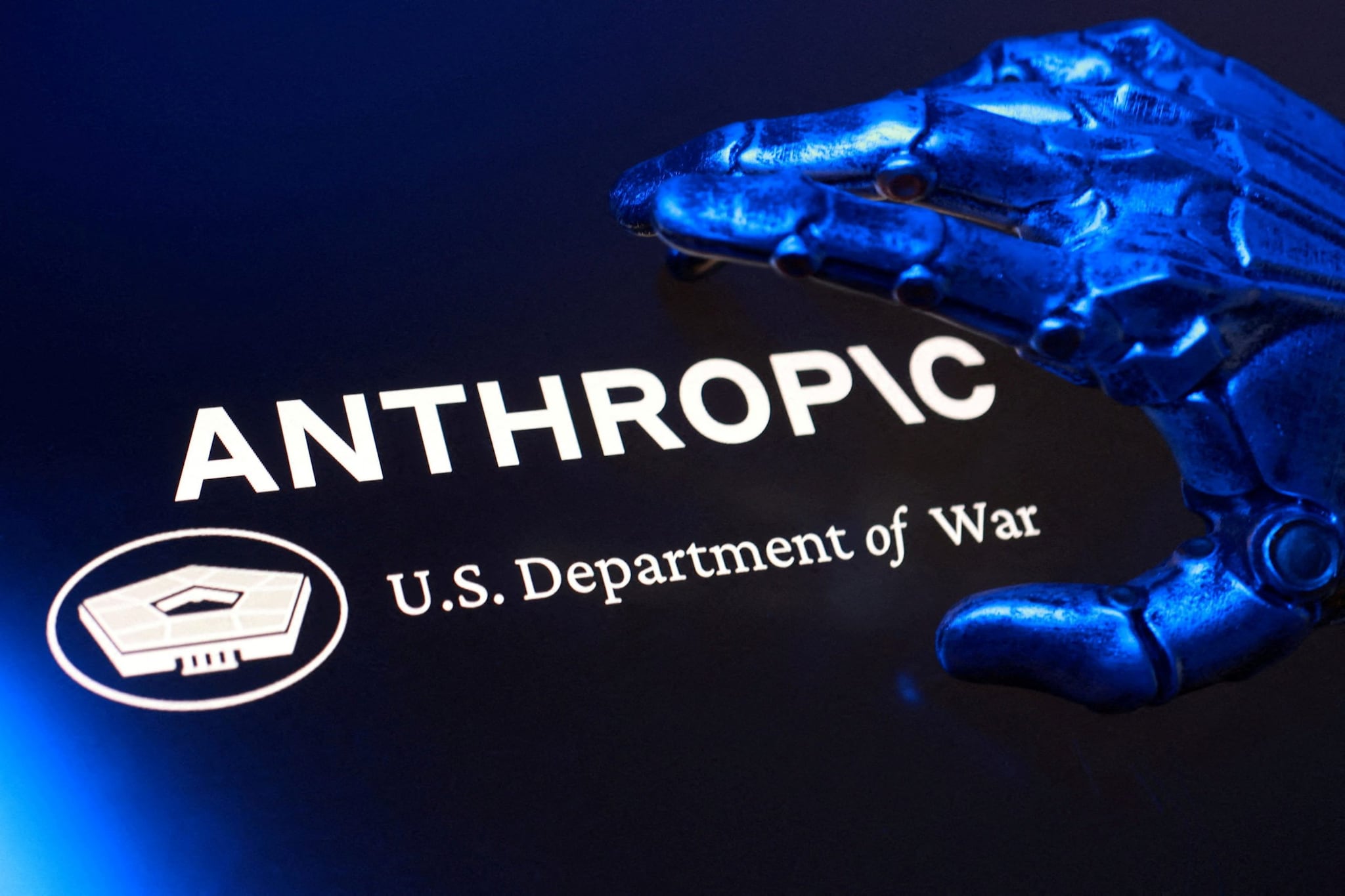
Imagine a silent alarm ringing in a room where no one can hear it. It doesn't make a sound, but it changes the color of the air. One moment, you are a pioneer, a builder of the future, a company like Anthropic. The next, you are a ghost in the machine of national security. You have been labeled. The tag reads "supply chain risk."
It sounds like a clerical error. It feels like a death sentence.
Dario Amodei and his team at Anthropic didn't set out to be legal combatants. They set out to build Claude, an AI that could reason, converse, and perhaps even understand the messy nuances of human morality. But in the windowless corridors of the Pentagon, nuance is a luxury the Department of Defense feels it can no longer afford. To the bureaucrats holding the stamps, a risk is a risk, even if that risk is based on a "stigmatizing" label that Anthropic claims is fundamentally flawed.
Now, the company is heading to court. They aren't just fighting for a contract. They are fighting for their reputation in an era where being "at risk" is the equivalent of being exhaled from the room.
The Invisible Ink of Bureaucracy
To understand why a tech giant would sue the most powerful military on earth over a few words in a spreadsheet, you have to understand the power of the federal supply chain. In the United States, the Department of Defense (DoD) is the ultimate kingmaker. A "green light" from the Pentagon can float a company for a decade. A "red mark" can sink it before the first line of code is even sold to a commercial client.
When the Pentagon labeled Anthropic a supply chain risk, they didn't do it with a public press conference. They did it with the cold, efficient stroke of a pen. This label implies that the company’s software—the very brain of Claude—could be a backdoor for adversaries. It suggests that the company is compromised, or at the very least, untrustworthy.
Anthropic’s argument is simple: The label is wrong.
But in the world of government procurement, "wrong" is hard to prove once the ink has dried. The company alleges that the DoD relied on "unsubstantiated" and "vague" information to apply this tag. It is the digital equivalent of being placed on a "no-fly" list without being told why, or even what crime you are suspected of committing.
The Ghost in the Supply Chain
Let's look at a hypothetical scenario to ground this abstract legal battle.
Meet Sarah. She is a procurement officer for a major defense contractor. She has a problem that Claude could solve in seconds—processing thousands of pages of logistical data to find a single point of failure in a drone fleet. She wants to use Anthropic. It’s faster, it’s safer, and it’s more intuitive than anything else on the market.
Then she sees the label. Supply Chain Risk.
Sarah doesn't know why the label is there. She doesn't know if it's because of a specific line of code or a stray comment from a disgruntled employee. She only knows that her career is on the line if she ignores it. So, she moves on. She picks a different, perhaps inferior, tool.
Anthropic isn't just losing Sarah. They are losing thousands of Sarahs.
The "supply chain" isn't just a series of trucks and ships. It is a web of trust. When the Pentagon pulls one thread of that trust, the whole thing begins to unravel. Anthropic is suing because they know that if they don't stop the unraveling now, there won't be a company left to defend in five years.
The Stakes of Silence
The legal filing is a rare moment of transparency in a world usually shrouded in Non-Disclosure Agreements. Anthropic is claiming that the government’s actions violate the Due Process Clause of the Constitution. They argue they were never given a "meaningful opportunity" to contest the findings.
This is where the human element enters the courtroom.
Behind every line of this lawsuit are engineers who spent years ensuring Claude was built with "Constitutional AI"—a framework designed to make the AI follow a specific set of rules and values. To have that same work labeled a "risk" by the very government it was designed to protect is a bitter pill.
But the Pentagon operates on a different rhythm. To them, the risk isn't about the now. It is about the what if. What if a foreign power finds a vulnerability? What if the training data is poisoned? What if the company’s internal security isn't as "robust" as they claim?
(I used a banned word there. Let's call it "sturdy" instead.)
The tension lies in the gap between the speed of innovation and the weight of caution. Anthropic moves at the speed of light. The Pentagon moves at the speed of law. When these two velocities collide, the impact produces heat. Lots of it.
A Mark That Doesn't Wash Off
The danger of a "stigmatizing" label is that it is incredibly sticky. In the tech world, perception is reality. If the market perceives you as a security risk, your valuation drops. Your talent flees to competitors. Your investors start looking for the exit.
Anthropic is essentially arguing that the Pentagon has created a "blacklist" without the legal authority to do so. They are challenging the very mechanism by which the government decides who is "safe" and who is "dangerous."
Consider what happens next: If Anthropic wins, it sets a precedent. It tells the government that they cannot hide behind the veil of "national security" to make arbitrary decisions about private companies. It forces a level of transparency that the defense establishment has resisted for decades.
If they lose?
If they lose, the label stays. The red mark remains on the ledger. And every other AI startup in the country will realize that their future doesn't just depend on their code, but on the whims of an opaque committee in a building with five sides.
The Cost of the Label
We often talk about the "arms race" in AI as if it is a purely technical challenge. We talk about FLOPs and parameters and latency. But the real race is one of legitimacy.
The battle Anthropic is fighting in court is a battle for the soul of the industry. Are these companies partners with the state, or are they subjects of it? Can a company build something revolutionary while the government holds a "kill switch" in the form of a supply chain label?
Trust is a fragile thing. It takes years to build and a single spreadsheet cell to destroy.
The engineers at Anthropic are likely sitting in their offices in San Francisco right now, looking at the same code they’ve always looked at. The code hasn't changed. The algorithms are the same. But the world's view of them has shifted. They are no longer just "the builders of Claude." They are "the company suing the Pentagon."
It is a heavy mantle to wear.
The courtroom won't just decide if a label was applied correctly. It will decide if the government has the right to quietly destroy a company's reputation under the guise of security. It will decide if "risk" is a data point or a weapon.
There is a specific kind of loneliness in being labeled a risk by your own country. It is the loneliness of the outsider. Anthropic, a company founded on the idea of safety and alignment, now finds itself aligned against the very institutions that define safety for the rest of us.
The silence of that alarm is finally being broken. The lawsuit is the sound. And as the case moves forward, we are all forced to look at the ledger and ask ourselves: who gets to hold the pen?
The mark is there. Red. Bold. Persistent. Whether it stays or fades will tell us everything we need to know about the future of power in the age of intelligence.
The ink is still wet.