The smell of antiseptic is supposed to signal safety. In the corridors of El-Daein Hospital, that sharp, clean scent usually fought a losing battle against the heavy heat of East Darfur and the metallic tang of blood. But for the mothers in the maternity ward and the malaria patients shivering under thin sheets, that hospital smell was the only thing standing between them and the chaos outside.
Then the planes came.
When a bomb falls on a hospital, it doesn't just break the bricks. It shatters the very idea of sanctuary. On a Tuesday that should have been defined by successful births and routine rounds, the Sudanese Armed Forces (SAF) reportedly decided that this specific coordinate on the map was no longer a place of healing. It was a target.
The blast didn't just kill. It unmade the world for those inside.
Imagine a nurse named Maryam. She isn't real, but she represents every terrified soul who stood in those halls. In our scenario, Maryam is holding a tray of vaccinations when the floor becomes the ceiling. The roar isn't just a sound; it’s a physical weight that crushes the air out of her lungs. The "cold facts" tell us that the hospital was hit by barrel bombs. The reality is that Maryam's world turned into a whirlwind of white dust, screaming metal, and the sudden, horrific silence of those who couldn't scream anymore.
The Architecture of a Target
Why bomb a hospital? From a tactical, cold-blooded perspective, it’s about more than removing a building. It is about erasing the future. When you destroy a regional hub like El-Daein, you aren't just hitting the Rapid Support Forces (RSF) who might be nearby. You are telling every civilian in the state that there is nowhere left to bleed in peace.
The SAF and the RSF have been locked in a dance of mutual destruction for months. The RSF took control of El-Daein late last year. Since then, the city has become a warehouse for the displaced, a gathering point for the broken. By dropping explosives on the primary medical facility, the military isn't just fighting a militia. They are conducting a siege on the human spirit.
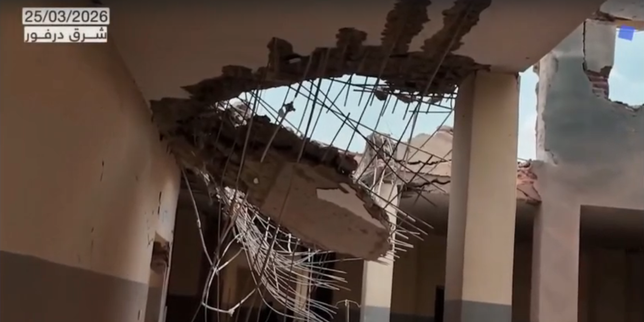
Evidence from the ground—grainy cell phone footage and the frantic reports of local activists—shows the dialysis center and the maternity ward in ruins. These aren't "collateral" areas. They are the most vulnerable organs of a community. A dialysis patient without a machine doesn't die from a bomb; they die from a slow, agonizing buildup of toxins that their own body can no longer flush away. The bomb just speeds up the clock.
The Invisible Stakes of a Broken Promise
International law is a series of polite agreements written in expensive rooms in Geneva and New York. One of those agreements, the Geneva Convention, explicitly forbids the targeting of medical facilities. It’s a simple rule: even in the mouth of hell, you don't burn the place that puts people back together.
But in Sudan, these rules have become ghost stories.
When the military targets a hospital, they bet on the world’s exhaustion. They bank on the fact that you, the reader, have seen so many headlines about "conflict in Africa" that your eyes will slide right over the word "Darfur." They rely on the "triage of empathy," where some lives are deemed too complicated or too far away to mourn properly.
The stakes here aren't just about Sudanese politics. They are about the precedent of impunity. If a sovereign army can systematically dismantle the healthcare infrastructure of its own people without a whisper of global consequence, then the "safety" of any hospital, anywhere, becomes a suggestion rather than a mandate.
A Ledger of Loss
Let’s look at the math of a massacre.
- One barrel bomb.
- Dozens of lives extinguished instantly.
- Hundreds of thousands of people in the East Darfur region left without a surgical theater.
- A generation of children born into the dust of a clinic that no longer exists.
The strike on El-Daein followed a grim pattern. Only weeks earlier, similar reports emerged from Fasher and Khartoum. The strategy is transparent: if you cannot hold the city, you make the city unlivable. You turn the infrastructure of life into a liability.
If you are a father in El-Daein today, you have to make a choice. Do you take your feverish daughter to the ruins of the hospital, hoping a doctor is still there working by candlelight? Or do you keep her at home, because the hospital is now the most dangerous place in the city? That is a choice no human being should ever have to weigh. It is a psychological torture that lingers long after the smoke clears.
The Echo in the Dust
The international community often responds to these events with "grave concern." It’s a phrase that has lost its teeth. "Concern" doesn't rebuild a neonatal intensive care unit. "Concern" doesn't stop the next Su-24 jet from opening its bay doors over a civilian center.
The tragedy of El-Daein isn't just that it happened. It’s that it was predictable. It was the logical conclusion of a war where the combatants have decided that the civilian population is merely the terrain they are fighting over.
We talk about "war crimes" as if they are abstract legal puzzles. They aren't. A war crime is the sound of a kidney patient’s last breath because the power to his machine was cut by a deliberate explosion. It is the sight of a doctor using his own shirt as a bandage because the supply room is a crater.
The story of the El-Daein hospital isn't a news brief. It is a scream. It’s the sound of a society’s floor falling out. As the dust settles over the twisted rebar and the charred gurneys, the only thing left in the air is the question of what we are willing to ignore.
The antiseptic smell is gone now. It has been replaced by the scent of scorched earth and the heavy, lingering silence of a sanctuary that was dared to exist in a time of monsters.
Somewhere in the ruins, a single, discarded stethoscope lies tangled in the rubble, its diaphragm pressed against the dirt as if still trying to find a heartbeat in the ground.
Would you like me to research the current status of humanitarian aid corridors into East Darfur to see how these victims are being reached?