The Guanabara Bay does not keep secrets; it merely waits for the tide to go out. To look at Rio de Janeiro from a postcard is to see Christ the Redeemer watching over a city of impossible curves and granite peaks. To look at it from the floor of the Superior Court of Justice is to see a recurring nightmare.
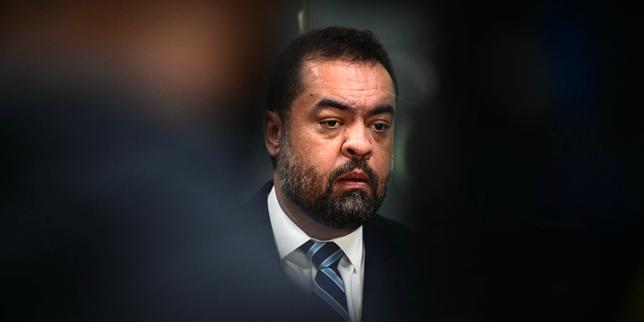
Claudio Castro is not a name that arrived with a thunderclap. He was the accidental man, the vice-governor who stepped into the light only because his predecessor, Wilson Witzel, was swallowed by the same political abyss that has claimed nearly every man to hold his office since the 1990s. In Rio, being the Governor is less of a public service and more of a pre-trial waiting room.
Now, the list grows longer.
The allegations against Castro—involving the kickback schemes within the "Folião" and "Catarina" operations—are not merely legal line items. They represent a systemic betrayal of the person standing at a bus stop in the Baixada Fluminense, wondering why the schools are crumbling while the political elite find new ways to siphon "social assistance" funds into private pockets.
The Ghost of Governors Past
Walk through the halls of the Palácio das Laranjeiras and you are walking through a crime scene that spans decades.
Consider the lineage. Moreira Franco, Anthony Garotinho, Rosinha Matheus, Sérgio Cabral, Luiz Fernando Pezão, and Wilson Witzel. All of them have worn the sash. All of them have worn handcuffs, or faced the very real threat of them.
When Sérgio Cabral was sentenced to several lifetimes in prison, there was a fleeting sense that the "Old Rio" was dead. The hope was that the sheer gravity of his corruption—the jewelry, the private helicopters, the literal bars of gold—would serve as a permanent deterrent. But corruption in Rio de Janeiro is not an individual failing. It is an ecosystem.
Imagine a business where the ledger is written in disappearing ink. This is the reality of the State Secretariat for Education and the Foundation for the Support of the Schools of Rio de Janeiro (FAETEC). These are the entities currently under the microscope. The investigation suggests that between 2017 and 2020, a sophisticated network turned social programs meant to help the most vulnerable into a sophisticated ATM for the powerful.
The Anatomy of a Kickback
It usually starts with a handshake in a place where the sun doesn’t hit the pavement.
In the case of Claudio Castro, the Public Prosecutor's Office points toward a period when he was still a city councilman and later the vice-governor. The narrative painted by investigators is one of "procurement ghostwriting." Contracts were allegedly steered toward specific companies in exchange for a percentage—a "pedágio" or toll—paid in cold, hard cash.
There is a specific kind of coldness required to skim money from programs titled "Universal Citizenship." While a mother in a favela struggles to find a spot for her child in a technical course, the money intended to fund that desk is reportedly being diverted to pay for the loyalty of political operatives.
The numbers are dizzying. Millions of Reais. But the numbers are the least interesting part of the story. The real story is the silence. It is the silence of a state that has become cynical. In Rio, when a governor is accused of corruption, the people don't gasp. They sigh.
The Vice-Governor's Trap
Claudio Castro’s defense is a familiar refrain: "I am being persecuted. This is political theater. There is no proof."
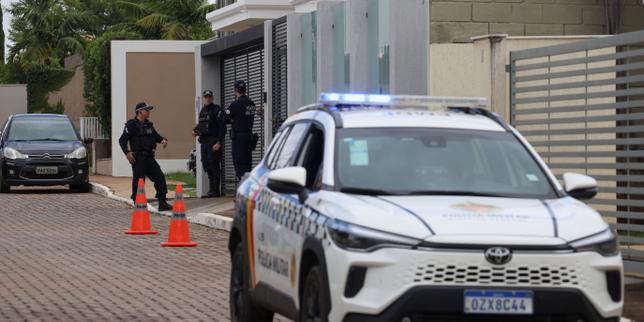
It is a difficult defense to maintain when the Federal Police are knocking on your brother’s door or seizing assets from your closest advisors. The "Catarina" operation specifically looked at the detour of funds from the State Secretariat for Social Action and Human Rights.
Think about that title. Human Rights.
In a state where the police-to-civilian violence ratio is among the highest in the world, and where the "milícias" (paramilitary groups) control vast swaths of territory, the Human Rights budget is a lifeline. To treat it as a slush fund is to actively pull the plug on the state's most desperate inhabitants.
The mechanism of the alleged fraud was almost elegant in its simplicity. Overpriced contracts. Ghost employees who existed only on a payroll sheet. Services that were paid for but never rendered. It is a death by a thousand cuts, where each cut is a stolen Real that should have gone toward a public hospital or a paved road.
The Geography of Neglect
To understand why this keeps happening, you have to look at the geography of power in Rio. The state is divided between the "Sul," where the wealth is concentrated, and the "Norte" and "Baixada," where the votes are harvested.
Governors like Castro often build their power bases in these neglected peripheries. They promise "Social Houses" and "Cestas Básicas" (food baskets). They position themselves as the protectors of the poor. This creates a perverse incentive. If you actually fix the systemic poverty, you lose your leverage. If you keep the people dependent on the occasional handout—handouts that you also happen to be skimming from—you maintain a permanent, desperate electorate.
The Superior Court of Justice (STJ) has now authorized the continuation of investigations into Castro. This is a significant blow. In Brazil, the "Foro Privilegiado" usually acts as a shield for high-ranking politicians, ensuring that only the highest courts can touch them. When the STJ moves, it means the evidence has reached a critical mass.
The Invisible Stakes
What happens to a society that stops believing in its leaders?
When the person at the top is seen as just another looter, the social contract dissolves. The police officer on the street feels justified in taking a bribe. The small business owner feels justified in dodging taxes. The teenager in the Rocinha favela looks at the Governor and sees a more successful version of the local drug lord—someone who takes what they want and uses force or influence to keep it.
This is the hidden cost of the Claudio Castro investigation. It isn't just about the millions of Reais that may have been stolen. It is about the evaporation of the rule of law.
Castro was supposed to be the "new" face. He was young, a singer of Catholic songs, a man who spoke of faith and renewal. He was the antithesis of the brash, warlike Witzel or the aristocratic Cabral. And yet, the allegations suggest he fell into the same ancient rhythms of Carioca politics.
The Cycle of the Serpent
There is a Greek myth about Sisyphus, the man condemned to roll a boulder up a hill for eternity, only for it to roll back down every time he nears the top. Rio de Janeiro is Sisyphus, and the boulder is political integrity.
Every four years, the state gathers its strength. It elects a "saviour." It dreams of a government that won't end in an FBI-style raid. And every time, the boulder crashes back down, crushing the hopes of the six million people who call the city home.
The prosecution’s case against Castro is built on the testimonies of former allies who turned state's witness. This is the recurring theme of Brazilian corruption: there is no honor among thieves. When the Federal Police begin squeezing the mid-level bureaucrats, the paper trail starts to glow. They talk about bags of cash delivered in parking lots. They talk about code words used in encrypted messages.
It feels like a script from a high-stakes crime drama, but for the residents of Rio, there is no "off" switch. They live in the set. They pay for the production.
A State in Suspense
As the legal proceedings grind forward, Rio enters a familiar state of limbo. A governor under investigation is a governor who cannot govern. He is a man looking over his shoulder, spending his political capital on survival rather than strategy.
The investors look elsewhere. The federal government becomes wary of sending funds that might vanish into the "Folião" vortex. The state’s credit rating shudders.
Meanwhile, Claudio Castro continues to appear at ribbon-cutting ceremonies. He smiles for the cameras. He insists that he is the victim of a conspiracy. But the list of his predecessors who said the exact same thing is long, and most of them are currently watching the sunset through a different kind of window.
The tragedy of Rio is not that it is poor. It is a state of immense natural wealth, a hub of oil and gas, a crown jewel of global tourism. The tragedy is that its wealth is treated as a carcass to be picked clean by the very people sworn to protect it.
The tide is going out on the Guanabara Bay once again. As the water recedes, it reveals the rusted remains of old promises and the skeletons of grand designs. Claudio Castro stands on the shore, asserting his innocence, while the judicial waters rise around his ankles. Whether he is eventually convicted or acquitted in a court of law is almost secondary to the verdict already rendered by the streets.
The people of Rio are no longer angry. They are exhausted. They are waiting for a governor who treats the state house as a cathedral of service rather than a private bank, but they aren't holding their breath.
The boulder is at the bottom of the hill again.
The sun sets behind the Dois Irmãos mountains, casting long, jagged shadows over a city that has seen everything and expects nothing. In the corridors of power, the lights stay on late into the night, not for the work of the people, but for the work of the defense.
Rio remains a masterpiece of nature, governed by the flaws of man.
Would you like me to look into the specific details of the "Folião" and "Catarina" operations to explain how these kickback schemes were structured?