The coffee in Seoul is always better when the air is quiet. On a Thursday morning in late May, the city moved with its usual, frantic grace. Salarymen ducked into subway entrances. Baristas frothed oat milk. High schoolers scrolled through TikTok. But for those whose eyes are perpetually fixed on the radar screens of the Ministry of National Defense, the morning was anything but quiet.
At 6:14 AM, the screens bloomed.
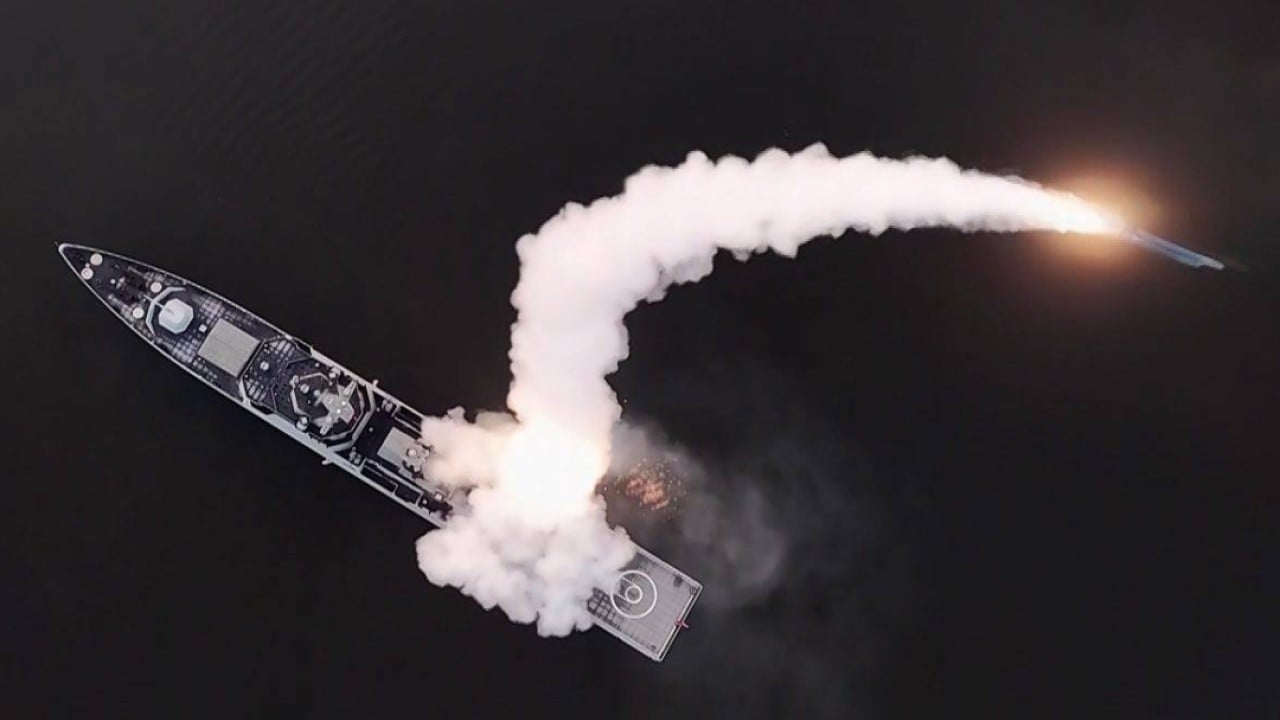
Ten streaks of light rose from the Sunan area near Pyongyang. In the clinical language of international diplomacy, these are called short-range ballistic missiles. In the lived reality of the Korean Peninsula, they are ten distinct reminders that the peace here is a thin glass floor held together by luck and old treaties.
Ten is a specific number. It isn’t the solitary, experimental arc of a rogue scientist or a singular "message" to a neighbor. It is a volley. It is a demonstration of a digital-age firing squad. When you fire ten missiles simultaneously, you aren't just testing a rocket motor; you are practicing for a day when the sky turns to fire.
The Geography of Anxiety
Imagine standing on a balcony in a high-rise in Seoul. To your south, the city stretches into a glittering infinity of neon and commerce. To your north, less than 40 miles away, lies the most heavily fortified border on the planet. For the twenty-six million people living in the Seoul metropolitan area, the threat of the North is like a low-frequency hum. You stop hearing it after a few years. You have to, or you’d never get any sleep.
But then the hum becomes a roar.
The missiles traveled roughly 350 kilometers—about 217 miles. They splashed into the waters between the Korean Peninsula and Japan. If you tilted that trajectory just a few degrees to the south, those missiles wouldn’t have hit salt water. They would have hit the heart of the world’s most advanced semiconductor industry. They would have hit the homes of people currently deciding what to pack for their children’s school lunches.
This isn't just about North Korea. This is a choreographed dance. These launches happened exactly as the United States and South Korea were conducting large-scale aerial drills. It was a response in kind. The U.S. flies stealth fighters; Pyongyang ignites the launch pads. It is a cycle of "anything you can do, I can do with more gunpowder."
The Invisible Stakes of the Silicon Shield
We often talk about these events in terms of "geopolitical instability," a phrase so dry it practically turns to dust in the mouth. To understand the stakes, we have to look at what lies beneath the flight paths.
The Korean Peninsula is the world's furnace for the hardware that runs our lives. The chips in your phone, the servers holding your photos, and the processors in your car likely originated in a factory within range of those ten missiles. When Pyongyang pushes a button, the global economy flinches. This isn't just a local spat between two brothers who never signed a peace treaty. It is a precarious balancing act involving the world’s most vital supply chains.
The technology behind these missiles is evolving with terrifying speed. We are no longer looking at the clunky, erratic Scuds of the 1990s. These are solid-fuel projectiles. They are mobile. They can be hidden in tunnels, driven out on a truck, and fired before a satellite can even blink. They are designed to overwhelm.
Think of a missile defense system like a catcher’s mitt. It’s easy to catch one ball. It’s possible to catch two. But when ten balls are thrown at your face at several times the speed of sound, the math changes. The goal of a ten-missile volley is to prove that the catcher’s mitt can be bypassed. It is a statement of technical dominance over the very idea of safety.
A World of Hypotheticals
Let’s consider a hypothetical resident of Paju, the town closest to the border. We’ll call him Min-jun. Min-jun is seventy-two. He remembers when the border was just a line on a map and not a scar across the earth. When the alerts go off on his phone—that shrill, unmistakable government chime—he doesn't run for a bunker anymore. He’s seen this play a hundred times.
"They are just shouting," he might say, gesturing toward the north.
But Min-jun’s grandson, who works for a tech startup in Gangnam, sees it differently. He sees the "Korea Discount"—the way South Korean stocks are perpetually undervalued because of the neighbor with the short fuse. He sees the way international investors hesitate. He sees the way the world treats his home like a ticking time bomb that everyone has learned to ignore.
The real tragedy of the ten missiles isn't the physical damage they caused—which was none, this time—but the psychological erosion they perform. Each launch chips away at the normalcy of twenty million lives. It turns the sky from a source of light into a source of potential descent.
The Silence After the Splash
The United States Indo-Pacific Command issued a statement shortly after the launches. It was exactly what you would expect: a condemnation, a reassurance of "ironclad" commitments to the defense of the Republic of Korea and Japan. It is a script we have all memorized.
But the script is fraying.
North Korea has moved beyond seeking attention. They are no longer the "hermit kingdom" trying to get a seat at the table. They are a nuclear-armed state refining the delivery systems to make that nuking a reality. This isn't a cry for help; it's a display of a finished product.
The missiles fell into the Sea of Japan, also known as the East Sea. The water swallowed the metal and the fuel. The waves smoothed over. For a few hours, the news cycles in New York and London flashed red. Then, a celebrity did something scandalous, or a stock price moved, and the ten missiles were relegated to the "World News" sidebar.
In Seoul, the sun set behind the mountains. The neon signs for fried chicken and karaoke blinked to life. People walked home, their collars turned up against a slight evening breeze. Life continued because it must.
Yet, somewhere in a darkened command center in Pyongyang, the data from those ten flights is being analyzed. Fuel burn rates are being calculated. Re-entry angles are being adjusted. The silence that follows a missile launch isn't a sign of peace; it’s the quiet of a technician resetting the stage for the next act.
We live in a world that has mastered the art of looking away. We pretend that as long as the missiles land in the water, the system is working. We convince ourselves that the "ironclad" commitments are a physical wall rather than a collection of words. But the ten streaks of light in the morning sky were not a hallucination. They were a measurement of the distance between where we are and where we might end up.
The sun went down over the Han River, reflecting off the glass towers of a city that refuses to be afraid. But the water in the East Sea is still cold, and somewhere on the seabed, ten pieces of twisted metal are sinking into the silt, waiting for the next time the sky decides to speak.