The narrative being peddled by mainstream media and law enforcement regarding the surge in Malaysian-based scammers targeting Singaporeans is dangerously superficial. They want you to believe this is a story about "vulnerable victims" and "sophisticated syndicates." They are wrong. This isn't a crime wave; it’s a massive, distributed logistics problem being solved by the most efficient workforce on the planet: the willing accomplice who thinks they are a victim.
We need to stop talking about "mules" as if they are kidnapped livestock. In the industry of illicit capital flow, the Singaporean retiree isn't just a target. They are the essential infrastructure. The current focus on cross-border enforcement ignores the reality that these networks aren't bypassing Singapore’s defenses—they are being invited in through the front door by people who know exactly what they are doing, even if they’ve convinced themselves otherwise. Learn more on a similar issue: this related article.
The Myth of the Sophisticated Syndicate
Open any major news outlet and you’ll see the same tired tropes. "High-tech scammers using AI-driven scripts to manipulate the innocent."
The truth is much more insulting. Most of these operations are run out of cramped shophouses in Johor Bahru or Kuala Lumpur using scripts that haven't changed since 2015. They don't need "cutting-edge" tech. They rely on the fact that Singapore’s obsession with efficiency and trust-based banking has created a massive loophole. More reporting by The New York Times explores similar views on this issue.
Singapore’s financial system is a victim of its own success. Because the friction of moving money is so low, the "human friction"—the person physically holding the gold or the cash—is the only thing that matters. The "scam" isn't the phone call; the scam is the belief that we can regulate human greed out of the equation.
Why Physical Gold Is The Ultimate Middle Finger To Regulators
The recent trend of scammers demanding physical gold bars or cash handed over to "couriers" isn't a step backward into the Stone Age. It is a brilliant adaptation to the digital surveillance state.
If I transfer $100,000 from a DBS account to a CIMB account in Malaysia, a dozen red flags go off. The Monetary Authority of Singapore (MAS) has built a digital fortress. But if a 70-year-old woman goes to a jeweler in Little India, buys five gold bars, and hands them to a 19-year-old on a motorcycle at a void deck, the digital trail vanishes.
Gold is the perfect high-density value carrier. It is:
- Untraceable: No serial numbers that are checked at the border.
- Highly Liquid: You can melt it down or sell it in any back-alley shop from Penang to Bangkok.
- Psychologically Weighty: Victims feel they are "protecting" their wealth by holding something physical, making them easier to manipulate.
The industry calls this "the physical bypass." While Singaporean authorities spend millions on blockchain analytics and AI monitoring, the scammers are using the oldest trick in the book: gravity. They move heavy things from one hand to another. You can't patch a human hand.
The "Mule" Fallacy: Stop Excusing the Accomplices
We have to address the "People Also Ask" nonsense that litters the web. "How do I know if I'm being used as a money mule?"
If you are receiving money from a stranger and sending it to someone else, you know. If you are picking up a package and "safekeeping" it for a "government official" you've never met, you know.
The legal system in Singapore is notoriously harsh, yet it continues to treat many of these participants with kid gloves, labeling them as "victims of deception." This is a mistake. By softening the language, we provide a psychological safety net for the next "mule."
I have seen cases where individuals were warned by their banks, warned by the police, and still went ahead with the transaction because the "commission" or the "romantic interest" was too tempting. This isn't a lack of education; it’s a calculated risk that failed.
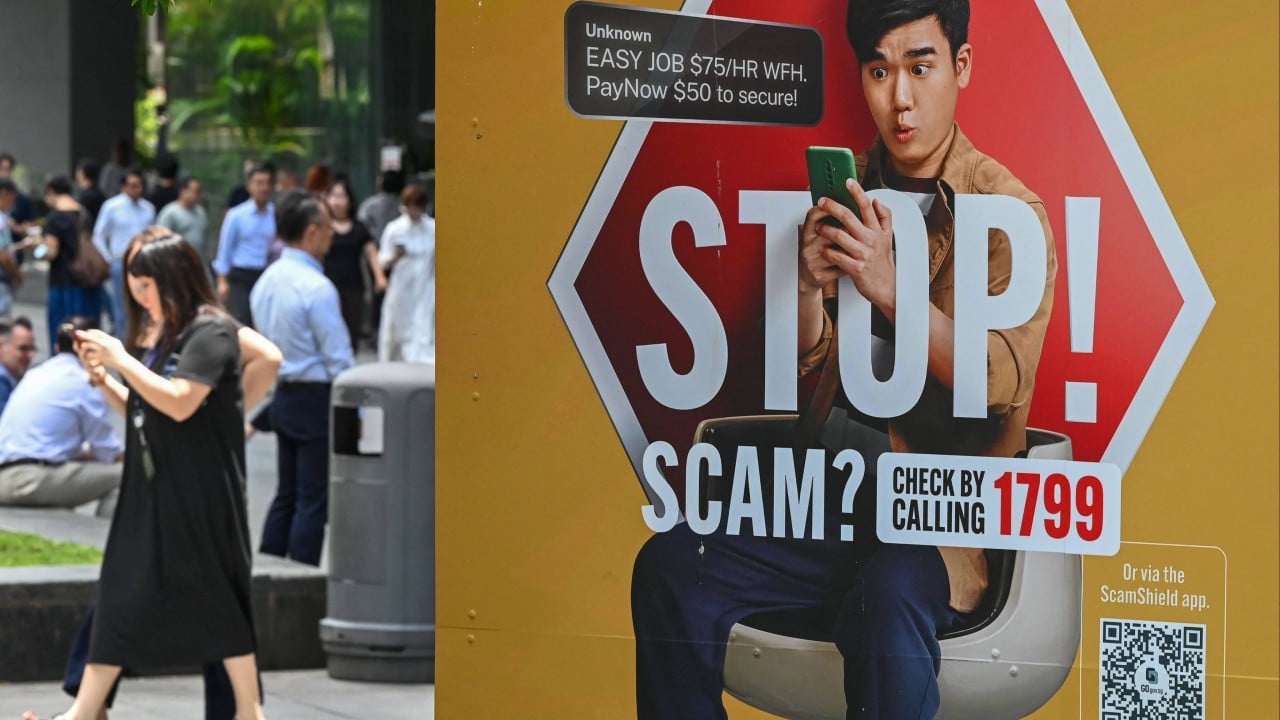
The "lazy consensus" is that we need more public awareness campaigns. We don't. Everyone in Singapore knows about scams. The posters are in every elevator and on every ATM. The problem isn't a lack of information; it's an abundance of willful ignorance.
The Arbitrage of Trust
Singapore is a high-trust society. Malaysia is a high-hustle society. When these two collide, the hustle always wins.
Scammers aren't just looking for money; they are looking for "clean" reputation. A Singaporean bank account or a Singaporean physical address is a valuable asset. When a scammer uses a local "mule" to collect cash, they are effectively "washing" the transaction through the victim's social and legal standing.
The authorities tell you to "be skeptical." I'm telling you that skepticism isn't enough. You need to understand that in the eyes of a Malaysian syndicate, your grandmother’s 40-year history of being a law-abiding citizen is just a commodity to be burned for a one-time payout.
The Real Mechanics of the Cross-Border Handover
Imagine a scenario where a "mule" is told to wait at a crowded MRT station. They are carrying $50,000 in a paper bag. The person they meet is often another "mule"—perhaps a Malaysian work permit holder looking for a quick few hundred dollars.
- Step 1: The Singaporean victim/mule converts digital savings to physical cash or gold.
- Step 2: The hand-off happens in a blind spot of local surveillance (yes, they exist).
- Step 3: The Malaysian courier crosses the Causeway. They don't carry the cash in their luggage. They hide it in vehicle compartments or use "runners" who cross daily.
- Step 4: The value is re-integrated into the Malaysian economy through shadow banks or informal "Hawala" networks.
This is a professional logistics chain. To call it a "scam" is like calling Amazon a "website." It's a massive, multi-national operation that thrives because it is more agile than the bureaucracy trying to stop it.
The Failure of "Anti-Scam" Tech
Every time a bank introduces a new "kill switch" or a "cooling-off period," the scammers celebrate. Why? Because it drives the "mules" toward more desperate, physical methods.
When you make it harder to transfer money digitally, you force the victim to go to the branch, withdraw cash, and interact with the physical world. And in the physical world, the police are always ten minutes too late.
The tech isn't the solution; the tech is the catalyst for the shift toward gold and cash. We are digitizing the defenses while the offense is going analog. It’s like building a 50-foot wall and being surprised when the enemy uses a tunnel.
Stop Trying to "Protect" the Public
The conventional wisdom says the government needs to do more. I disagree. The government has already done too much, creating a false sense of security. Singaporeans believe that because the system is so regulated, they are inherently safe. This "security theater" makes them the perfect marks.
If you want to stop the flow of gold and cash to Malaysian syndicates, you have to stop treating the "mules" as victims and start treating them as the final, essential link in a criminal chain.
The moment a Singaporean realizes that "I was just helping a friend" will result in a mandatory five-year prison sentence regardless of their "intent," the supply of mules will dry up. Until then, you are just watching a very expensive game of cat and mouse where the mouse has a motorcycle and the cat is stuck in a committee meeting.
Stop looking for the "masterminds" in Kuala Lumpur. They are untouchable. Start looking at the person standing in line at the gold smith in Toa Payoh. That is where the war is lost.
Handing over your life savings because a voice on the phone told you to isn't a lapse in judgment. It is a fundamental failure to respect the reality of the world outside your bubble. The scammers aren't the ones breaking the system. They are the ones showing you exactly where the system was already broken.
Buy a safe. Delete your social media. Stop answering the phone. If you think you're too smart to be a mule, you're exactly the person they’re looking for.