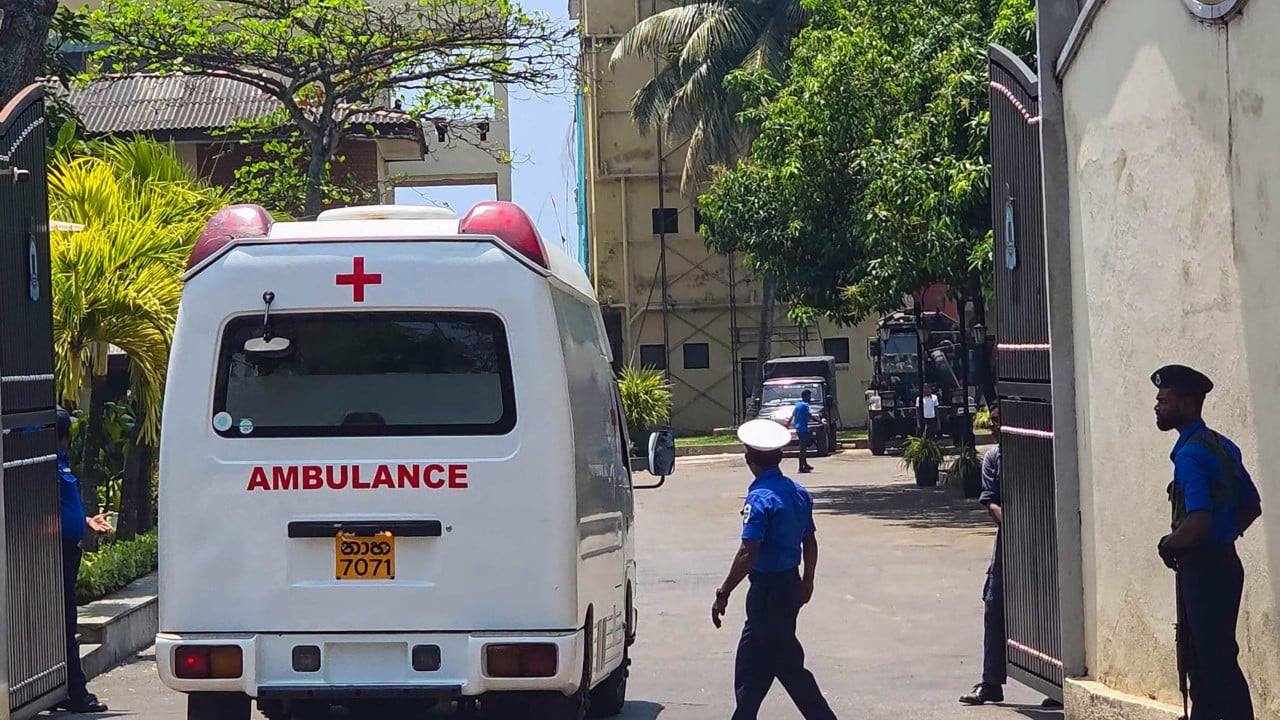
The recovery of bodies from the wreckage of an Iranian naval vessel off the coast of Sri Lanka is not merely a localized tragedy or a routine maritime salvage operation. It is a stark exposure of the structural and technological vulnerabilities haunting the Islamic Republic of Iran Navy (IRIN) as it attempts to project power far beyond the Persian Gulf. While official reports from Colombo remain sparse, detailing only the grim retrieval of human remains by specialist divers, the geopolitical implications of this sinking ripple from the Indian Ocean to the corridors of power in Tehran. This incident highlights a desperate naval strategy where aging hulls and domestic retrofits are pushed past their breaking point in a bid for regional relevance.
A Legacy of Rust and Ambition
The vessel in question did not succumb to enemy fire or a sudden act of sabotage. It failed because of the physics of neglect and the hubris of overextension. For years, Iran has relied on a "Frankenstein" approach to naval engineering, cobbling together components from decades-old Western designs and unproven domestic electronics. When these ships enter the high-stress environments of the deep Indian Ocean, the margin for error vanishes. Building on this idea, you can also read: Why the Green Party Victory in Manchester is a Disaster for Keir Starmer.
The sea is a brutal auditor. It finds the hairline fracture in a pressurized pipe that was "good enough" for the calm waters of the Bandar Abbas harbor but catastrophic in a monsoon-driven swell. This sinking follows a pattern of high-profile Iranian naval accidents, including the loss of the Kharg in 2021 and the Sahand capsizing during repairs just recently. These are not isolated strokes of bad luck. They are the symptoms of a fleet that is being cannibalized to stay afloat.
The Sri Lankan Connection
Sri Lanka’s role in this recovery operation is more than just geographical. Colombo finds itself in a precarious balancing act, providing logistical support to an Iranian mission while under the watchful eyes of New Delhi and Washington. The Sri Lankan Navy’s diving teams are among the most experienced in the region, trained to operate in the silt-heavy, unpredictable currents of the Palk Strait and the deeper trenches to the south. Experts at TIME have also weighed in on this trend.
By leading the recovery of the bodies, Sri Lanka is performing a humanitarian duty that simultaneously serves as a diplomatic shield. It allows the Iranian government to save face by framing the disaster as an unfortunate accident while avoiding the scrutiny that would come with a larger, international salvage coalition. However, the presence of Iranian "technical advisors" alongside the recovery teams suggests there is more at stake than just the return of fallen sailors. There is hardware on that seabed that Tehran cannot afford to let the world see.
The Technological Mirage of the IRIN
Iran’s domestic propaganda often showcases new destroyers and "stealth" corvettes, claiming they rival the best of the US Fifth Fleet. The reality sitting on the ocean floor tells a different story. Most of these vessels are based on 1960s-era British or American designs, such as the Vosper Thornycroft Mk 5. While the hulls might be refurbished, the internal systems—specifically the power distribution and damage control mechanisms—often lack the sophistication required for modern blue-water operations.
Effective damage control is the difference between a fire and a sinking. In many of these Iranian incidents, reports suggest that automated fire suppression systems failed or that the crew lacked the specialized training to seal compartments under pressure. When a ship begins to take on water, the weight of the Iranian-made "indigenous" radar arrays and missile launchers—often bolted onto decks not originally designed for such loads—shifts the center of gravity. A vessel that was already unstable becomes a tomb in minutes.
The Human Cost of Strategic Pride
The "few bodies" recovered so far represent a fraction of the specialized personnel Iran sends on these long-range deployments. Unlike the massive crews of US carriers, Iranian frigates and destroyers operate with lean, highly trained technical teams. Losing these sailors is a blow to the IRIN’s operational memory.
These men are often the sons of the revolutionary elite or the brightest products of the Imam Khomeini Naval University. They are sent out on these aging platforms to prove that Iran is a "Maritime Power." When the ships fail, the state's first instinct is to control the narrative, often at the expense of a transparent investigation that could prevent the next disaster. The recovery effort in Sri Lanka is being managed with an intensity that suggests a desire to bury the evidence along with the dead.
Intelligence in the Debris
Why does the world care about a mid-sized warship at the bottom of the Indian Ocean? Because the wreckage is a goldmine for signal intelligence and materials science analysts. Even a "failed" Iranian ship contains encrypted communication modules, radar signatures, and possibly samples of Chinese or Russian-derived drone control systems.
The scramble to recover the bodies is also a race to secure the ship’s "black boxes" and sensitive codebooks. If a third party—even a commercial salvage firm with ties to a foreign intelligence agency—were to reach the site first, the technical secrets of Iran’s naval reach would be compromised. This explains the rapid deployment of Iranian "relief" vessels to the site, masquerading as support while likely conducting their own underwater sweeps.
The Indian Ocean Power Struggle
The Indian Ocean is no longer a quiet transit zone; it is a chessboard. India views the region as its "backyard" and views any Iranian or Chinese naval presence with intense suspicion. The sinking provides New Delhi with a perfect opportunity to observe Iranian operational procedures under duress.
- India's Perspective: They are monitoring the salvage not just for the Iranian presence, but for the potential of Chinese involvement in the "recovery" of the vessel's remains.
- The US Perspective: The Fifth Fleet, based in Bahrain, gains valuable data on the structural weaknesses of Iranian naval assets without ever firing a shot.
- China’s Silence: Notably, Beijing has remained quiet, despite its close ties to both Tehran and Colombo. They are likely calculating whether to offer "technical assistance" that would grant them even deeper access to Sri Lankan ports.
The Logistics of a Deep Sea Recovery
Recovering bodies from a sunken warship is a nightmare of physics and biology. At the depths reported, the pressure is immense. Divers must contend with jagged metal, leaking fuel, and the potential for unexploded ordnance. The Iranian vessel was likely carrying a mix of anti-ship missiles and anti-aircraft rounds, any of which could be unstable after the trauma of a sinking.
The Sri Lankan Navy is using specialized decompression chambers and remotely operated vehicles (ROVs) to survey the hull. The priority is to find the remains of the officers, who are typically situated in the bridge or the upper-deck quarters, which are the most accessible. Those trapped in the engine room or the lower ammunition magazines may never be recovered. The sea has a way of claiming what the bureaucracy cannot account for.
Hard Lessons for the Revolutionary Guard
While the IRIN (the regular navy) bears the brunt of these maritime failures, the Islamic Revolutionary Guard Corps Navy (IRGCN) watches from the sidelines. The IRGCN prefers small, fast, "swarming" boats that stay close to the coast. This sinking reinforces their internal argument: that Iran should abandon the "big ship" fantasy and focus on asymmetric warfare.
However, a nation that wants to be a global player cannot do so with speedboats alone. They need the prestige of the large hull. This tension between the regular navy’s desire for traditional power and the IRGCN’s guerrilla tactics is a fault line in Iranian military strategy. Every time a frigate sinks due to poor maintenance, the "small boat" faction gains political ground in Tehran.
The Environmental Fallout
Beyond the human and political toll, there is the immediate threat of environmental degradation. These ships carry heavy fuel oil, hydraulic fluids, and lead-acid batteries. Sri Lanka’s coastline is its economic lifeblood, supporting both a massive fishing industry and a booming tourism sector. A significant leak from the Iranian wreck would be a catastrophe for the local reefs.
Tehran has not traditionally been known for its commitment to international environmental standards. If the ship begins to leak, will they pay for the cleanup? History suggests they will claim the sinking was caused by foreign interference and use that as a pretext to avoid liability. The Sri Lankan government, already facing an economic crisis, cannot afford to foot the bill for an Iranian military blunder.
A Pattern of Denial
The Iranian state media’s coverage of the event has been predictably muted. They focus on the "martyrdom" of the sailors while omitting any mention of mechanical failure or the age of the ship. This denial is a survival mechanism. To admit that the fleet is rotting is to admit that the sanctions are working—or, worse, that the domestic defense industry is incapable of producing reliable high-seas technology.
The "few bodies" being flown back to Tehran will be met with full military honors. There will be speeches about the "Sacred Defense" and the "Maritime Silk Road." But the families of those sailors know the truth: their sons were sent to sea in a coffin of cold steel, sustained by a budget that prioritizes optics over safety.
Assessing the Structural Failure
To understand why this vessel is at the bottom of the ocean, one must look at the Iranian shipyards. Maintenance schedules are often skipped due to a lack of imported spare parts. When a pump fails, a local technician might bypass the safety sensor just to get the ship out of the dry dock. On land, this is a minor error; at sea, it is a death sentence.
The Iranian navy is currently operating in a state of permanent "jury-rigging." They are experts at making things work that shouldn't, but that expertise has a ceiling. When you are 500 miles from the nearest friendly port, and the main generator fails, the dominoes begin to fall. The sinking in Sri Lankan waters is the definitive proof that Iran’s naval ambition has outpaced its industrial reality.
The recovery operation continues, but the real story is already clear. The Indian Ocean has swallowed another piece of Tehran’s regional pride, leaving behind a trail of oil, unanswered questions, and a few more bodies to be buried in the sand of a distant home.
Investigate the manifest of the next Iranian vessel to dock in the region. Look for the discrepancy between the tonnage they claim to carry and the actual displacement of the ship. That gap is where the truth of their naval decay is hidden.