The Potomac River doesn’t care about sentiment. Twice a day, the tide pushes inward, a relentless, murky reminder that the land we claim for our monuments is mostly borrowed. For years, one specific tree stood at the edge of this rising water, a gnarly, hollowed-out Yoshino cherry that the internet eventually christened "Stumpy."
Stumpy shouldn’t have survived the 2010s, let alone the 2020s. While its brothers and sisters around the Tidal Basin grew into lush, symmetrical explosions of white and pink, Stumpy looked like a lightning bolt that had been forced to grow roots. It was decaying from the inside out. Its bark was a jagged map of survival. Most of its branches were dead wood, and yet, every spring, against the laws of botanical probability, a few stubborn twigs would produce the most delicate, defiant blossoms in Washington, D.C.
People loved it because it was a mirror. In a city of polished marble and curated optics, here was something broken that still insisted on being beautiful. But in May 2024, the narrative reached its inevitable expiration date. To save the Tidal Basin from the worsening floods caused by a changing climate and sinking sea walls, the National Park Service had to remove 140 trees. Stumpy was on the list.
The saws came. The crowds cried. The ghost was cleared away.
But death in the botanical world is rarely as final as it is for us. While the physical trunk of that scraggly hero was mulched into the earth, a secret heist of genetic material had already taken place. Scientists from the National Arboretum had stepped in months earlier, snipping off bits of living tissue—dormant buds known as scions—and whisking them away to a laboratory.
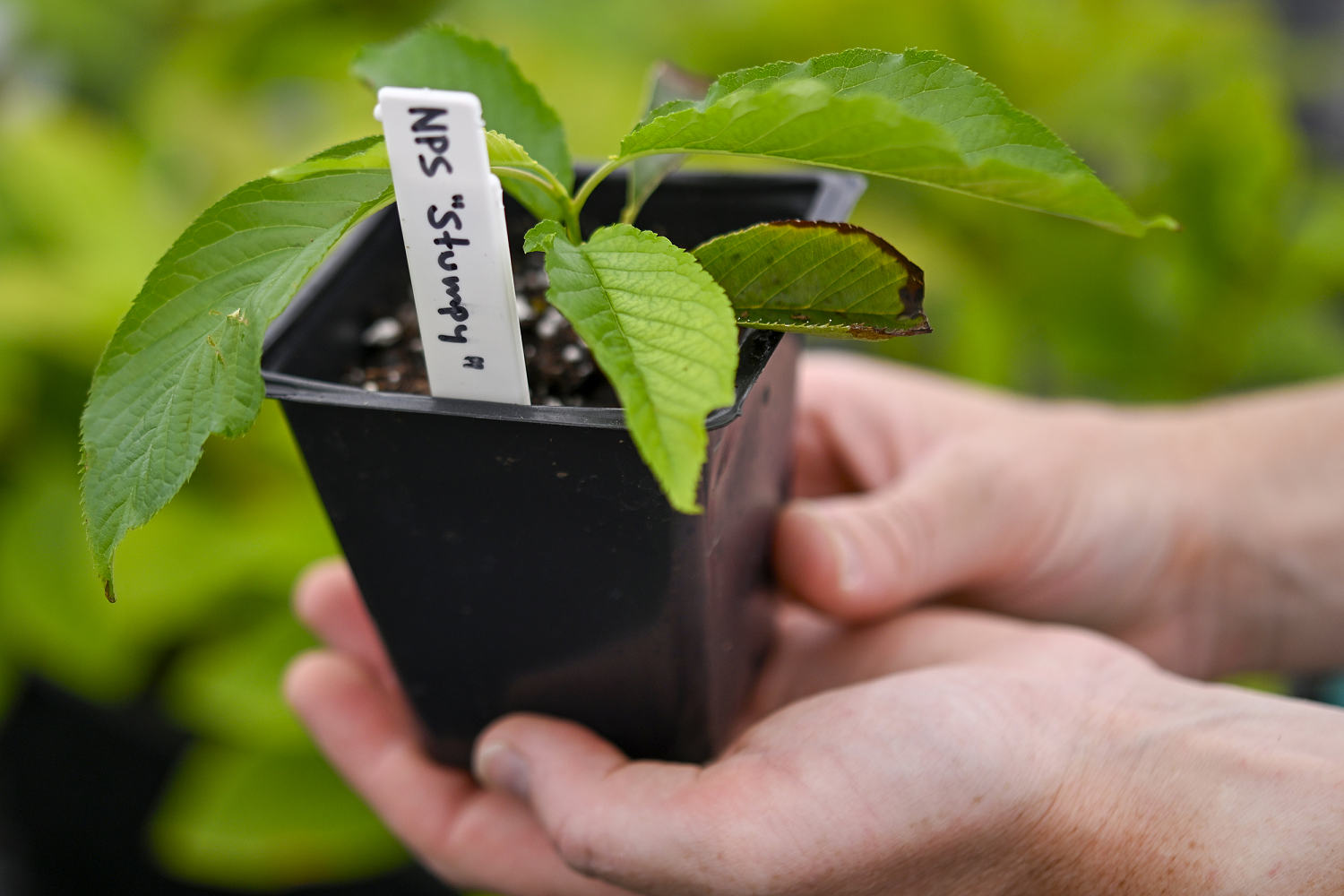
Now, in a quiet greenhouse shielded from the harsh winds of the Potomac, the impossible has happened. The ghost has returned. The clones of Stumpy have flowered for the very first time.
The Alchemy of the Scion
To understand why this matters, you have to look past the floral vanity of the Cherry Blossom Festival. We often treat trees like statues, fixed points in our personal histories. But a tree is a biological record of every trauma it has ever endured. Stumpy wasn't just a "cute" tree; it was a survivor of extreme saline stress and root rot.
When the horticulturists at the National Arboretum took those cuttings, they weren't just making copies. They were performing a form of biological time travel.
Propagation is a delicate, nerve-wracking gamble. Imagine taking a single fingernail from a person and trying to grow a twin from it. That is the essence of grafting. Scientists took the genetic material from Stumpy and fused it onto the "rootstock" of a younger, more vigorous cherry tree. The rootstock provides the muscle—the ability to draw nutrients and water from the soil—while the Stumpy graft provides the soul, the specific genetic code that dictates the shape of the leaf and the exact shade of the petal.
For months, these tiny experiments sat in controlled environments. There were no guarantees. A graft can fail for a hundred reasons: a slight temperature fluctuation, a fungal spore, or simply a lack of vigor in the parent tissue. After all, Stumpy was old. Its cells were tired.
But then, the buds began to swell.
The first green tips appeared, followed by the distinctive bronze-tinted leaves of a Yoshino. And then, a few weeks ago, the first white petals unfurled. They are identical to the flowers that once drew thousands of pilgrims to the water’s edge. The DNA held true. The memory of the survivor survived.
The Invisible Stakes of a Changing Basin
It is easy to get lost in the romance of a "baby Stumpy," but there is a cold, hard reality beneath the soil. The reason the original tree became a celebrity was that it was a victim of a landscape in crisis.
The Tidal Basin is sinking. At the same time, the sea level is rising. This creates a "pincer move" of salt water that drowns the roots of the cherry trees. When roots sit in salt water, they can't breathe. They suffocate. Stumpy was the poster child for this slow-motion disaster because it sat at one of the lowest points, frequently submerged up to its middle during high tide.
Consider the logistical nightmare of the National Park Service. They aren't just gardeners; they are engineers fighting a war against the Atlantic Ocean. The multi-year project to rebuild the sea walls is a $113 million desperate measure to ensure that the Jefferson Memorial doesn’t become an island.
The removal of the trees, including Stumpy, was a tactical retreat. By clearing the old, compromised trees and raising the grade of the land, the city is trying to buy another century of time. The clones are the reinforcement troops waiting in the wings.
The Five-Year Wait
If you go looking for these new blossoms today, you won't find them by the water. They are currently "nursery stock," which is a polite way of saying they are in middle school. They are small, spindly, and protected from the public.
The National Arboretum plans to grow these clones for about five years before they are ready to be outplanted back at the Tidal Basin. They need to develop a skeletal structure that can withstand the D.C. humidity and the inevitable contact with millions of tourists.
This waiting period is a lesson in human patience that we rarely practice anymore. We want the "content" now. We want the selfie with the famous tree today. But the natural world moves at the speed of wood. You cannot rush a cell’s division. You cannot demand a sapling grow faster than its roots can support.
There is a profound irony in the fact that by the time these clones are planted back in the earth, the Tidal Basin will look entirely different. The sea walls will be higher. The walkways will be wider. The old, familiar mud where Stumpy sat will be covered in new, reinforced stone.
Why We Project Our Lives onto Bark
Why did a dying tree become a global sensation? Why do we care that its clones are flowering in a lab?
Perhaps it’s because we live in an era of disposability. When a phone breaks, we trade it in. When a building gets old, we tear it down. We are surrounded by things that have no history and no grit. Stumpy was the opposite. It was a testament to the idea that you can be "less than perfect" and still be worthy of space.
The clones represent a second chance—not just for the tree, but for our relationship with the environment. We failed to protect the original landscape, but through science and obsession, we are carrying the best parts of it forward.
There is a specific kind of quiet in a greenhouse where a rare plant is blooming. It’s the sound of a heartbeat that almost stopped, now thudding steadily again. When those first petals opened on the clones, it wasn't just a botanical success. It was a message from the past.
The original Stumpy is gone, turned back into the nitrogen and carbon that will feed the next generation of D.C. flora. But its children are waking up. They are stretching their young branches toward the fluorescent lights of the Arboretum, unaware that they carry the weight of a city’s affection on their leaves.
One day, a decade from now, a tourist will walk along a newly minted sea wall. They will see a young, healthy cherry tree, its branches heavy with white blossoms, leaning slightly toward the water. They might not know the name "Stumpy." They might not know about the floods of 2024 or the frantic snipping of scions in the dark.
But they will stop. They will look at the flowers. And they will feel, for a fleeting moment, that even in a world that is sinking, some things are worth the effort of saving.
Life finds a way, but only if we are brave enough to hold the door open. These first blooms are the proof that we haven't closed the door just yet. The ghost is back, and this time, it has fresh roots.
Would you like me to generate an image of what these young clones look like in their protected nursery environment?