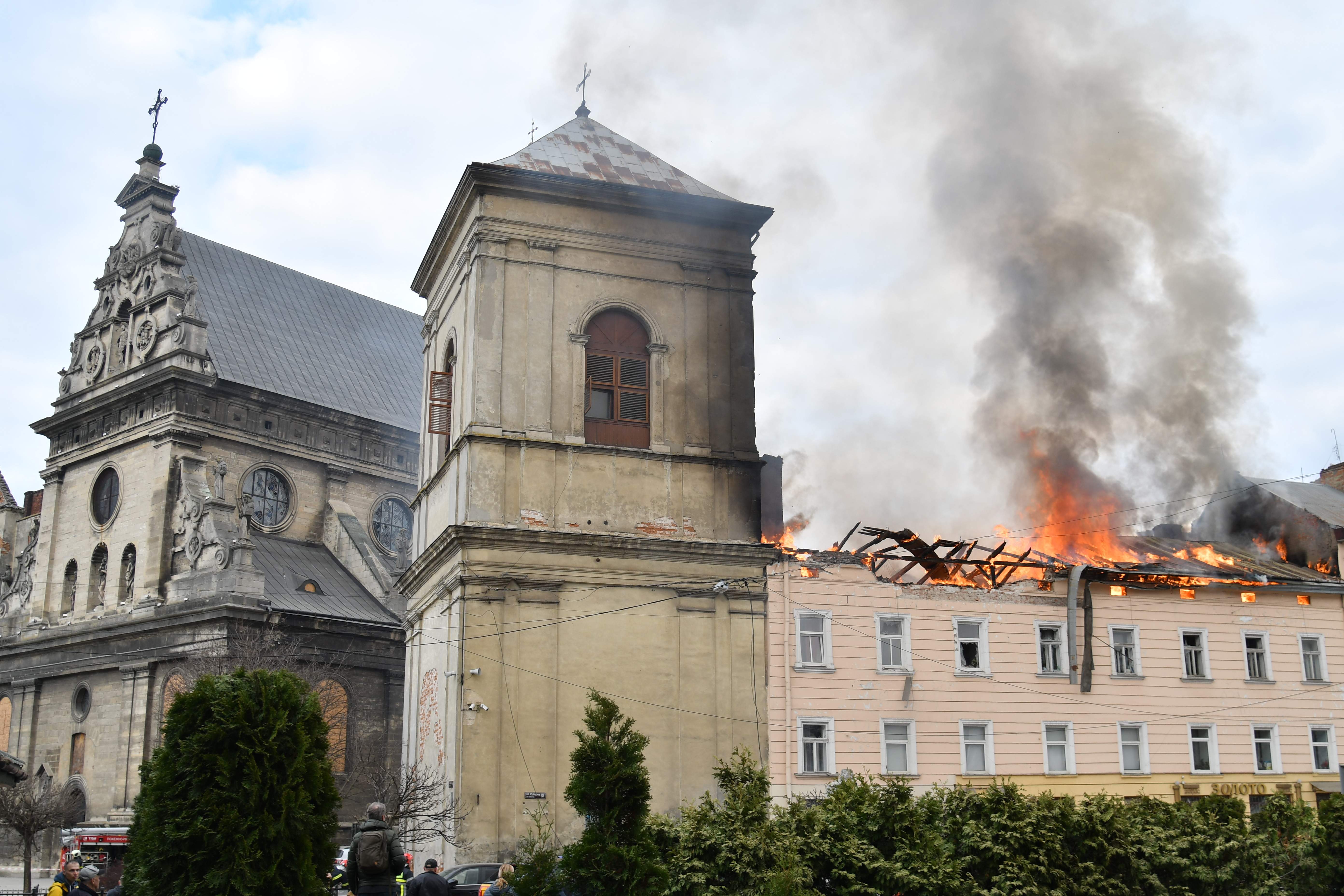
The sound of a precision-guided munition is not a roar. It is a sharp, metallic inhalation, a gasp of air sucked into a vacuum before the world fractures. In the quiet, carpeted boardrooms of Northern Virginia and the sun-drenched offices of Tel Aviv’s defense corridor, that sound translates to something much quieter: the soft click of a high-frequency trade.
Money is a liquid. It flows toward heat. Right now, the heat is radiating from a map where the borders of Israel, Lebanon, and Iran blur under the smudge of satellite-tracked smoke. For the titans of the defense industry, the escalation of conflict is not a tragedy to be mourned. It is a backlog to be filled.
The Mathematics of the Sky
Consider a single interceptor missile. It is a marvel of engineering, a pencil-thin dart packed with enough sensors to find a needle in a hurricane. It costs roughly $50,000 to $100,000 to produce. When a swarm of one hundred drones—cheap, lawnmower-engined relics—crosses a border, the math becomes a predator.
To save a city, you must spend millions in minutes.
This is the "attrition economy." It is the reason why, while global markets titter with anxiety over oil prices or shipping lanes, the share prices of the world’s largest primary contractors have decoupled from the gravity of the general index. Since the regional tension surged into a multi-front reality involving Iranian ballistic salvos and Israeli retaliatory strikes, the valuation of the "Big Five" defense firms has climbed by double digits.
The investors aren't betting on a winner. They are betting on the duration.
A Tale of Two Basements
To understand the human weight of these balance sheets, you have to look at two hypothetical, yet statistically certain, individuals.
In a basement in Haifa, an architect named Elias sits on a plastic crate. He listens to the rhythmic thud of the Iron Dome overhead. To him, each explosion is a heartbeat of survival. He doesn't think about the quarterly earnings of the company that built the battery protecting his children. He only cares that the battery is full.
Six thousand miles away, a mid-level fund manager named Sarah sits in a climate-controlled office in Manhattan. She is looking at a heat map of the Middle East. She sees the same explosions Elias hears, but on her screen, they are data points indicating a "sustained demand signal." She moves five million dollars into an aerospace ETF.
Sarah is not a monster. Elias is not a statistic. But they are both tethered to the same umbilical cord of industrial output.
The defense industry has mastered a unique form of alchemy: they have turned geopolitical instability into a recurring revenue model. In the past, wars had a beginning and an end. You built a thousand tanks, the war ended, and you went back to making tractors. Not anymore. The current conflict between the US-backed Israeli forces and the Iranian-led "Axis of Resistance" is a war of replenishment.
The Invisible Assembly Line
When Iran launched its massive barrage of over 300 projectiles in early 2024, it wasn't just a military operation. It was an involuntary stress test for the American industrial base.
The US didn't just provide diplomatic cover; it provided the hardware. Standard Missile-3 (SM-3) interceptors, fired from US Navy destroyers, are the elite guards of the atmosphere. Each one carries a price tag of nearly $10 million. In one night of frantic, high-altitude defense, the United States expended a significant portion of its annual production capacity.
The result? The Pentagon didn't just write a check to replace them. They signed multi-year, multi-billion dollar "indefinite-delivery" contracts.
This is where the "dry facts" of the competitor’s report miss the soul of the story. The "thriving" of an arms manufacturer isn't just about a spike in the stock chart. It’s about the locking in of national priorities for the next decade. When a factory in Arizona expands its production line to meet the "Iran threat," that factory isn't going away in six months. Those jobs, those supply chains, and those political lobbying blocks are now permanent fixtures of the local economy.
We have reached a point where peace is a localized risk.
The Feedback Loop of Deterrence
There is a grim irony in the concept of "deterrence." To prevent a war with Iran, the US and Israel must prove they are ready to fight one. To prove they are ready to fight one, they must buy more weapons. The more weapons they buy, the more Iran feels the need to innovate cheaper ways to overwhelm those weapons.
It is a perfect, self-sustaining loop of consumption.
- The Threat Emerges: Iran develops low-cost suicide drones.
- The Response: The US funds high-cost kinetic interceptors.
- The Escalation: Iran launches more drones to deplete the interceptors.
- The Profit: The manufacturer receives a "bridge contract" to surge production.
The complexity of these systems—lasers, AI-driven targeting, hypersonic gliders—means that no one else can build them. We are witnessing the birth of a mandatory monopoly. If you are a nation-state, you cannot opt-out. You are a subscriber to a security service that costs more every year.
The Weight of the "Backlog"
In the language of Wall Street, "backlog" is a beautiful word. It means guaranteed future money. It means the customer is waiting in line, cash in hand, and they have nowhere else to go.
For the major defense players, backlogs are currently at record highs, often exceeding $150 billion for a single firm. This isn't just a pile of orders; it is a map of future conflict. You don't order five hundred fighter jets if you expect the world to be calm in 2030. You order them because you have calculated that the friction between the West and the Iranian-Russian-Chinese bloc is a permanent feature of the human experience.
But look closer at that backlog. Behind the numbers are the raw materials.
Titanium. Neon. Semiconductors. The same materials needed for the "green transition" or to build the medical devices that might save a life in a hospital are instead being diverted into the "kill chain."
The cost of the war on Iran isn't just the taxpayer dollars flowing out of Washington. It is the "opportunity cost" of what we aren't building because we are too busy building shields.
The Human Core of the Machine
We often talk about these companies as if they are faceless monoliths. They aren't. They are composed of thousands of engineers who believe, quite sincerely, that they are the only thing standing between civilization and chaos. They go to work, they drink mediocre coffee, and they solve the physics of how to hit a moving target at Mach 5.
There is a profound sense of purpose in that work. It is the same purpose felt by the soldiers operating the batteries in the Negev desert.
The tragedy lies in the fact that their brilliance is harnessed to a system that requires the threat of annihilation to remain solvent. The "thriving" mentioned in the headlines is a symptom of a fever. If the Middle East were to suddenly find a path to a grand, lasting peace tomorrow, the "Big Five" would see their valuations crater. Thousands of people would lose their jobs. Entire congressional districts would fall into recession.
We have built a global economy that is functionally allergic to peace.
The Echo in the Vaults
As the sun sets over the Potomac, the lights stay on in the Pentagon. The latest reports from the Red Sea or the Lebanese border are being distilled into spreadsheets. They are looking at "expenditure rates."
How many missiles did we fire today?
How many do we have left in the warehouse?
How fast can the factory in Troy, Alabama, spin up a third shift?
Every time a siren wails in Tel Aviv, a bell rings on the floor of the Stock Exchange. It is not a celebratory sound, but it is a definitive one. It is the sound of the world deciding that the most valuable thing a human can produce is a way to stop another human from destroying them.
The ledger is balanced in blood and brass. As long as the "Iran threat" remains a viable, terrifying reality, the business of defense will not just survive; it will dominate.
The invisible stakes are not found in the total amount of the contract. They are found in the fact that we no longer know how to live in a world where these contracts aren't necessary. We have traded our curiosity about the stars for a sophisticated way to watch the horizon for incoming fire.
The dust settles on a street in Gaza or a suburb in Beirut, and while the survivors sift through the rubble for fragments of their lives, the analysts in Virginia sift through the data for fragments of a new market opportunity. The glass on the ground is broken, but the glass in the skyscraper is bulletproof, and the view from the top has never looked more profitable.
Somewhere, a printer is humming, producing a fresh contract that will ensure the next generation of missiles is smarter, faster, and twice as expensive as the last.
The cycle remains unbroken. The stock price holds its breath. The world waits for the next gasp of air before the fracture.