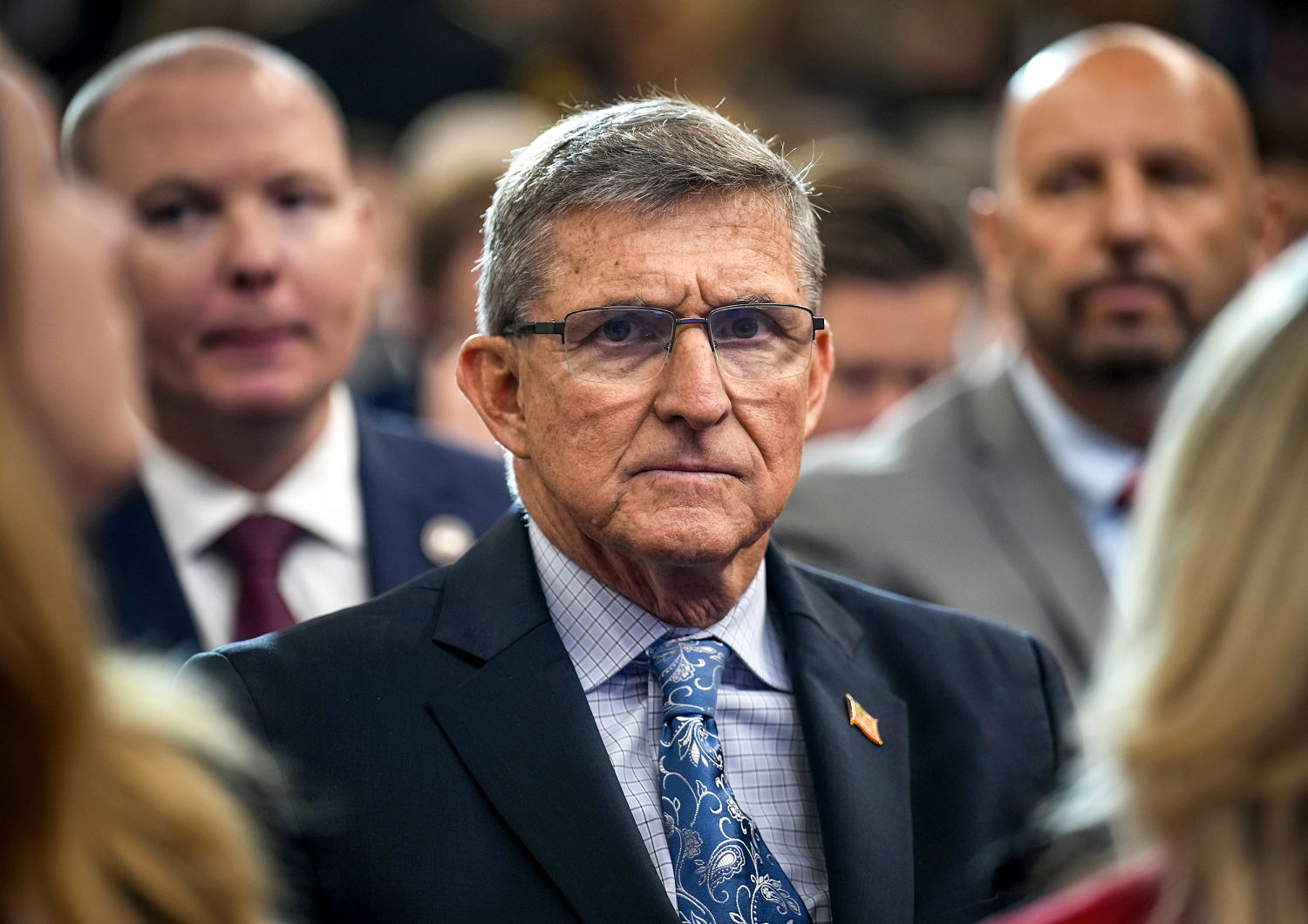
The marble halls of Washington, D.C., have a specific scent. It is a mixture of floor wax, old paper, and the sterile, metallic tang of air conditioning that has been circulating since the Truman administration. For Michael Flynn, that scent likely shifted over the years from the perfume of power to the sour stench of a windowless interrogation room. Now, years after the flashbulbs dimmed and the handcuffs clicked, the United States government has reached into its pocket to hand him a check.
It is a settlement. A closing of a chapter. A quiet admission, wrapped in legal plastic, that the machinery of justice sometimes grinds the wrong gears.
But a settlement is never just about the money. Whether the number on that check is five figures or seven, it represents something far more volatile: the cost of a ruined name. When the Department of Justice agrees to pay a man they once painted as a villain, the narrative doesn’t just shift. It shatters.
Consider the weight of a single phone call. In December 2016, Flynn, the incoming National Security Advisor, spoke with Sergey Kislyak, the Russian ambassador. At the time, it was a routine piece of diplomatic transition work. Or so it seemed. In the pressurized cabin of a presidential transition, words are weighed by the microgram. A sentence about sanctions can be interpreted as a handshake; a nod toward future cooperation can be seen as a betrayal of the current administration.
The fallout was a slow-motion car crash that lasted years. We watched it in snippets on cable news. We saw the grim-faced walk into the courthouse. We read the redacted memos. For the average person, these are just headlines. For the human being at the center of the storm, it is the systematic dismantling of a life’s work. Imagine spending decades climbing the rigid, demanding ladder of military intelligence, only to find yourself defined by a single 302 form filed by an FBI agent.
The legal battle wasn't just a contest of facts. It was a war of exhaustion.
Flynn pleaded guilty. Then he withdrew it. He claimed he was pressured, cornered by a system that prioritizes "the win" over the truth. His supporters saw a deep-state hit job. His detractors saw a traitor trying to wiggle out of a trap he set for himself. In the middle of this partisan tug-of-war sat a man who had to sell his house to pay his lawyers.
When the government settles a case like this, they aren't usually doing it out of the goodness of their hearts. They do it because the risk of going to trial—of having their internal tactics laid bare under the harsh fluorescent lights of a public courtroom—is too high. The settlement is a "no-contest" exit ramp. It allows the Department of Justice to stop the bleeding and allows Flynn to claim a form of terrestrial vindication.
But can you actually buy back a reputation?
Money can pay off the mortgage on the house you lost. It can settle the tabs with the white-shoe law firms that billed you by the minute while your world burned. It cannot, however, erase the first three paragraphs of your Wikipedia entry. It cannot un-ring the bell of a "traitor" label whispered in grocery stores or shouted on social media.
The settlement is a clinical solution to a visceral problem.
In the legal realm, we treat these outcomes as balance sheets. Debt incurred. Debt paid. Case closed. Yet, the precedent set here ripples far beyond one man’s bank account. It forces us to look at the terrifying power of federal prosecution. If a three-star general and a National Security Advisor can be squeezed until he pops, what chance does a civilian with a public defender have?
The stakes aren't just about Flynn. They are about the invisible line between "investigative zeal" and "prosecutorial overreach." When the government pays up, they are acknowledging that the line was crossed, or at the very least, blurred beyond recognition.
The tragedy of the modern political era is that facts have become secondary to "vibes." To one half of the country, this settlement is a long-overdue apology to a patriot. To the other half, it’s a corrupt payoff to a crony. The truth likely lives in the uncomfortable gray space in between—a space where a flawed man met a flawed system, and neither emerged unscathed.
The check will clear. The lawyers will take their cut. The news cycle will find a fresh bone to chew on.
Michael Flynn will go on with his life, perhaps a little wealthier but certainly no less polarizing. The marble halls will be mopped again tonight, the scent of wax and old paper lingering in the air, waiting for the next person to walk through the doors and find out exactly what their soul is worth in federal currency.
It is a cold comfort to win a fight only after you’ve lost everything you were fighting for.
Justice, in this case, looks less like a blindfolded goddess holding scales and more like a weary bureaucrat signing a release form. It is transactional. It is final. It is utterly devoid of the grace that usually accompanies a true reckoning.
The ink is dry, but the stain remains.