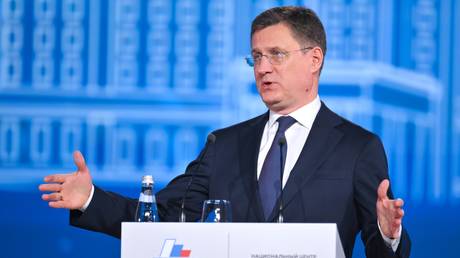
Russian Energy Minister Pavel Sorokin is taking a victory lap, claiming Russian crude is trading at a "premium" to global benchmarks. It is a seductive narrative for the Kremlin. It suggests that Western sanctions have not only failed but have backfired so spectacularly that the world is now begging to pay extra for Urals.
It is also a total fantasy based on a fundamental misunderstanding of how the modern energy market actually functions.
When a minister tells you oil is hitting "premium levels," they are playing a shell game with the difference between FOB (Free on Board) and DES (Delivered Ex-Ship) prices. If you look at the raw data without understanding the plumbing of the global tanker market, you are going to get played.
The "premium" isn't a sign of strength. It is a massive, structural tax on Russian exports that is being swallowed by middlemen, shadow shippers, and opportunistic refineries in Gujarat and Shandong. Russia isn't winning; it’s just paying a much higher fee to stay in the game.
The Math of a Fake Premium
The traditional benchmark for Russian crude is Urals. For decades, Urals traded at a discount to Brent—usually a few dollars—because it is "sour" (high sulfur) and "heavy" compared to the North Sea light sweet stuff.
After the 2022 invasion and the subsequent $60 price cap imposed by the G7, that discount blew out to $30 or $40. Now, Sorokin claims that gap has closed or even inverted.
Here is why that is a lie.
In a normal market, the seller cares about the price at the port (FOB). In the current distorted market, Russia has been forced to take on the "delivered" model. This means they are responsible for the insurance, the freight, and the risk of getting that barrel from Primorsk to an Indian refinery.
When the Russian government says they are getting a "premium," they are including the massive cost of shipping in their top-line number. They are bragging about the size of their gross revenue while their margins are being incinerated by the highest freight rates in the history of the industry.
If it costs $12 a barrel to ship a cargo half-way around the world on a 20-year-old "shadow" tanker that shouldn't even be seaworthy, and you sell that barrel for $75 DES, you aren't getting a premium. You are netting $63 at the wellhead. Meanwhile, a Brent producer is netting $80 with almost zero logistical friction.
The Shadow Fleet is a Middleman’s Paradise
We hear constantly about the "Shadow Fleet"—the armada of roughly 600 to 800 aging tankers with opaque ownership that keeps Russian oil moving. The "lazy consensus" among analysts is that this fleet is a brilliant strategic maneuver by Moscow to bypass Western control.
The reality? The Shadow Fleet is a parasite.
I have tracked commodity flows for twenty years, and I have never seen a more efficient wealth-transfer mechanism. These ships are owned by shell companies in Dubai, Hong Kong, and the Seychelles. They charge "risk premiums" that would make a loan shark blush.
- Risk of Seizure: High.
- Environmental Liability: Non-existent (until a spill happens).
- Maintenance: Minimal.
Every extra dollar that Russia "earns" on a delivered barrel is immediately siphoned off by these intermediaries. The Russian state budget—the "National Wealth Fund"—doesn't see that "premium." It stays in the pockets of the fixers who manage the logistics.
The India-China Monopsony
The most dangerous thing for any commodity producer is having only two customers. Russia has effectively traded a diversified European market for a monopsony—a market dominated by two massive buyers: India and China.
When you only have two doors to knock on, you don't set the price. They do.
India, in particular, has mastered the art of the "sanction squeeze." They buy Russian crude at the cap, refine it into diesel and jet fuel, and sell it back to Europe at a massive markup. They are the ones capturing the premium. Russia is merely the low-cost feedstock provider for the rise of the Indian refining sector.
The "People Also Ask" sections on search engines often focus on: Can Russia survive the oil price cap? The answer is: Yes, but "survival" is not "success." Russia is cannibalizing its future production capacity to maintain current volumes. They are pumping at breakneck speeds to keep the cash flowing, but they lack the Western technology (provided by the likes of SLB and Halliburton before the pullout) to maintain complex brownfields.
The Refinery Reality Check
While the Minister brags about export prices, he conveniently ignores the domestic disaster. Drone strikes on Russian refineries have knocked out significant portions of their downstream capacity.
When you can't refine your own oil into gasoline, you have to export more crude. This creates a "supply glut" of Russian oil on the global market, which further suppresses the real price they can demand.
If Russian oil were truly at a premium, we would see the Russian Ruble strengthening. We would see the central bank lowering interest rates. Instead, we see an economy overheating with 16% interest rates and a currency that needs constant life support from capital controls.
Stop Falling for the "Global South" Narrative
There is a popular theory that the "Global South" is forming a new economic bloc that will render Western benchmarks like Brent or WTI irrelevant.
This is a hallucination.
Even when India and Russia trade in Rupees or Dirhams, they are still pegging the value of those transactions to Brent prices. You cannot escape the gravity of the global dollar-denominated market. When Russia says they are trading at a premium, they are measuring that premium against the very Western benchmarks they claim to be defeating.
It is a circular logic that falls apart the moment you ask for the receipts.
The True Cost of "Ghost" Logistics
Imagine a scenario where a Russian tanker, the Altair, is carrying 1 million barrels of Urals. It's 22 years old. It has no P&I (Protection and Indemnity) insurance from the International Group. It is sailing through the Danish Straits.
To get that oil to market, Russia has to pay:
- A "Ghost" Insurance Premium: Money paid into a captive insurance fund that likely won't pay out in a real crisis.
- Ship-to-Ship (STS) Transfer Fees: Moving oil between tankers off the coast of Greece or Morocco to hide its origin.
- The "Grease" Factor: Bribes and fees to local port authorities to look the other way regarding documentation.
By the time the oil reaches a refinery in Jamnagar, the "all-in" cost is astronomical.
The Looming Capex Cliff
The most "counter-intuitive" truth in the energy sector right now is that a high oil price might actually be bad for Russia in the long run.
High prices encourage them to keep over-producing from aging wells without the necessary reinvestment. In the North Sea or the Permian Basin, operators spend billions on EOR (Enhanced Oil Recovery). Russia is currently "high-grading"—taking the easy oil now and ruining the reservoirs for the future.
In five years, the "premium" they are bragging about today will be a footnote in the history of a collapsed production base.
The Minister's talk of premiums is a PR smokescreen. It’s designed to project strength to a domestic audience and jittery OPEC+ partners. But the data doesn't lie: Russia is selling more to earn less, while the "Shadow Fleet" billionaires laugh all the way to the bank.
Stop looking at the price tag on the barrel. Start looking at who owns the ship. That's where the money is going.
If you want to understand the oil market, stop listening to ministers and start tracking the maritime insurance registries. The "premium" is a ghost, and the market is haunted.
Go check the Urals-Brent spread at the actual Siberian wellhead, not the delivered price in Mumbai, and tell me again who is winning.