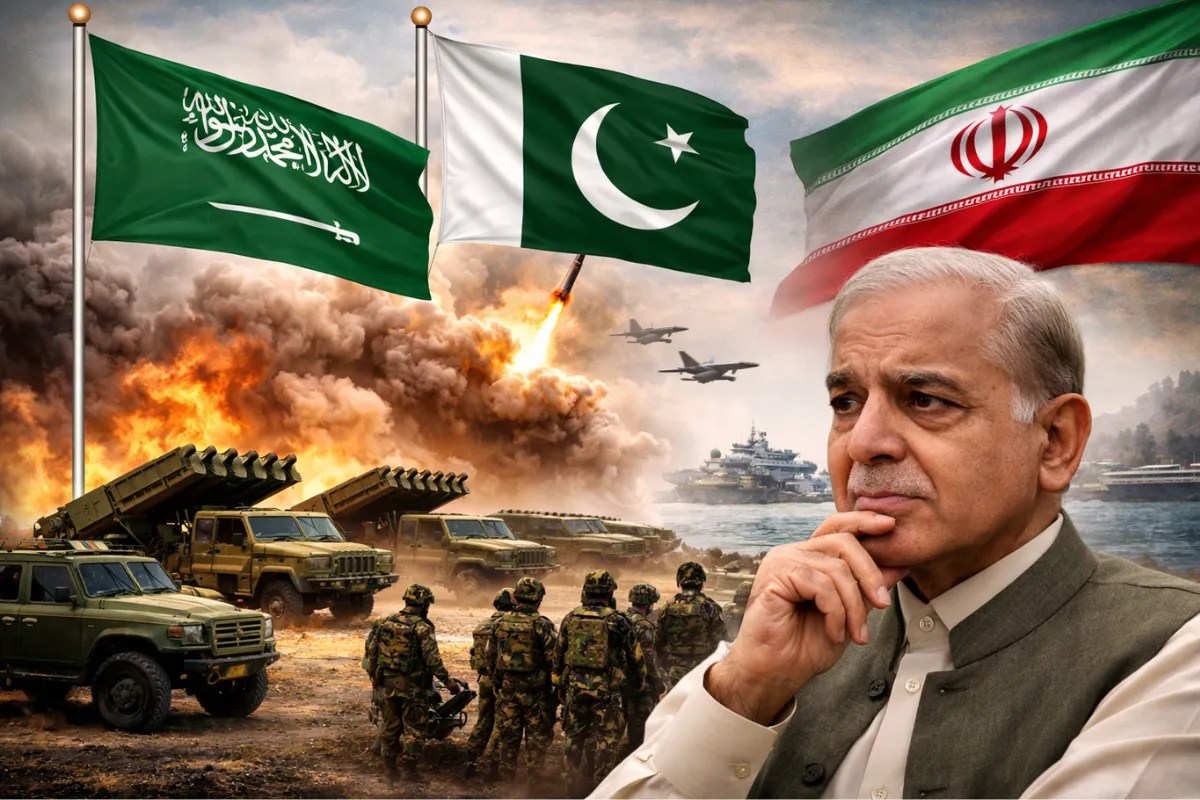
The mainstream narrative regarding Pakistan’s defense pact with Saudi Arabia is a masterclass in surface-level analysis. Armchair geopoliticians are currently obsessed with the idea that Islamabad is "trapped" or "caught in the middle" of a looming Middle Eastern conflagration. They point to the lack of immediate multi-billion dollar cash injections as proof of a failed strategy.
They are looking at the wrong balance sheet.
The "lazy consensus" suggests that Pakistan has traded its sovereignty for empty Saudi promises, leaving it vulnerable to Iranian retaliation and devoid of the "strength" it was promised. This is a fundamental misunderstanding of how asymmetric power works in the 21st century. Pakistan isn't a victim of this deal; it is the ultimate hedge fund manager of regional instability.
The Myth of the Investment Deficit
Critics love to moan about the "delayed" Saudi refinery projects or the lack of immediate FDI into the Special Investment Facilitation Council (SIFC). They see a lack of cash and scream "failure."
In reality, the value of the Saudi-Pakistan relationship is not found in liquid capital. It is found in strategic solvency. When you are a nuclear-armed state with a fragile economy, you don't need a one-time check; you need a permanent credit line of geopolitical relevance.
By deepening military ties with Riyadh, Pakistan has effectively made itself "Too Big to Fail" for the Gulf monarchies. Saudi Arabia isn't just buying soldiers; they are buying an insurance policy against regional hegemony. The moment that relationship "fails," the security architecture of the entire Arabian Peninsula shifts. That leverage is worth more than ten refineries.
Iran is Not the Threat You Think It Is
The competitor's claim that Pakistan is "trembling" over Iranian backlash is pure theater. Tehran and Islamabad have spent decades mastered the art of "controlled friction." They trade border skirmishes like corporate rivals trade patent lawsuits—it’s a cost of doing business, not a precursor to total war.
The real nuance? Iran needs Pakistan to remain neutral more than Pakistan needs to appease Iran. If Pakistan were to truly pivot into a dedicated Saudi proxy, Iran’s eastern flank becomes a nightmare. Islamabad knows this. By flirting with Riyadh while maintaining a "security-first" dialogue with Tehran, Pakistan is practicing Strategic Ambiguity.
Don't mistake a diplomat's polite concern for a General's fear. Pakistan’s military isn't "trapped" by the Iran-Israel-Saudi triangle; it is the only entity in the region that can talk to every side while holding a nuclear deterrent.
The Military Strength Fallacy
There is a persistent, tired argument that this deal hasn't "increased Pakistan's strength." This assumes strength is measured solely by how many new fighter jets you can buy this week.
Real strength in this context is Interoperability.
- Logistical Depth: The defense pact allows Pakistan to integrate its hardware and training modules into the wealthiest defense budget in the world.
- Technological Backdoor: Through Saudi Arabia, Pakistan gains peripheral access to Western defense ecosystems that are often restricted by direct US sanctions or political hurdles.
- Human Capital: The export of military expertise isn't "brain drain"; it's a massive, state-sponsored training exercise funded by someone else's treasury.
I’ve watched analysts cry about Pakistan "losing its edge" because it isn't fighting a conventional war. They forget that the most powerful army is the one that gets paid to stay ready, not the one that goes bankrupt winning a desert.
The Invisible ROI: The Petro-Security Swap
Let’s talk about what the "experts" miss: the Eurobond Shadow.
Pakistan’s economic survival is tied to its ability to roll over debt and secure IMF packages. Every time a Saudi Prince mentions "defense cooperation," the risk premium on Pakistani debt flattens. Why? Because the markets know that the House of Saud will not let their primary security partner go into a hard default.
It’s not an investment; it’s a Geopolitical Escrow.
If you think this deal is about building factories, you’re playing checkers. This is about ensuring that whenever the IMF asks for "assurances" from friendly nations, Riyadh is the first to pick up the phone. You can't put a price tag on that kind of systemic backstop.
Stop Asking if Pakistan is "Caught"
The "People Also Ask" sections of the internet are filled with queries like "Will Iran attack Pakistan?" or "Is Saudi Arabia abandoning Pakistan?"
These questions are fundamentally flawed because they assume these nations act like emotional teenagers. These are cold, calculating actors.
- Will Iran attack? No. They can't afford a two-front cold war.
- Is Saudi Arabia abandoning Pakistan? No. You don't abandon the only Muslim nuclear power when your primary rival is enriching uranium.
The real question you should be asking is: How much is Pakistan charging for the status quo?
The answer is: enough to keep the lights on and the missiles fueled. In the brutal world of South Asian survival, that isn't a "failed deal"—it’s a masterstroke.
The Downside No One Admits
To be clear, this strategy has a shelf life. The risk isn't Iranian missiles or Saudi "betrayal." The risk is Internal Stagnation.
By relying on the "Security for Solvency" model, Pakistan’s elite have effectively subsidized their own refusal to reform the domestic economy. When you can sell your strategic location and military pedigree to the highest bidder, you lose the incentive to build a competitive manufacturing base.
Pakistan isn't "trapped" by its neighbors. It is trapped by its own success at playing them against each other. It has become so good at being a "vital security partner" that it has forgotten how to be a functioning civilian economy.
The Tactical Reality
Forget the headlines about "war clouds." Watch the joint exercises. Watch the frequency of mid-level military delegations.
When Saudi Arabia looks at its Vision 2030, they see a need for security that doesn't rely solely on an unpredictable Washington D.C. Pakistan is the only logical choice to fill that gap. This isn't a "defense deal" in the traditional sense; it's a Merger and Acquisition of regional stability.
Stop looking for the "investment" in the form of a shiny new car. Look for it in the fact that the bank hasn't foreclosed on the house despite the owners not having a job for ten years.
That’s not weakness. That’s an elite-level grift. And in geopolitics, the best grifter usually wins.
If you want to understand the real movement in the region, stop reading the civilian press releases. Follow the fuel tankers and the flight paths of the transport planes. Pakistan isn't losing its grip; it’s tightening it on the only thing that matters in the Middle East: the necessity of its own existence.
The next time you hear someone say Pakistan is "trapped" in a Saudi-Iran war, ask them why both sides are still sending envoys to Islamabad to beg for "restraint."
You don't beg a weak man for restraint. You beg the man holding the gun.
Go look at the debt maturity schedules for the next twenty-four months and tell me again how "unsuccessful" this partnership is.