The relationship between Pakistan’s military and its Shia minority just hit a new low. During a recent closed-door iftar event in Rawalpindi, Army Chief General Asim Munir reportedly looked a group of Shia clerics in the eye and gave them a choice: stop protesting for a foreign power or leave. His exact words, according to several religious leaders in the room, were blunt. "If you love Iran so much, then go to Iran."
This isn't just a stray comment from a frustrated general. It’s a deliberate policy shift. For decades, Pakistan’s "establishment" tried to play a balancing act between its massive Shia population—the second largest in the world after Iran—and its strategic ties to Saudi Arabia. That act is over. Munir’s ultimatum marks the moment the military decided that religious affinity for Tehran is no longer compatible with "national interest" in Islamabad.
The Breaking Point in Rawalpindi
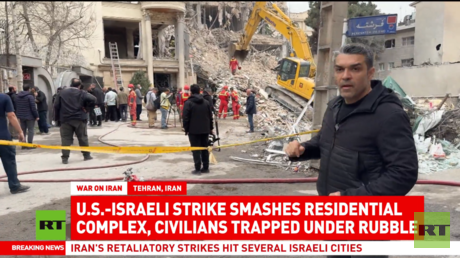
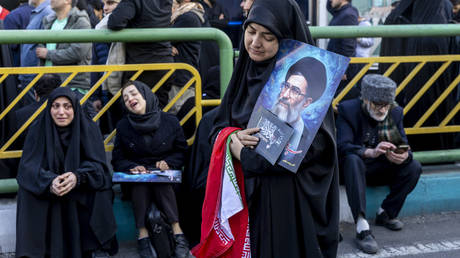
The meeting was supposed to be about "societal harmony." Instead, it turned into a lecture. Munir was reportedly furious over recent protests across Pakistan. These weren't about local issues like inflation or the rigged February elections. They were about the death of Iranian Supreme Leader Ayatollah Ali Khamenei and Israeli aggression in the Middle East.
From the military’s perspective, these protests aren't just religious expressions. They're security threats. The army sees the Shia community’s grief as a sign of "dual loyalty." When thousands of people hit the streets of Skardu, Jhang, and Karachi carrying posters of Iranian leaders, the generals in Rawalpindi see a fifth column.
Munir didn't stop at the "go to Iran" comment. He allegedly warned the clerics that anyone approaching military installations during these protests would be shot. He also made it clear that protesters wouldn't face the slow, often-lenient civilian courts. They’ll be hauled into military courts. If you're wondering why the tone has changed so drastically, look at the map. Pakistan is pivoting hard toward the Gulf.
Following the Money to Riyadh
Pakistan is broke. The economy is on life support, and the doctors are in Riyadh and Abu Dhabi. The Special Investment Facilitation Council (SIFC), which Munir essentially runs, is banking on billions in investment from Saudi Arabia and the UAE.
You can't ask the Saudis for $25 billion while your citizens are burning flags and praising their arch-rival, Iran. Munir explicitly told the clerics that the Pakistani army would stand with Saudi Arabia under a "Joint Strategic Defence Agreement" if the Kingdom asked. This is a massive departure from Pakistan's historical stance of neutrality in the Saudi-Iran rivalry.
Basically, the army chief has picked a side. He’s betting the country's future on Sunni Gulf capital, and he’s willing to crush any internal dissent that might annoy his donors.
The Clerics Fire Back
The reaction from the Shia leadership was immediate and venomous. They aren't backing down. Allama Nasir Abbas and other senior figures didn't just disagree; they questioned Munir’s own loyalty.
"You are becoming America’s servants," Allama Syed Ahmed Iqbal Rizvi retorted in a public address. The rhetoric has shifted from "protect us from terrorists" to "you are the ones destroying the country." The clerics are leaning heavily on the history of Pakistan’s creation. They’ve been reminding anyone who will listen that Muhammad Ali Jinnah, the nation's founder, was himself from a Shia background.
It’s a powerful argument. It frames the Shia community not as a "foreign-influenced minority," but as the literal architects of the state. By telling them to "go to Iran," Munir isn't just attacking a sect; he's rewriting what it means to be Pakistani.
Why This Matters Right Now
This isn't just a religious spat. It’s a dangerous cocktail of three distinct crises:
- Sectarian Fault Lines: Pakistan has a brutal history of Shia-Sunni violence. When the head of the army uses language that sounds like extremist rhetoric, he risks green-lighting militants who have spent years targeting the Shia community.
- Foreign Policy Hypocrisy: For years, Pakistan claimed to be a bridge between Tehran and Riyadh. That bridge is currently being demolished.
- Military High-Handedness: The army is already under fire for its interference in the 2024 elections. Attacking a religious minority further alienates a huge chunk of the population that already feels the military has overstepped its bounds.
The "go to Iran" comment has turned into a rallying cry. Protests are popping up in Gilgit-Baltistan and Punjab, not just about Iran, but about the right to exist in Pakistan without having your patriotism questioned.
If you're watching this from the outside, don't mistake it for a simple theological debate. This is about power, money, and who gets to define "loyalty" in a country that is increasingly divided. The military is trying to force a mono-identity on a pluralistic society to please foreign investors. It’s a high-stakes gamble that could easily blow up in their faces.
To stay informed on how this impacts regional stability, monitor the official statements from the Majlis Wahdat-e-Muslimeen (MWM) and the ISPR's follow-up press releases. The next few Friday sermons across Pakistan will likely dictate whether this tension simmers down or boils over into widespread civil unrest. Keep an eye on the border regions in Balochistan, where any spillover of this rhetoric could trigger more than just verbal sparring.