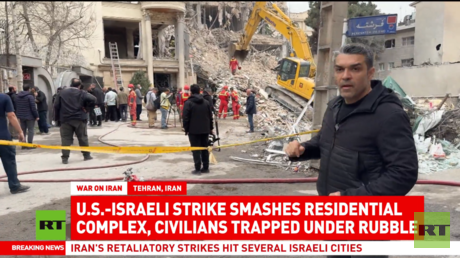
The current friction between the United States and Iran has moved beyond simple diplomatic impasse into a state of structural entrapment where the cost of de-escalation for both parties now exceeds the marginal cost of continued low-level kinetic engagement. This phenomenon, defined here as Strategic Sunk Cost Attachment, occurs when political actors prioritize the preservation of "deterrence credibility" over the objective assessment of geopolitical gains. As the timeline of the conflict extends, the window for a negotiated equilibrium narrows because the internal political capital required to "fold" increases exponentially relative to the actual military stakes on the ground.
The Triad of Deterrence Erosion
The stability of the Middle East has historically relied on a predictable feedback loop of action and reaction. However, three specific variables have decoupled, leading to a breakdown in traditional deterrence.
1. The Asymmetry of Risk Tolerance
The United States operates under a Democratic Constraint Function, where domestic sensitivity to casualties and long-term deployments limits the executive branch's appetite for sustained conflict. Conversely, the Iranian leadership utilizes an Ideological Survival Metric. For Tehran, the "Gray Zone" conflict—utilizing non-state proxies to achieve state objectives—is not an auxiliary tactic but a core survival mechanism. When one party measures success by "avoiding loss" and the other measures it by "exhausting the opponent’s patience," the party with the higher pain threshold gains a mathematical advantage in a war of attrition.
2. The Proxy Decoupling Effect
A critical fallacy in Western analysis is the assumption of a perfect command-and-control hierarchy between Tehran and its "Axis of Resistance." In reality, these groups operate on a Semi-Autonomous Franchise Model. While Iran provides the hardware and high-level strategic direction, local commanders often make tactical decisions based on regional grievances.
- The Intent Gap: An autonomous militia strike that kills US service members may not have been authorized by the IRGC, yet the US is structurally obligated to hold Tehran responsible to maintain the integrity of its deterrence threats.
- The Escalation Ladder: This creates a scenario where a third-party actor can force the two primary powers into a direct confrontation that neither fundamentally desires.
3. The Failure of Economic Levers
Sanctions were designed as a "non-kinetic" tool to force behavioral change. However, the Iranian economy has reached a state of Sanction Immunization. By pivoting toward a "Resistance Economy" and deepening trade ties with non-Western blocs (notably China and Russia), the marginal impact of additional US sanctions has hit a point of diminishing returns. When the primary tool of influence—economic pressure—loses its teeth, the only remaining tools are military, which are inherently more volatile and harder to calibrate.
The Attrition Calculus: Why Time Favors the Insurgent
In a prolonged conflict, the "Status Quo" is not static; it is a decaying asset for the established power. The United States faces a Logistical and Financial Drain that far outstrips the investment required by Iranian-backed entities.
- The Interceptor-to-Threat Cost Ratio: Using a $2 million interceptor missile to down a $20,000 "one-way" attack drone is a fiscal catastrophe over a long horizon. This creates a "Cost Imbalance Ratio" that Iranian strategists actively exploit to hollow out US defense budgets and readiness.
- The Intelligence Saturation Point: The longer a conflict persists, the more the adversary learns about your patterns of life, defensive capabilities, and political red lines. Iran has spent decades mapping US vulnerabilities in the Persian Gulf and Levant. Each month of continued tension provides Tehran with high-fidelity data on how the US responds to various stimuli.
The Credibility Trap
Both Washington and Tehran are currently caught in a Credibility Trap, a psychological state where the fear of appearing weak dictates policy more than the pursuit of a specific outcome.
For the US, a withdrawal or a significant reduction in regional footprint after a series of attacks would be interpreted globally as a defeat, potentially signaling to other adversaries (e.g., in the Indo-Pacific) that the US can be harassed out of its strategic positions. For Iran, any sign of backing down under US military pressure threatens the domestic legitimacy of the regime and its standing among its regional proxies.
This creates a Deadlock of Credibility. Neither side can afford the "first mover" advantage of de-escalation because the perceived cost to their reputation is higher than the actual cost of staying the course.
The Mechanics of "Accidental Escalation"
As the density of military assets in the region increases, the probability of a "Black Swan" event—a mechanical failure, a misidentified target, or an overzealous local commander—rises. In a high-trust environment, these incidents are resolved via hotlines. In the current high-friction environment, they serve as triggers for the next rung on the escalation ladder.
Strategic Shift: Moving Beyond Kinetic Reactive Cycles
To break the cycle of narrowing options, the strategic framework must shift from Reactive Deterrence to Proactive Containment and Decoupling.
The first step requires a rigorous audit of US interests in the region to separate "vital" assets from "legacy" positions. Maintaining a presence in locations that offer high target-value to proxies but low strategic-value to the US creates unnecessary exposure.
The second step involves a Multi-Vector Counter-Proxy Strategy. Rather than retaliating against the "hand" (the proxy), the focus must shift to the "nervous system" (the logistics and financial networks that connect the proxy to the state). This requires a more sophisticated integration of cyber operations and targeted financial interdiction that targets the IRGC's internal commercial interests, creating domestic friction within the Iranian power structure.
The final strategic move is the establishment of a Crisis Communication Architecture. Deterrence only works when the adversary knows exactly what will trigger a response and what will not. The current ambiguity serves only to invite miscalculation. Establishing clear, non-public channels for de-confliction is not a sign of weakness; it is a requirement for managing a high-risk relationship where the ultimate goal is the avoidance of a total regional war that would serve neither party's long-term objectives.
The path forward is not found in "winning" a war of attrition, but in re-engineering the environment so that attrition is no longer the primary mode of interaction. This demands a pivot from purely military responses to a sophisticated, integrated strategy that leverages US strengths in financial intelligence and diplomatic coalition-building to isolate the "Gray Zone" tactics and render them strategically obsolete.