The Silence of the Sky
Steel and circuitry don’t bleed, but when a multi-million dollar piece of American engineering vanishes over hostile territory, the air in the West Wing turns heavy. It is a specific kind of pressure. It feels like the oxygen has been sucked out of the room, leaving behind only the low hum of computer fans and the frantic scratching of pens.
John Bolton knows this feeling. He has spent a lifetime navigating the labyrinthine corridors of power, where decisions are measured in lives and the distance between a "diplomatic incident" and "total war" is thinner than a sheet of vellum. When he speaks of a president in "panic mode," he isn't just throwing political shade. He is describing a physiological reality.
Think of a pilot. Let's call him Miller. Miller isn't a statistic or a line item in a defense budget. He is a father from Ohio who likes craft beer and struggles to help his daughter with common-core math. Now, imagine Miller’s cockpit lighting up with the frantic chirping of a surface-to-air missile lock. The world outside his canopy is a blur of high-altitude indigo and the jagged, unforgiving brown of the Iranian desert.
Then, the signal goes dark.
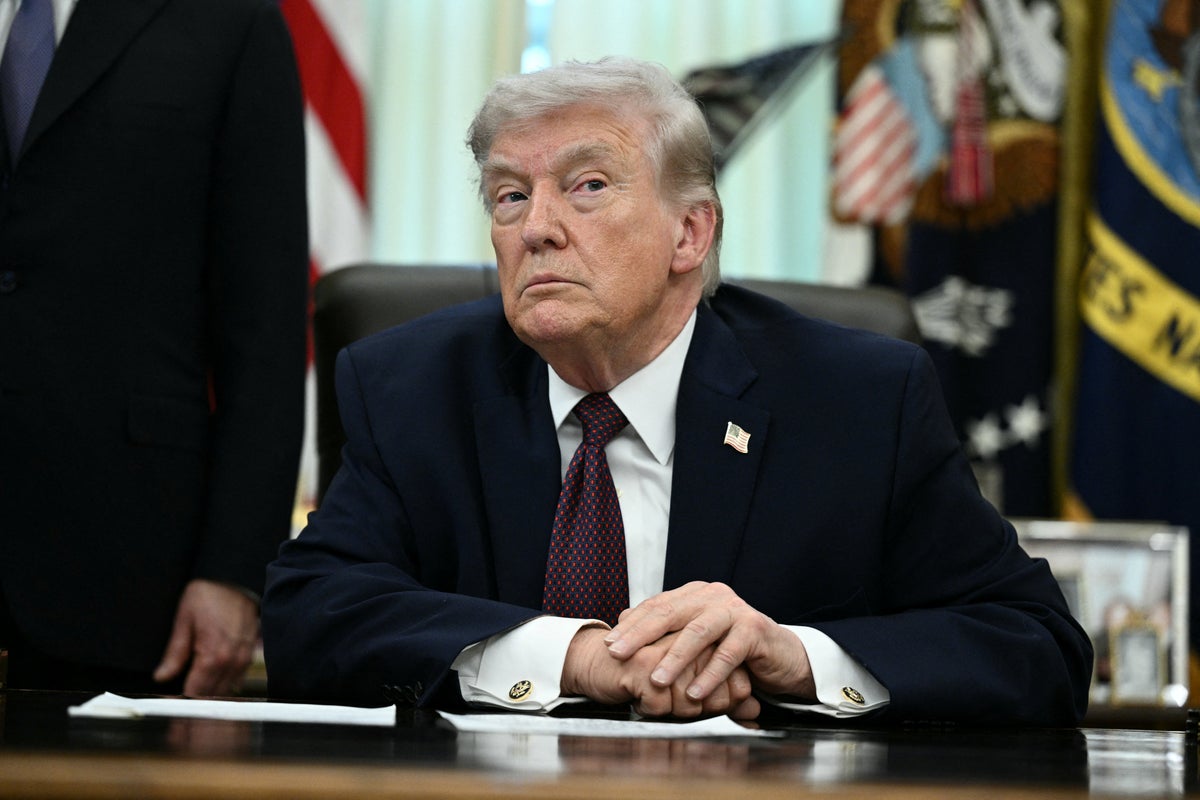
On the screens in Washington, a glowing green icon simply disappears. No explosion. No distress call. Just a void where a human being used to be. This is the moment where the bravado of the campaign trail meets the cold, hard wall of the Oval Office.
The Weight of the Chair
The presidency is often sold as a position of ultimate power, but in moments like these, it is a position of ultimate trapped-ness. You are the most powerful person on earth, yet you are entirely dependent on a thin stream of data coming from a place you cannot see and cannot reach.
When news broke that US jets were purportedly shot down and a pilot was missing, the gears of the geopolitical machine didn't just grind; they shrieked. Former National Security Adviser John Bolton’s assessment of the situation wasn't based on hearsay. It was based on the predictable psychology of a leader who realizes the script has been flipped.
In the typical Washington dance, the US dictates the tempo. We move, they react. But a downed pilot changes the physics of the room. Suddenly, the adversary holds the only currency that matters: a human soul.
The panic Bolton describes isn't the frantic running of a cartoon character. It is the internal collapse of a strategy. If the reports are true, the administration faces a binary choice, and both options are poisoned. You can strike back and risk a regional conflagration that sends oil prices screaming and body bags returning. Or, you can negotiate, admitting that your "maximum pressure" campaign had a glass jaw.
The Ghost in the Machine
We talk about technology as if it is infallible. We use words like "stealth" and "superiority" to wrap ourselves in a blanket of security. But the reality is that the skies over Iran are thick with sensors designed specifically to find the "unfindable."
An F-35 or an F-22 is a marvel. It is a flying supercomputer. Yet, it remains a fragile thing of aluminum and carbon fiber. When an adversary manages to poke a hole in that veil of invincibility, it does more than destroy an aircraft. It destroys a narrative.
For years, the American public has been told that our technological edge is an insurmountable wall. We believed that we could project power without the messy, bloody consequences of 20th-century warfare. We thought we had "solved" the problem of risk.
We were wrong.
Consider the technical reality of a shoot-down. It isn't always a direct hit. Sometimes, it’s a proximity fuse that peppers the engine with shrapnel. Sometimes, it’s a cyber-override that confuses the navigation systems until the plane simply runs out of sky. Whatever the method, the result is a vacuum of information.
Is the pilot dead? Is he being paraded through the streets of Tehran? Is he hiding in a ravine, clutching a signaling mirror and praying for the thump-thump-thump of a rescue chopper that might never come?
The Invisible Stakes
The panic in the White House isn't just about one man or one plane. It is about the global perception of strength. In the world of high-stakes diplomacy, reputation is the only thing that prevents the next conflict.
If the US looks hesitant, China watches. If the US looks reckless, our European allies pull back. Every minute that passes without a clear answer is a minute where the American brand loses value.
Bolton’s critique is sharp because it identifies the gap between the public persona—the "tough guy" image—and the private reality of a leader realizing he has no good cards left to play. It is easy to tweet about fire and fury when you are in a gold-trimmed office. It is much harder to look a military chaplain in the eye when things go sideways.
The missing pilot becomes a ghost that haunts every meeting. You can’t discuss trade deals while the ghost is there. You can’t talk about infrastructure or the next election. The ghost demands an answer.
The Human Core of the Crisis
Behind the headlines and the partisan bickering, there is a kitchen table in America where the phone hasn't rung yet, but the air feels wrong. A spouse is looking at the clock, wondering why the scheduled FaceTime call is late.
This is where the "panic mode" truly resides. It trickles down from the Situation Room to the suburbs. It is the realization that the grand games of emperors and presidents always come down to a single person in a cold place, waiting for a rescue that may be politically impossible to authorize.
The machinery of war is cold. The rhetoric of politics is loud. But the reality of a missing pilot is silent. It is the silence of an empty chair at dinner. It is the silence of a radar screen that refuses to show a blip.
John Bolton’s words aren't just a political attack; they are a window into the most terrifying aspect of leadership: the moment you realize you are no longer in control. The jets are gone. The pilot is missing. And the world is waiting to see if the man at the desk is as brave as he claimed to be when the cameras were rolling.
The sun rises over the Persian Gulf, glinting off waves that hide a billion dollars of wreckage and the secrets of a mission gone wrong. Somewhere, a signal is waiting to be found. And in Washington, the lights stay on, casting long, thin shadows against the walls of the West Wing, where the only thing louder than the ticking clock is the sound of a leader holding his breath.

.png?width=1200&auto=webp&trim=0%2C0%2C0%2C0)