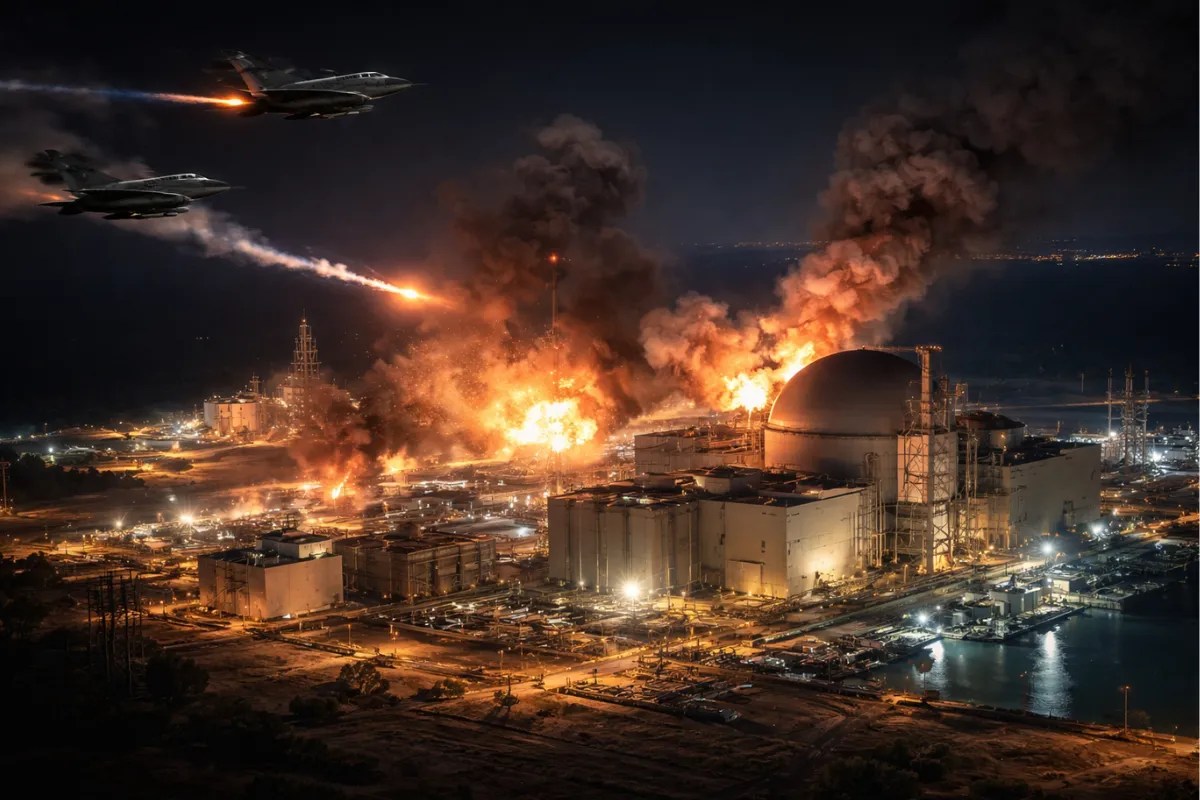
The hum of the central heating in a modest apartment in suburban Berlin is a sound most people never notice. It is the white noise of comfort. But for Elara, a freelance translator working late into the rainy Tuesday evening, that hum has started to sound like a countdown. Every time the boiler kicks in, she doesn't think of warmth; she thinks of a ledger. She thinks of the price of Brent Crude. She thinks of a map she saw on the news—a jagged coastline along the Persian Gulf that feels a million miles away but is currently reaching into her bank account and pulling out her rent money.
Geopolitics is often discussed in the abstract, handled by men in charcoal suits sitting around mahogany tables in Brussels or Washington. They talk about "strategic autonomy" and "treaty obligations." They use bloodless terms like "kinetic escalation." But for the rest of us, the war involving Iran isn't a chess match. It is a cold house. It is a grocery bill that makes you blink twice in disbelief. It is the sudden, terrifying realization that the shield we thought protected Europe—the North Atlantic Treaty Organization—is vibrating with a tension that might finally crack it open.
The Ghost in the Machine
For decades, NATO was a predictable machine. Its purpose was clear, its enemy was singular, and its geography was fixed. You looked East. You stayed ready. But the current conflict involving Iran has introduced a ghost into that machine. Unlike a direct confrontation on the plains of Europe, this crisis is fluid. It moves through oil pipelines, through digital cables, and through the fractured opinions of voters from Madrid to Warsaw.
The core of the problem isn't just the missiles or the drones. It is the fundamental disagreement over what a "defense" alliance is supposed to do when the threat is economic and the theater is global. When the first reports of closed shipping lanes in the Strait of Hormuz hit the wires, the reaction in the United States was a reflex: protect the flow of energy. But in the capitals of Europe, the reflex was a shudder.
Europeans remember the gas queues of the seventies. They know that while America has become an energy-exporting titan through fracking and shale, Europe remains a hungry guest at a volatile table. This creates a physiological difference in how a war is perceived. To Washington, Iran is a rogue state to be contained. To Paris and Berlin, Iran is a pressure point on the jugular of the global economy.
A House Divided by a Barrel
Consider a hypothetical meeting in a basement room at NATO headquarters. On one side of the table, you have the American delegation. Their logic is binary. Iran has crossed a line; therefore, the alliance must project power to restore the status quo. To them, credibility is the only currency that matters. If you don't respond to a provocation in the Gulf, how can you claim you will respond to one in the Baltics?
On the other side sit the Europeans. They are looking at spreadsheets. They see that a sustained conflict doesn't just mean "war"—it means the collapse of the industrial base in the Rhine Valley. It means the rise of populist movements fueled by energy poverty. For the European members, the "crisis" isn't just the war itself; it’s the fact that their primary protector is dragging them into a fight that might bankrupt them before the first shot is even fired.
The friction is visible in the hesitation. We saw it when the request for a coordinated naval task force was met with "let me check with my parliament." That isn't just bureaucracy. It is a polite way of saying that the domestic political cost of this war is higher than the price of breaking rank.
The Invisible Stakes of the Hormuz Chokehold
The Strait of Hormuz is a narrow stretch of water, only twenty-one miles wide at its narrowest point. It is the world's most important artery. Nearly a fifth of the world’s petroleum passes through it. When you look at a map, it looks like a tiny gap. In reality, it is a trigger.
If that trigger is pulled, the ripple effect is instantaneous. We aren't just talking about the price at the pump. We are talking about the cost of the plastic in a medical syringe. We are talking about the fertilizer used to grow wheat in the Midwest. We are talking about the shipping containers full of semiconductors sitting on docks in Singapore.
The Iran crisis has exposed the fact that NATO’s "Article 5"—the famous "an attack on one is an attack on all" clause—was designed for a world of borders, not a world of interconnected supply chains. If Iran doesn't fire a single bullet at a NATO member, but instead raises the global price of oil to $200 a barrel, is that an attack? The treaty doesn't say. The ambiguity is where the alliance goes to die.
The Human Cost of Strategic Ambiguity
Back in Berlin, Elara turns off her heater. She puts on a second sweater. This is the "human element" that the policy papers miss. The Iran war has become NATO's biggest crisis because it has brought the frontline into the living rooms of people who never signed up for a Middle Eastern crusade.
When people lose faith in the ability of their government to provide basic necessities—warmth, affordable food, a stable currency—they stop caring about high-minded alliances. They start looking for outsiders who promise to "fix it." The real threat to NATO isn't an Iranian strike on a base in Turkey; it is the slow-motion political rot from within as member states prioritize their own survival over collective security.
This is the invisible tax of the conflict. It is the stress of a father in London wondering if he can afford the commute to work. It is the anxiety of a factory owner in Milan seeing her electricity bills triple in a month. These people are the true constituents of the alliance, and right now, they feel like the collateral damage of a strategy they didn't choose.
The Architecture of a Fractured Trust
Trust is a fragile thing. It is built over decades of shared risk and shattered in an afternoon of perceived betrayal. The Iran crisis has forced a conversation that most NATO leaders wanted to avoid forever: Does the US actually care about European stability, or does it only care about its own primacy?
There is a growing sense in Europe that they are being treated as a "junior partner" in a game where they have the most to lose. If the US pushes for escalation, Europe pays the bill. If the US decides to pivot away and leave the region in chaos, Europe deals with the resulting wave of migration and energy shortages. It is a "heads you win, tails I lose" scenario.
This isn't just a disagreement over tactics. It is an existential debate about the future of the West. If NATO cannot find a way to align the energy security of Europe with the security objectives of the United States, then the alliance is nothing more than a historical artifact. It becomes a ghost ship, still sailing but with no one at the wheel.
The Echo in the Silence
Late at night, the news cycle slows down. The pundits stop shouting, and the maps of the Persian Gulf fade from the screen. In the silence, you can almost hear the gears of the old world grinding to a halt.
The Iran crisis isn't just another headline. It is the moment we realized that the world is too small for "distant" wars. Every explosion in the Gulf echoes in the grocery aisles of Manchester. Every drone strike over the desert dims the lights in a small town in Ohio.
We have spent seventy years pretending that security is something soldiers do on a perimeter. We are now learning that security is the ability to live without the constant, gnawing fear that a conflict on the other side of the planet will destroy your life at home.
The crisis is here. It isn't waiting at the border. It is already inside the house. It is sitting in the cold room with Elara. It is waiting in the empty space where a sense of certainty used to live. The question is no longer whether NATO can stop a war. The question is whether NATO can survive the peace it is currently failing to protect.
The hum of the heater has stopped. The room is quiet. The ledger is still open.