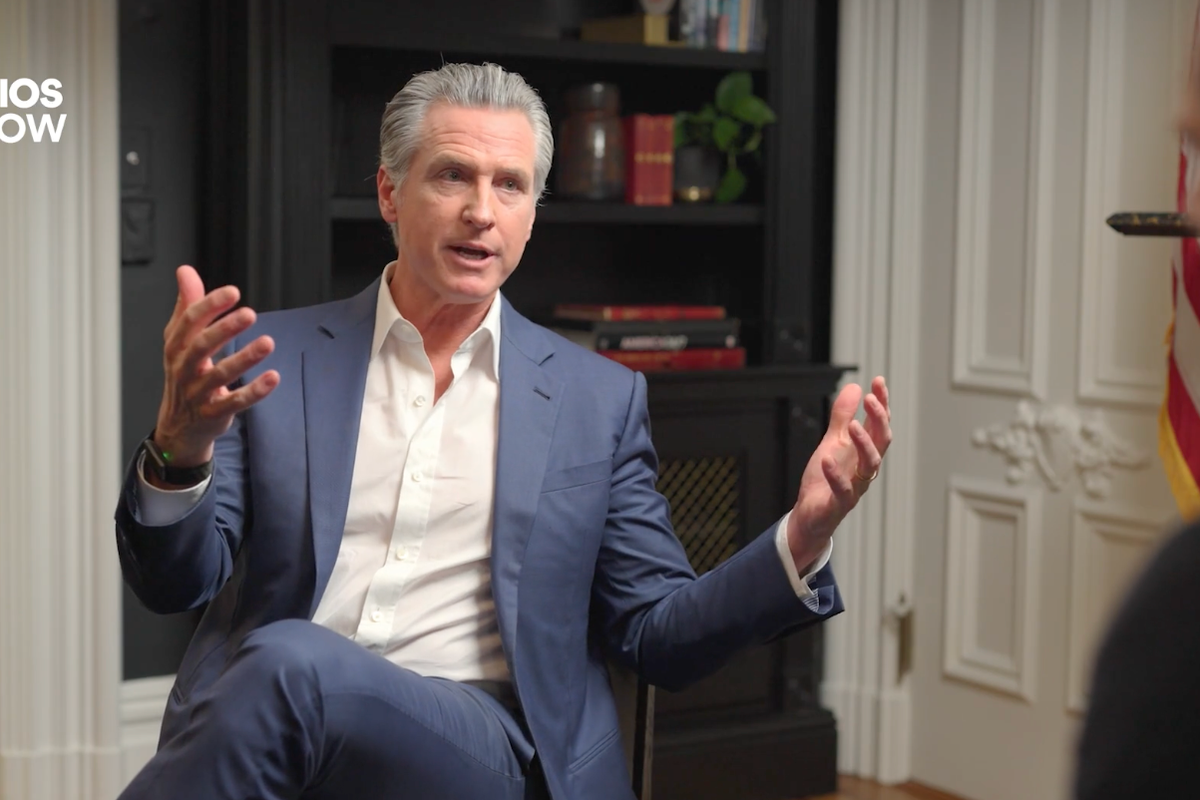
Gavin Newsom calling Elon Musk "one of the great disappointments" is the ultimate exercise in projection. It’s a classic political maneuver: when your crown jewel industry starts packing its bags, you don't fix the tax code or the regulatory sludge—you attack the character of the guy moving the boxes.
The media narrative is lazy. It paints a picture of a visionary governor betrayed by a radicalized tech mogul. The reality is far more clinical and far more damaging to California’s future. This isn't a clash of personalities. It’s a case study in how institutional inertia kills innovation.
The Myth of the Betrayed Benefactor
Newsom’s core argument rests on a shaky premise: that California "made" Elon Musk through subsidies and a favorable ecosystem, and therefore Musk owes the state a lifetime of compliance. This is a fundamental misunderstanding of how venture capital and industrial scaling work.
California didn’t "give" Tesla $3 billion in subsidies out of the goodness of its heart. It traded those incentives for the prestige of being the global hub of the EV revolution. It was a transaction. Musk delivered the goods. Tesla became the only successful mass-market American car company started in a century.
When the transaction stopped making sense for the shareholder, the headquarters moved. That isn't a "disappointment." That’s fiduciary duty.
The Geography of Stagnation
I have watched boards of directors agonize over California operations for a decade. The conversation is always the same. You start with the talent—which is world-class—and you end with the "California Tax," a nebulous but crushing combination of litigation risk, housing costs that prevent your mid-level engineers from ever owning a home, and a legislative body that views every successful balance sheet as an untapped piggy bank.
Musk moving SpaceX and X to Texas wasn't a political tantrum. It was an optimization. If you are building rockets to Mars, you cannot spend 40% of your executive bandwidth fighting CEQA (California Environmental Quality Act) lawsuits filed by "community groups" that are actually front organizations for competitors or NIMBY neighbors.
The Talent Trap
The "People Also Ask" sections of the internet are currently obsessed with whether Musk's "radicalization" will cause a talent drain. This is the wrong question. The real question is: Why is the talent following him?
Engineers don't move to Brownsville, Texas, for the nightlife. They move because they want to build things that explode and then fly, and they want to do it without a three-year environmental impact study on how a launch affects the local seagrass—especially when that seagrass has been analyzed fifty times already.
Newsom claims Musk has changed. Musk hasn't changed; his scale has.
- Stage 1: In the garage phase, you need California’s density and VC network.
- Stage 2: In the scaling phase, you need Texas’s land and lack of friction.
- Stage 3: In the institutional phase, California becomes a predator rather than a partner.
The disappointment isn't that a CEO moved his companies. The disappointment is that a state with the fifth-largest economy in the world has become so sclerotic that its only defense against losing its biggest taxpayers is a press conference filled with hurt feelings.
The Identity Politics Smokescreen
Newsom’s critique focuses heavily on Musk’s shift in social commentary. This is a brilliant distraction. By making the fight about "values" and "culture," Newsom avoids talking about the fact that California’s budget surplus has turned into a massive deficit.
It is much easier to dunk on a billionaire's tweets than it is to explain why the high-speed rail project is $100 billion over budget and nowhere near finished. Musk’s Boring Company might be a fever dream, but at least he uses his own money to dig the holes.
The Logic of the Exit
Let’s look at the data the "disappointment" narrative ignores.
- The Regulatory Cliff: California introduces hundreds of new business-related bills every year. Texas introduces a fraction of that.
- Cost of Living: When an entry-level engineer at Tesla or SpaceX can’t afford a condo in Fremont, the company has to pay a "cost of living" premium that goes straight into the pockets of California landlords, not into R&D.
- Power Reliability: For a company like Tesla, which relies on high-output manufacturing and massive data centers, a shaky power grid prone to seasonal shut-offs is a non-starter.
Imagine a scenario where a state treats its most innovative citizens as permanent ATMs while simultaneously making it harder for their employees to live. Eventually, the ATM breaks.
Stop Asking if Musk is "Good" or "Bad"
The public discourse is trapped in a binary of hero-worship or villainy. It’s irrelevant. Musk is a force of nature driven by a specific set of engineering goals. Newsom is a career politician driven by the need to maintain a specific institutional power structure.
When Newsom calls Musk a disappointment, he is actually mourning the loss of a trophy. He liked Musk when Musk was the poster boy for "Green California." He hates Musk now that Musk is the poster boy for "California’s Competitiveness Problem."
The real disappointment is the lack of introspection in Sacramento. If the most successful entrepreneur of a generation decides that your state is no longer the best place to build the future, the problem isn't the entrepreneur. It’s the state.
The Brutal Reality of the New Industrial Age
We are entering a period where physical manufacturing matters again. Software is easy to ship from a laptop in San Francisco. Rockets, batteries, and AI hardware are not. They require massive footprints, cheap energy, and a government that stays out of the way.
California is perfectly optimized for the software era of 2010. It is catastrophically misaligned for the hardware era of 2026.
If you want to keep the next Elon Musk, you don't do it by demanding loyalty. You do it by building a state where it is actually possible to build. Until Newsom realizes that his "values" don't pay the bills or launch the payloads, he will continue to watch the future get loaded onto semi-trucks headed east on I-10.
The moving vans don't care about your feelings. They care about the math. And right now, the math says California is the one failing the test.
Fix the state. Stop blaming the taxpayer for leaving the burning building.
.jpg?width=1200&auto=webp&crop=3%3A2)