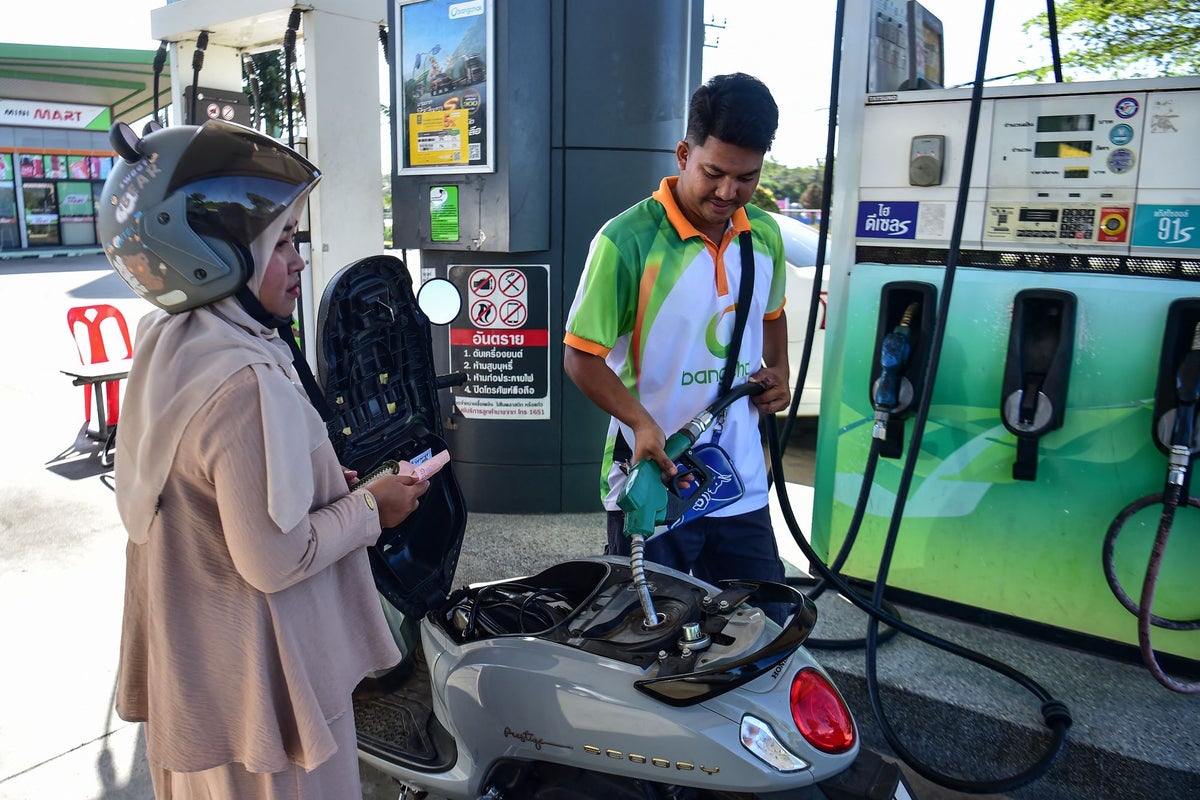
The "shielding" is a lie.
Every time a politician stands behind a podium to announce an "energy price cap" or a "utility rebate" to protect you from the fallout of Middle Eastern volatility, they are effectively mortgaging your next ten years to pay for your next ten minutes. We are currently watching a global masterclass in economic cowardice.
The consensus among mainstream analysts is that governments must intervene to prevent social unrest and keep the lights on. They argue that during a supply shock—like the current constraints stemming from the Iran conflict—the state must act as a shock absorber. This sounds compassionate. It is, in fact, catastrophic.
By artificially suppressing the price of energy, governments are destroying the only signal that actually solves a shortage: the price.
The Price Signal Is Not Your Enemy
High prices are a diagnostic tool. They tell the market two things: "Stop using so much of this" and "Find a way to make more of this, fast."
When a government "shields" a resident from a $400 heating bill by capping it at $150, they are telling that resident to keep the thermostat at 72 degrees. They are removing the incentive to insulate the attic, install a heat pump, or simply wear a sweater. On the supply side, they are telling innovators that there is no urgent profit to be made in scaling alternatives because the "crisis" has been smoothed over by the taxpayer.
I have watched energy trading floors for two decades. I have seen what happens when the market is allowed to break. It’s ugly, it’s painful, and it works. In 2022, when European natural gas prices spiked to the moon, industrial demand dropped because it had to. That pain drove more efficiency gains in six months than ten years of "green energy" white papers ever did.
Now, we are doing the opposite. We are subsidizing demand during a supply crunch. If you want to know why inflation won't die, look no further than the energy rebate check sitting on your kitchen table.
The Hidden Tax of the "Price Cap"
There is no such thing as a "shield." There is only a shift in the timing of the payment.
Governments do not have "money." They have your future productivity, which they borrow against. To fund these multi-billion dollar energy packages, nations are issuing massive amounts of debt. This debt is bought by central banks, which print money to cover it, which devalues the currency in your pocket.
You didn't pay $200 extra for your electricity this month? Congratulations. You will pay $2,000 extra for your groceries, your rent, and your car over the next three years because the currency has been debased to "protect" you from a utility bill.
This is the "Lazy Consensus" at its finest: treating a symptom while feeding the underlying disease.
The Misery of "Just-In-Time" Geopolitics
The current obsession with Iran’s influence on energy costs reveals a deeper rot in Western infrastructure. We have spent thirty years building "just-in-time" energy grids that rely on global stability. We assumed the world would always be polite.
The competitor narrative suggests we just need to "weather the storm" until Iran stabilizes or the war ends. This is delusional. We are not in a storm; we are in a climate shift. The era of cheap, globally-sourced fossil fuels is over, not because the oil is gone, but because the cost of securing the supply lines has become prohibitive.
If governments actually wanted to protect residents, they wouldn't give them cash for bills. They would be deregulating the hell out of local nuclear small modular reactors (SMRs) and deep-bore geothermal. But that takes courage. It takes admitting that the current grid is a relic of the 1970s.
Instead, they choose the path of least resistance: hand out checks, win the next election, and let the 2030s figure out how to pay back the trillions.
The Efficiency Paradox
Consider the Jevons Paradox. It’s an economic principle stating that as technological progress increases the efficiency with which a resource is used, the rate of consumption of that resource actually rises because it becomes cheaper.
Government subsidies create a "Reverse Jevons" nightmare. By keeping prices low, they prevent the very efficiency gains that would eventually lower costs. We are trapped in a cycle of high consumption of a scarce resource because the government is pretending the resource isn't scarce.
How to Actually Survive an Energy Crisis
If you are waiting for the state to save you, you have already lost. The smart money isn't looking at "shields." The smart money is looking at "exit."
- Decouple from the Grid: This isn't about being a "prepper." It’s about being a rational economic actor. If the government is going to debase the currency to pay for the grid, the grid becomes an unreliable financial liability. Micro-generation—solar plus massive battery storage—is no longer an environmental statement; it’s a hedge against government incompetence.
- Short the "Protected" Sectors: Companies that rely on government energy subsidies to stay profitable are zombies. They are walking dead. When the debt ceiling eventually hits a hard wall and the subsidies vanish—which they must—these industries will collapse overnight because they haven't spent the last five years innovating for a high-cost environment.
- Ignore the "Energy Independence" Rhetoric: It’s a buzzword used to justify protectionism. True energy security is not "independence"; it’s redundancy. It’s having six different ways to power a city, four of which the government doesn't control.
The Moral Failure of Shielding
There is a darker side to this "shielding" narrative. By preventing people from feeling the cost of the war in the Middle East, governments are removing the democratic friction that prevents long-term conflict.
If every citizen felt the true, unvarnished cost of global instability at the gas pump and the light switch, there would be an immediate, bottom-up demand for a resolution. By masking the cost, the state buys itself the ability to engage in "forever-wars" and geopolitical posturing without the immediate political consequence of an impoverished electorate.
The "shield" isn't for you. It’s for the politicians who don't want you to realize how much their foreign policy is actually costing you.
Imagine a scenario where a country decides not to subsidize energy during a conflict. Yes, the first winter is brutal. People lose money. Some businesses close. But by the second winter, that nation has the most energy-efficient housing stock in the world. It has a localized, diverse energy grid. It has a currency that hasn't been inflated into worthlessness. That nation wins the century.
Instead, we are choosing to lose the century so we don't have to lose the winter.
Stop Asking "How Will They Help Me?"
The question "How are countries shielding residents?" is the wrong question. It assumes you are a helpless ward of the state waiting for a handout.
The real question is: "How is the government’s intervention preventing the market from solving this problem?"
When you see a rebate check in the mail, don't cheer. That check is a receipt for a debt your children will never be able to pay, issued to solve a problem that the government’s own interventionist policies made worse in the first place.
The shield is not a protector. It is a blindfold. Take it off.
Stop looking for a cushion and start looking for a generator. The only person who is going to keep your lights on in 2030 is you.
.jpg?width=1200&auto=webp&crop=3%3A2)