.jpg?width=1200&auto=webp&crop=3%3A2)
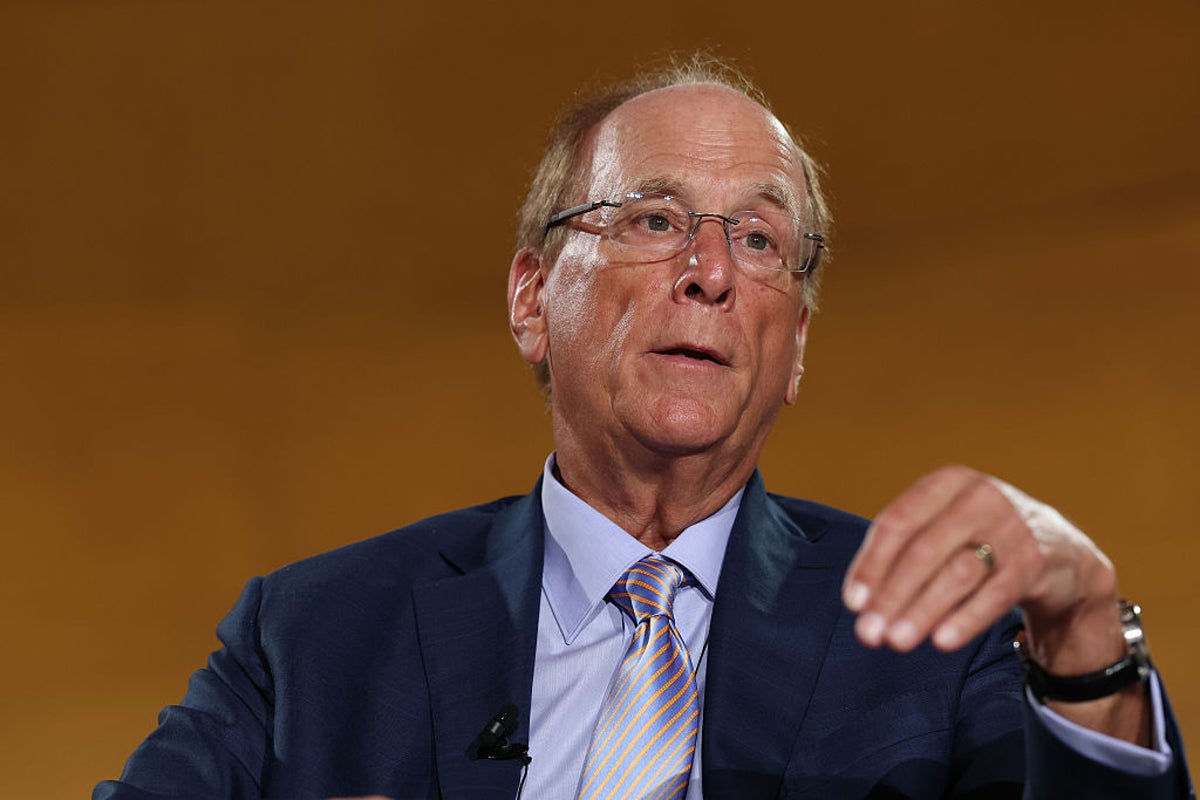
The friction between the Prime Minister’s Office and Air Canada’s executive leadership following a fatal aviation incident is not merely a clash of personalities; it is a structural failure in Stakeholder Alignment Theory. When a Chief Executive Officer issues communications that bypass the gravity of a national tragedy to focus on operational resilience or fiscal continuity, they create a "Governance Gap." This gap exists where the corporation's internal priorities—protecting share price and mitigating legal liability—diverge sharply from the state’s role as the ultimate guarantor of public safety and emotional closure. The Prime Minister’s public expression of disappointment serves as a formal signal that the airline has lost its "Social License to Operate," a theoretical framework where a business must maintain the approval of its employees, customers, and the communities it serves to function effectively.
The Triad of Crisis Communication Failure
In the immediate aftermath of a high-casualty event, a corporation must manage three competing vectors of communication: the Legal Defense Vector, the Operational Continuity Vector, and the Empathetic Accountability Vector. Air Canada’s leadership appears to have over-indexed on the first two while neglecting the third, creating a systemic imbalance.
- Legal Defense Overreach: Corporate counsel often mandates sterile, non-committal language to prevent "admission of liability" in future litigation. However, when this clinical tone enters the public sphere before the victims are honored, it triggers a "negative reciprocity" loop with the government.
- Operational Blindness: Focusing on flight schedules or technical recovery too early signals to the public that the organization views the loss of life as a mechanical variable rather than a human catastrophe.
- The Empathy Deficit: Public leaders, specifically the Prime Minister, operate on a currency of national sentiment. When a CEO issues a message that lacks sufficient gravity, they force the political leader to choose between defending a national carrier or defending the public's grief. The political choice is always the latter.
The Mechanism of Political Reprimand
The Prime Minister’s "extreme disappointment" is a calculated instrument of Regulatory Signaling. While the Prime Minister may not have the direct authority to terminate a CEO of a publicly traded company, the Canadian government maintains significant leverage through the Canada Transportation Act and various subsidy frameworks.
By publicly rebuking the CEO, the government achieves several tactical objectives:
- Distance Creation: It ensures the state is not perceived as complicit in the corporate tone-deafness.
- Pressure for Leadership Reform: It signals to the Board of Directors that the current CEO is now a liability in future legislative or tax negotiations.
- Public Catharsis: It provides a channel for national anger, directing it toward the corporation and away from regulatory bodies like Transport Canada.
This creates a Political Risk Premium for the airline. Investors must now factor in the possibility that the government will be less inclined to provide favorable terms on infrastructure projects, slot allocations, or emergency financing because the leadership has burned its rapport with the PMO.
The Cost Function of Brand Equity Erosion
The financial impact of a plane crash is usually modeled through insurance payouts and hull loss. Yet, the Executive Communication Tax is often higher. This is the long-term cost associated with a brand being perceived as indifferent to human life.
The decay of brand equity follows a specific function:
$$D = (I \times V) / R$$
Where:
- $D$ is the Brand Decay.
- $I$ is the Intensity of the Incident (in this case, a deadly crash).
- $V$ is the Vacuum of Leadership (the gap between public expectation and CEO response).
- $R$ is the Speed of Remediation.
When $V$ is high—meaning the CEO's message was perceived as inadequate—the decay accelerates regardless of how much the airline spends on marketing in the following quarters. The Prime Minister’s intervention effectively increases $V$, amplifying the damage to the airline's intangible assets.
Structural Incentives and the CEO Paradox
Why would a highly compensated executive fail to strike the correct tone? The answer lies in Principal-Agent Problems. The CEO is incentivized by the Board to protect the "Principal" (the shareholders). The Board’s primary concern in the hours after a crash is often the stabilization of the stock price and the prevention of a credit rating downgrade. This creates an environment where the CEO is being coached by risk managers and actuaries rather than sociologists or communications experts.
The paradox is that by trying to protect the share price through "safe," clinical language, the CEO inadvertently triggers a political backlash that hurts the share price more significantly in the long run. This is a failure to recognize that in the modern economy, Public Sentiment is a Material Factor.
The Regulatory Backlash Loop
When a national carrier fails the empathy test, it often results in a "Regulatory Hardening." Governments under pressure to show they are "doing something" about a perceived lack of corporate accountability often introduce more stringent oversight.
- Audit Frequency: Transport Canada may increase the frequency of unscheduled safety audits.
- Legislative Penalties: Parliament may move to increase the maximum fines for safety violations under the Aeronautics Act.
- Passenger Rights: There is often a correlation between corporate arrogance in a crisis and the subsequent tightening of Air Passenger Protection Regulations (APPR).
This creates a bottleneck for the airline's operational efficiency. Every hour spent on increased compliance and answering parliamentary inquiries is an hour not spent on revenue-generating activity. The CEO’s "message" was not just a PR error; it was a fiscal mistake that increased the airline's future cost of compliance.
The Strategic Path Toward Recovery
To mitigate the damage of a "disappointed" Prime Minister and a grieving public, the Board of Directors must move beyond simple apologies. The recovery requires a re-alignment of the corporate hierarchy of needs.
The first step is a Leadership Pivot. If the CEO’s brand is permanently tarnished by the "disappointing" message, the Board must evaluate whether the individual can still serve as the face of the company during the inevitable public inquiries.
The second step is Transparent Technical Cooperation. The airline must move from a defensive posture to one of "radical transparency" with the Transportation Safety Board (TSB). By becoming the most aggressive seekers of the truth behind the crash, they can slowly reclaim the "Social License" they lost. This involves publishing internal safety data that exceeds what is legally required, effectively "flooding the zone" with accountability to drown out the previous perception of indifference.
The third step is Direct Stakeholder Engagement. This is not a press release. It is the direct, unscripted involvement of senior leadership with the affected families and the frontline employees who are also dealing with the trauma of the event.
The airline's path to stability depends on whether it views the Prime Minister’s criticism as a PR hurdle to be managed or a fundamental market signal that its leadership model is currently incompatible with the national interest. If the airline fails to internalize the latter, it will find its next negotiation for federal support or regulatory relief significantly more expensive. The Board should immediately convene a special committee to oversee a "Tone and Accountability Audit," ensuring that all future communications are vetted through a lens of political and social impact rather than just legal liability.
Direct the Chief Communications Officer to suspend all scheduled brand marketing and reallocate that budget toward an independent, third-party safety review that reports directly to a combined committee of the Board and representatives from the Ministry of Transport. This removes the "self-policing" stigma and provides the Prime Minister with a face-saving off-ramp to end the public reprimand phase.