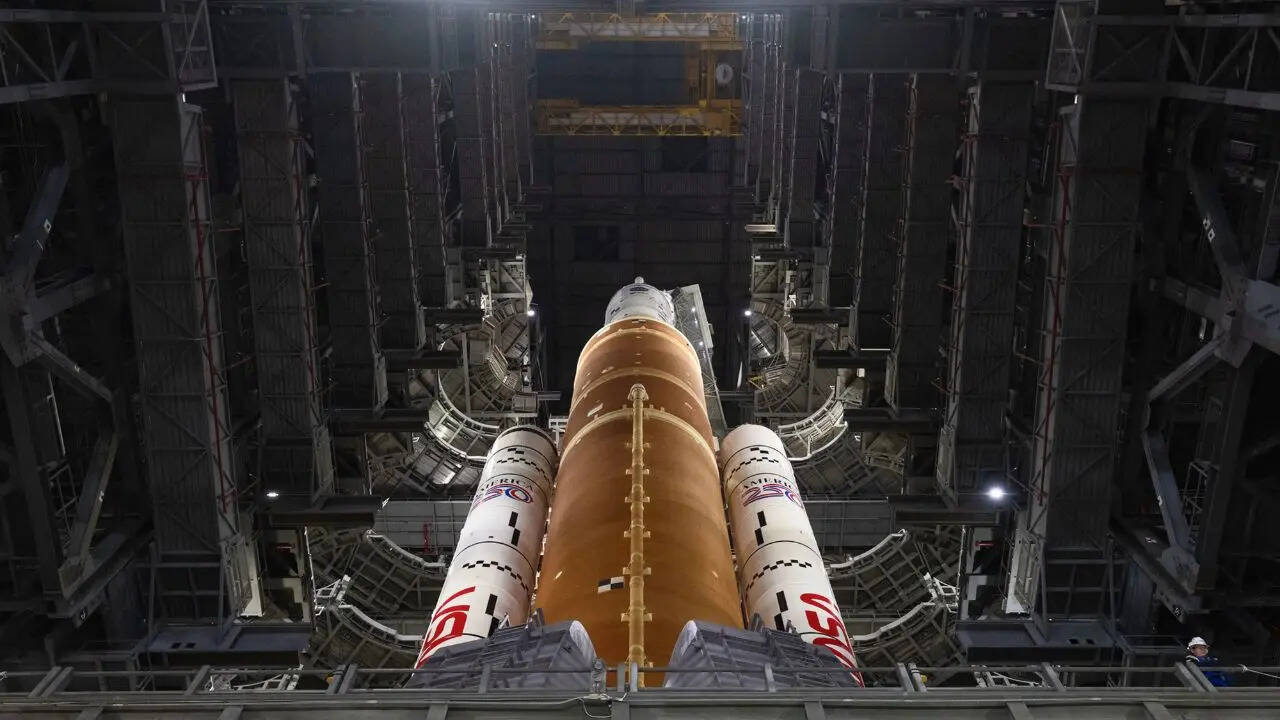
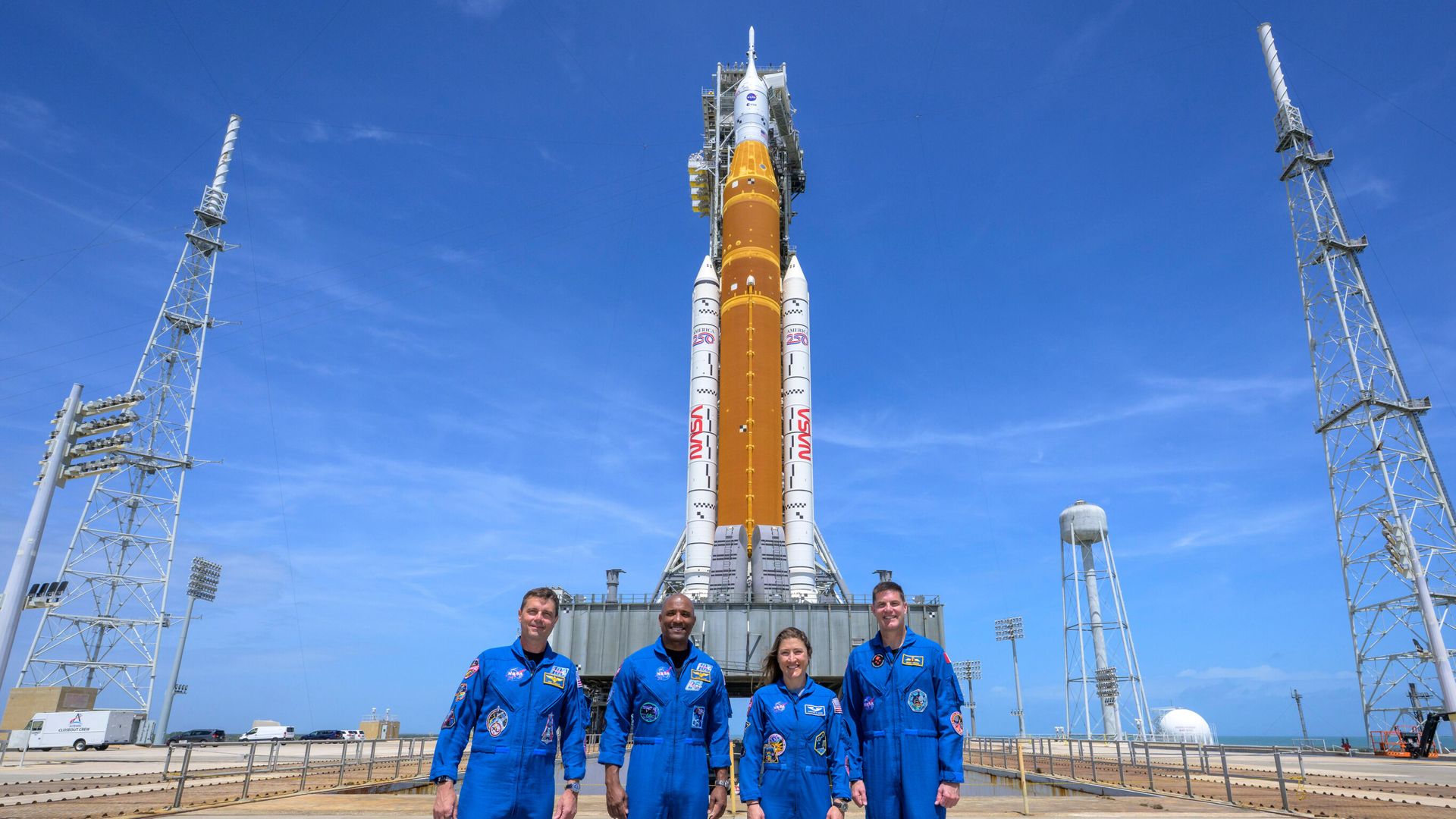
The press releases are humming. The countdown clocks are ticking. NASA is polishing the brass on the Artemis II mission, and the media is eating it up like it’s 1968. They want you to believe we are on the "precipice of a new era." They want you to marvel at the Orion capsule and the Space Launch System (SLS) as if they represent the pinnacle of human ingenuity.
They don’t. Recently making news lately: The Logistics of Survival Structural Analysis of Ukraine Integrated Early Warning Systems.
Artemis II isn't a giant leap. It’s a high-priced stroll down memory lane using hardware that belongs in a museum, not on a launchpad. While the "lazy consensus" celebrates a lunar flyby as a triumph of modern engineering, the reality is far more sobering: we are spending $4 billion per launch to do what we already did half a century ago, only slower and with less ambition.
The SLS is a Jobs Program in a Space Suit
Let’s stop pretending the Space Launch System is about exploration. It is a Frankenstein’s monster of legacy components. Its "new" engines? Those are RS-25s left over from the Space Shuttle era. Its "innovative" solid rocket boosters? Essentially stretched versions of the ones that flew in the 80s. Additional information on this are detailed by Ars Technica.
NASA didn't build the SLS because it was the best way to get to the moon. They built it because it was the most politically expedient way to keep Shuttle-era contracts alive in specific congressional districts. When you see an SLS launch, you aren't looking at the future of propulsion; you are looking at a $2.2 billion expendable firework that throws away its most expensive parts in the first eight minutes.
Imagine a scenario where an airline flew you from New York to London and then crashed the Boeing 787 into the Atlantic Ocean because they didn't feel like refueling it. That is the SLS business model. It is the antithesis of the modern aerospace logic of reusability.
The Orion Capsule is Overweight and Underpowered
The competitor pieces will tell you Orion is the "most capable spacecraft ever built." That’s a half-truth that hides a glaring flaw. Orion is a massive, heavy beast that requires the SLS just to get off the ground.
I have watched aerospace firms burn through capital for decades trying to solve the mass-to-orbit equation. Orion ignores the equation by being so heavy it limits where it can actually go. Because of its weight and the limited performance of its European Service Module, Orion can’t even get into a Low Moon Orbit.
Instead, NASA had to invent a "Near-Rectilinear Halo Orbit" (NRHO). It’s a compromise. It’s a parking spot far away from the lunar surface because the "most capable spacecraft ever" doesn't have the delta-v to get down into the weeds and back out again without a massive, separate landing system. We are celebrating a ship that can’t actually reach its destination without three other companies holding its hand.
The Lunar Gateway is a Speed Bump in Space
The "People Also Ask" section of the internet is obsessed with when we will have a permanent base on the moon. The answer? Not anytime soon if we keep wasting time on the Lunar Gateway.
The Gateway is a space station that will orbit the moon. Proponents say it's a "staging point." Critics—and I am firmly in this camp—know it's a toll booth. It adds risk, cost, and complexity to every single mission.
- Extra Docking: Every move to the Gateway is a point of failure.
- Radiation: Putting humans in a high-radiation orbit for long periods before they even touch the moon is an unnecessary biological tax.
- Maintenance: We are building a house in the suburbs of the moon before we’ve even cleared the lot on the surface.
If the goal is "Moon to Mars," you don't build a pit stop in a high lunar orbit. You build a direct-to-surface architecture. The Gateway exists solely to give the SLS and Orion somewhere to go because they can't land on the moon themselves. It is a solution in search of a problem.
The Reusability Gap is Embarrassing
While NASA meticulously prepares Artemis II—a mission that won’t even land—the private sector is iterating at a speed that makes the federal government look like it’s moving through molasses.
Look at the math. A single SLS launch costs roughly $2.2 billion, but when you factor in the development costs, that number balloons toward $4 billion. For that price, you get one mission. One.
Meanwhile, Starship is being designed to be fully reusable with a target launch cost that is orders of magnitude lower. Even if the private sector hits 10% of its goals, the SLS becomes a fiscal absurdity. We are using 20th-century procurement methods to solve 21st-century problems. It is the equivalent of building a brand-new, hand-cranked telegraph system while everyone else is using 5G.
The Safety Myth
The "Artemis II countdown" articles love to talk about the "rigorous safety checks" and the "unprecedented testing." This is a defensive crouch.
NASA is so terrified of failure that they have become paralyzed by process. They spent years analyzing the Orion heat shield after the Artemis I mission showed unexpected charring. That’s good, right? Sure. But compare that to the "fail fast" mentality of modern tech. While NASA spends three years analyzing a heat shield, a private competitor will build, burn, and iterate through five different designs.
Our current path values "certainty" over progress. But in space, there is no such thing as certainty. By trying to eliminate every possible risk through decades of paperwork, we have created a program that is too expensive to fail and too slow to succeed.
What No One Tells You About the Schedule
The official line is that Artemis II will fly in late 2025.
If you believe that, I have some lunar real estate to sell you.
The history of the SLS is a history of "moving the goalposts." The rocket was originally supposed to fly in 2017. It took until 2022. Every major milestone in the Artemis program has slipped by months or years. The complexity of the life support systems for Artemis II—the first time humans will be on board—is a massive hurdle that the media glosses over.
We aren't just waiting on a rocket. We are waiting on a crumbling industrial base that can't manufacture specialized parts at the speed required for a real space race.
The Wrong Questions
The public keeps asking, "When are we going back?"
The better question is: "Why are we going back like this?"
If we wanted to establish a permanent presence on the moon, we wouldn't be using an expendable rocket and a tiny capsule. We would be investing in orbital fuel depots. We would be mastering in-situ resource utilization (ISRU). We would be building the infrastructure for a lunar economy, not a lunar photo-op.
Artemis II is a PR mission. It’s designed to produce high-resolution photos of the Earth rising over the lunar limb to justify the billions spent. It provides a sense of "momentum" without actually delivering a landing. It is the ultimate participation trophy in the cosmos.
The Cost of the Status Quo
There is an opportunity cost to Artemis. Every dollar poured into the SLS is a dollar not spent on nuclear thermal propulsion, which could actually get us to Mars in a reasonable timeframe. It’s a dollar not spent on orbital manufacturing or large-scale space telescopes that could find life on exoplanets.
We are cannibalizing our future to pay for a nostalgic version of our past.
We don't need another Apollo. We don't need a "reimagined" version of 1960s technology. We need to stop treating the moon like a destination for explorers and start treating it like a platform for industry.
Artemis II will likely be a success in the sense that the crew will come home safely and the photos will be beautiful. But don't let the spectacle fool you. It is a mission designed by committee, powered by pork-barrel politics, and executed with technology that was "cutting-edge" when the Beatles were still together.
Stop watching the countdown and start watching the ledger. The moon isn't getting any closer; we’re just getting better at pretending it is.