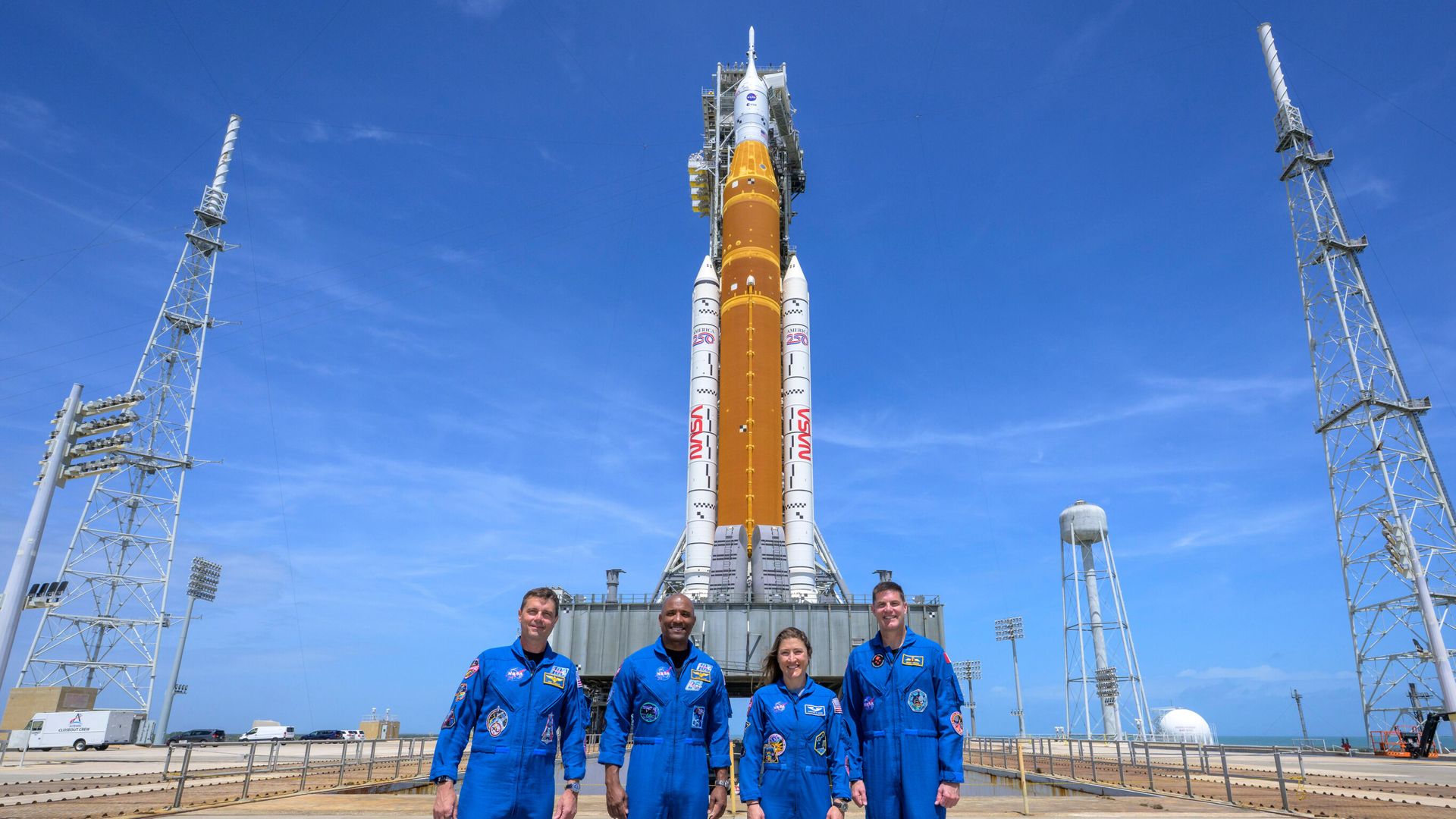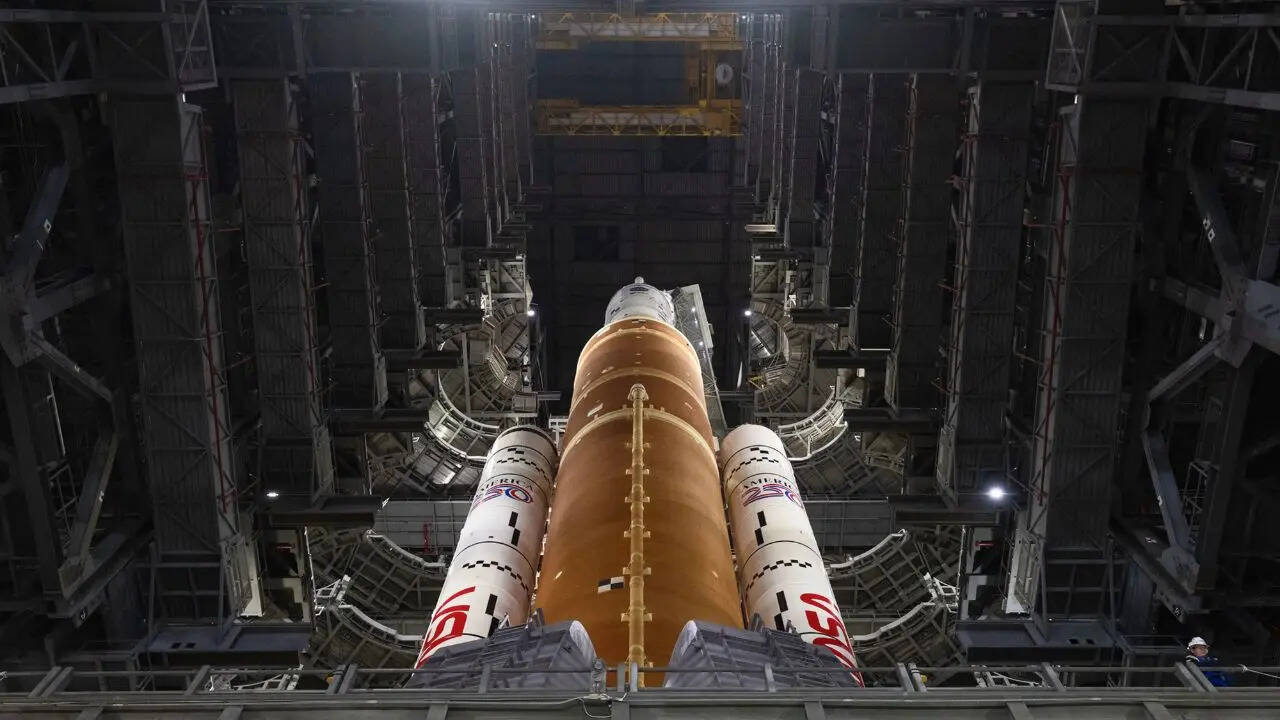
Artemis II is not a repeat of Apollo; it is a stress test of a deep-space life support architecture that has never been operationalized in a high-radiation, multi-day lunar flyback trajectory. While the imagery captures the scale of the hardware, the mission's success depends on the performance of the Orion Environmental Control and Life Support System (ECLSS) and the precision of the translunar injection (TLI) burn. This analysis decomposes the mission into its core technical pillars: orbital mechanics, human-integrated systems, and the structural integrity of the heat shield during a high-velocity skip reentry.
The Dual-Phase Orbital Strategy
The Artemis II flight profile utilizes a High Earth Orbit (HEO) period before committing to the lunar trajectory. This is a deliberate risk-mitigation strategy designed to validate the Orion spacecraft’s performance in a safe "abort-ready" environment before the crew is sent toward the Moon. Expanding on this idea, you can also read: Stop Blaming the Pouch Why Schools Are Losing the War Against Magnetic Locks.
- Initial Orbit and Systems Checkout: After the Space Launch System (SLS) Block 1 core stage reaches orbit and the Interim Cryogenic Propulsion Stage (ICPS) executes its first burn, the crew will remain in an elliptical Earth orbit for approximately 24 hours. This phase serves as a functional audit of the ECLSS and the communication arrays. If a CO2 scrubber fails or a leak is detected in the pressure vessel, the crew can initiate a rapid return to Earth—a luxury not available once the TLI burn occurs.
- Translunar Injection (TLI): Once the spacecraft passes its health check, the ICPS fires again to raise the apogee to the vicinity of the Moon. This maneuver transitions the mission from an Earth-centric operation to a free-return trajectory. The physics of this path ensure that if the service module engine fails during the transit, lunar gravity will naturally whip the capsule back toward Earth.
The ECLSS Performance Boundary
The primary technical hurdle for Artemis II is the transition from the short-duration capabilities of the International Space Station (ISS) to a self-contained, closed-loop system capable of sustaining four humans in deep space. On the ISS, water and oxygen systems benefit from massive redundancy and periodic resupply. Orion must operate as a standalone island.
Nitrogen and Oxygen Management
The spacecraft must maintain a sea-level atmospheric pressure of 101.3 kPa. The challenge lies in managing the partial pressure of Oxygen ($p\text{O}_2$) and preventing the buildup of Carbon Dioxide ($p\text{CO}_2$). Artemis II will utilize amine-based swing beds to scrub CO2. Unlike the lithium hydroxide canisters used in earlier eras, these beds are regenerable, venting the CO2 into space. The failure mode here is "loading"—if the beds saturate faster than they can regenerate, the crew faces hypercapnia, which impairs cognitive function during critical flight maneuvers. Experts at Wired have shared their thoughts on this situation.
Thermal Regulation in Deep Space
Orion faces extreme thermal gradients. One side of the spacecraft absorbs direct solar radiation while the other radiates heat into the 3K vacuum of space. The Active Thermal Control System (ATCS) uses radiators on the European Service Module (ESM) to pump heat away from the cabin. During the Artemis II mission, the orientation of the spacecraft—specifically its "barbecue roll" or Passive Thermal Control (PTC) maneuver—is the primary mechanism for maintaining thermal equilibrium.
Structural Dynamics of the Orion Heat Shield
The Artemis I uncrewed mission revealed unexpected charring and "spalling" (the loss of small pieces of heat shield material) during reentry. For Artemis II, the structural integrity of the Avcoat ablator is the single most significant safety variable.
Reentry from the Moon occurs at velocities exceeding 11 kilometers per second. The kinetic energy is dissipated as heat, reaching temperatures of approximately 2,760°C. The heat shield operates on the principle of ablation: the material purposefully chars and breaks away, carrying heat with it.
The analytical focus for this mission is the "skip reentry" maneuver. By dipping into the upper atmosphere, "skipping" out, and then diving back in, Orion reduces the G-loads on the crew. However, this subjects the heat shield to two distinct thermal pulses rather than one. The interval between these pulses allows for "thermal soak," where heat can migrate deeper into the internal structure of the capsule. Analysts are monitoring whether the spalling observed in Artemis I was a localized anomaly or a systemic flaw in the Avcoat application process.
The Human-Machine Interface (HMI) and Manual Override
Artemis II marks the first time humans will interact with the Glass Cockpit of the Orion. The interface relies on three large display units and a series of "edge keys."
- Optical Navigation: The crew will test the OpNav system, which uses cameras to photograph the Earth and Moon against star fields. This allows the onboard computer to calculate the spacecraft’s position and velocity without a signal from the Deep Space Network (DSN).
- Proximity Operations: A critical test involve the crew manually maneuvering Orion relative to the spent ICPS stage. This is not for docking—as Artemis II has no docking target—but to validate the handling qualities of the spacecraft's Reaction Control System (RCS).
The latency of communication between Earth and the Moon (roughly 1.3 seconds each way) means the crew must be capable of autonomous decision-making. The HMI is designed to minimize cognitive load by using "dark cockpit" philosophy: displays remain neutral unless a parameter falls outside of the operational envelope.
Radiation Exposure and the Van Allen Belts
Unlike Low Earth Orbit (LEO) missions, Artemis II will pass through the Van Allen radiation belts twice—once on the way out and once on the return. The spacecraft passes through these belts quickly to minimize Dose Equivalent (DE) to the crew.
The interior of Orion is equipped with a "storm shelter" concept. In the event of a Solar Particle Event (SPE), the crew will move to the center of the capsule and surround themselves with mass, such as water bags and cargo, to create a radiation shield. This operational workaround highlights the limitation of current spacecraft materials in blocking high-energy galactic cosmic rays (GCRs).
Trajectory Precision and the Free-Return Constraint
The "free-return" trajectory is the mission's ultimate safety net. It dictates that the spacecraft’s velocity and angle at the point of lunar approach are tuned such that the Moon's gravity bends the path into an ellipse that intersects Earth's atmosphere.
Any deviation in the $Delta-v$ (change in velocity) provided by the ICPS can move the spacecraft outside of this free-return corridor.
- If the velocity is too high, the crew risks being flung into a heliocentric orbit (orbiting the sun), requiring a massive fuel burn from the ESM to correct.
- If the velocity is too low, the return path may enter the Earth's atmosphere at too steep an angle, exceeding the thermal limits of the heat shield or the G-load limits of the human body.
The margin for error in the TLI burn is calculated in centimeters per second. Precision is maintained through redundant Inertial Measurement Units (IMUs) and star trackers that constantly update the state vector.
The Strategic Path Forward
The data harvested from Artemis II will define the hardware modifications for Artemis III, the mission slated to land humans on the lunar surface. If the ECLSS shows signs of struggle or the heat shield spalling is more pronounced with the added weight of a crew and life support, the timeline for the lunar landing will likely shift.
Operational success in Artemis II requires not just a safe return, but a high-fidelity data set across three specific domains: the durability of the Avcoat ablator under dual-pulse thermal stress, the stability of the closed-loop amine CO2 scrubbers, and the precision of the optical navigation software in a GPS-denied environment. The mission is a validation of a deep-space logistics chain; every kilometer traveled is an experiment in whether humans can survive the transition from an Earth-dependent species to one that can operate in the lunar environment without a constant umbilical to the ground.
The final strategic move involves the post-splashdown analysis of the ESM's propellant margins. If the Service Module concludes the mission with significant fuel reserves, it validates the potential for Orion to execute more complex orbital insertions, such as those required for the Gateway station, without requiring a complete redesign of the propulsion architecture.