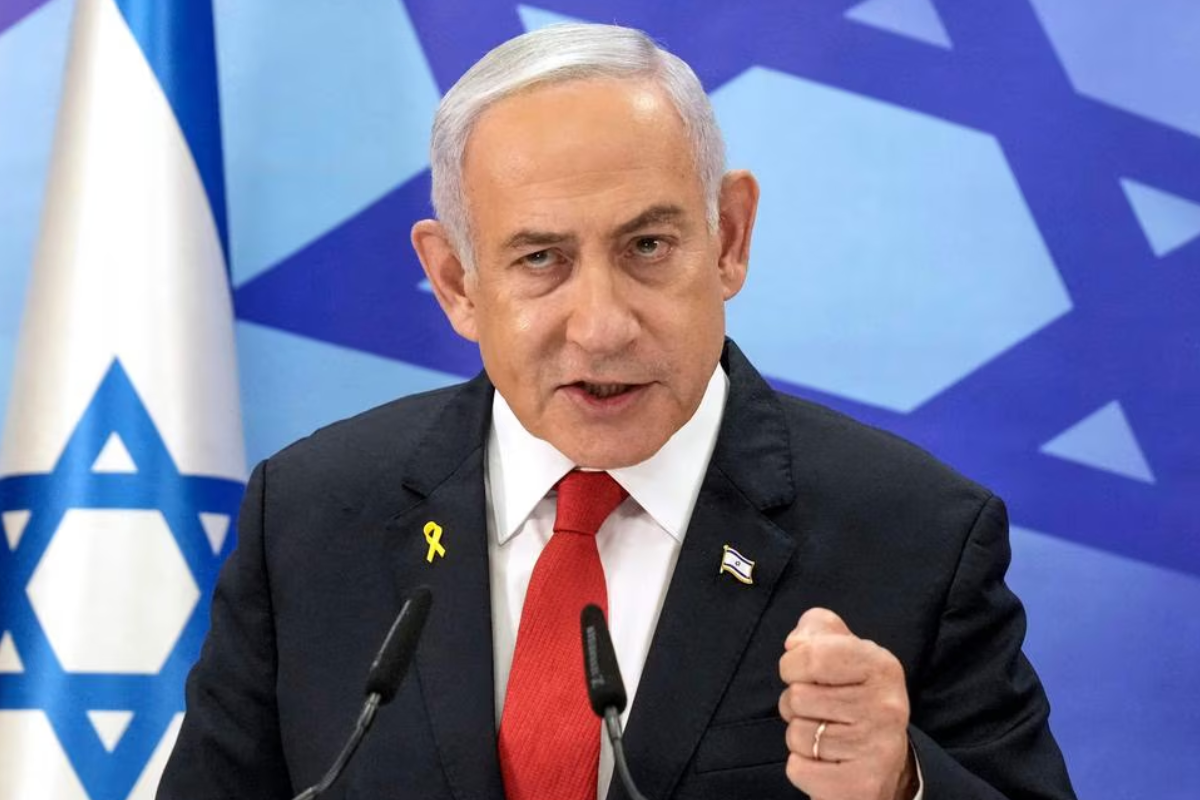
Geopolitics is a game of chess played by people who think they are playing checkers. The headlines scream about Netanyahu’s "elimination" of an Iranian naval commander in the Gulf of Oman as if it’s a checkmate. It isn’t. It is a tactical exchange that ignores the brutal reality of modern maritime friction. The media loves the narrative of the "Hormuz Siege" and the heroic "Payback," but if you look at the cold, hard data of global energy logistics and naval doctrine, you realize we are watching a theater production, not a shift in the global order.
Netanyahu’s announcement serves a domestic political appetite, not a regional security reality. Killing a commander doesn't open a strait; it just changes the name on the desk of the man ordering the next swarm of fast-attack craft. The "siege" of Hormuz is the most overblown bogeyman in modern history. Let’s dismantle why the current obsession with tactical assassinations in the Gulf is a distraction from the real crisis of attrition.
The Hormuz Blockade is a Mathematical Impossibility
Every armchair general talks about Iran "closing" the Strait of Hormuz. I have spent years analyzing maritime choke points, and here is the truth: you cannot "close" a 21-mile wide channel with a 20th-century mindset. The Strait of Hormuz is deep, wide, and impossible to physically block with sunken ships or sea mines for more than a few days.
The "blockade" isn't a wall. It’s an insurance premium hike. When an Iranian commander is targeted, the market doesn't celebrate a "victory" for free trade. It panics because the cost of hull insurance for a VLCC (Very Large Crude Carrier) spikes by 500% in an afternoon. Israel’s strike didn't "break the siege." It validated the risk. By turning the Gulf of Oman into a kinetic kill zone, you aren't securing the oil flow; you are making it unbankable.
The mainstream press misses the point: Iran doesn't need to win a naval battle. They only need to make the cost of transit higher than the value of the cargo. A single $20,000 drone hitting a $200 million tanker achieves more than a fleet of destroyers. Netanyahu’s "revenge" is a high-cost solution to a low-cost problem.
The Cult of the "Decapitation Strike"
We have been sold the lie that killing "Commanders" disrupts military machines. This is the "Great Man" theory of history applied to a bureaucratic revolutionary guard. The IRGC (Islamic Revolutionary Guard Corps) is built on a distributed command structure. It is designed to survive the loss of its leadership.
I have seen intelligence circles fall into this trap repeatedly. They think taking out a "key architect" stops the building from being built. In reality, it creates a martyr-driven promotion cycle. The new commander will be younger, more radicalized, and desperate to prove his worth by being more aggressive than his predecessor.
When Netanyahu brags about a "strike in the Gulf of Oman," he is treating a hydra like a human. You cut off one head, and the bureaucracy of the IRGC simply shifts the budget to the next guy in line. This isn't strategy; it’s a lethal HR reshuffle.
The False Security of the Blue-Water Navy
The competitor articles talk about "Naval superiority" as if we are still in 1944. They paint a picture of Israeli or Western fleets "policing" the waters. This is a fundamental misunderstanding of modern asymmetric warfare.
A billion-dollar destroyer is a liability in the Strait of Hormuz. It is a massive, slow-moving target for land-based anti-ship cruise missiles (ASCMs) and swarm boats. When Israel or its allies engage in these waters, they are fighting on Iran's "home turf"—a literal bathtub where every inch is mapped and zeroed in by shore-based batteries.
The real technology story here isn't the missiles that killed the commander. It’s the $500 3D-printed components in the Iranian suicide boats that are still patrolling the shipping lanes. We are using $2 million interceptors to stop $20,000 threats. That is a losing mathematical equation. In any business, if your cost of goods sold is 100x your competitor's, you go bankrupt. War is no different.
The Energy Transition Fallacy
The "Hormuz Siege" narrative relies on the idea that the world will collapse without that specific 20% of global oil. This is 1970s thinking. In 2026, the global energy map has shifted. The US is a net exporter. The SPR (Strategic Petroleum Reserve) is a political tool, not just a survival kit.
The real victim of a Hormuz flare-up isn't the West; it's China. China is the primary customer for that oil. By escalating in the Gulf, Israel isn't just hitting Iran; it’s poking the dragon in Beijing. This isn't a "security win" for the democratic world. It’s an economic grenade tossed into the gears of the global supply chain that the West still relies on for everything from microchips to pharmaceuticals.
Stop Asking if the Commander is Dead
The media asks: "Who was he? How was he killed? What does this mean for Netanyahu’s poll numbers?"
The wrong questions.
The right question is: "At what point does the cost of protecting a single barrel of oil exceed its market price?"
We are reaching that tipping point. Every time a "commander" is taken out, the security theater gets more expensive. The tankers need more escorts. The satellite surveillance gets more intensive. The cyber defenses require more layers.
I’ve seen industries collapse because they ignored the "Hidden Cost of Friction." Shipping through the Middle East is becoming a "friction-heavy" industry. Eventually, the world simply stops using the route. That’s the real siege. Not a line of ships, but a global "Unsubscribe" button from the region’s instability.
The Actionable Reality
If you are an investor or a policy-maker, stop looking at the "revenge" headlines. They are dopamine hits for the masses. Instead, look at the freight rates. Look at the shift toward the Northern Sea Route or the expansion of pipelines through Saudi Arabia that bypass the Strait entirely.
The "victory" Netanyahu announced is a symptom of a failed status quo. We are stuck in a loop of assassination and retaliation that secures nothing. It is a tactical masterclass in a strategic vacuum.
If you want to understand the future of the Gulf, ignore the commanders. Watch the insurance brokers. They are the only ones telling the truth about who is winning.
Don't buy the "mission accomplished" narrative. The Strait is more volatile today than it was before the strike. The commander is dead, but the geography remains, the drones are still flying, and the cost of doing business just went up again.
Move your capital accordingly.