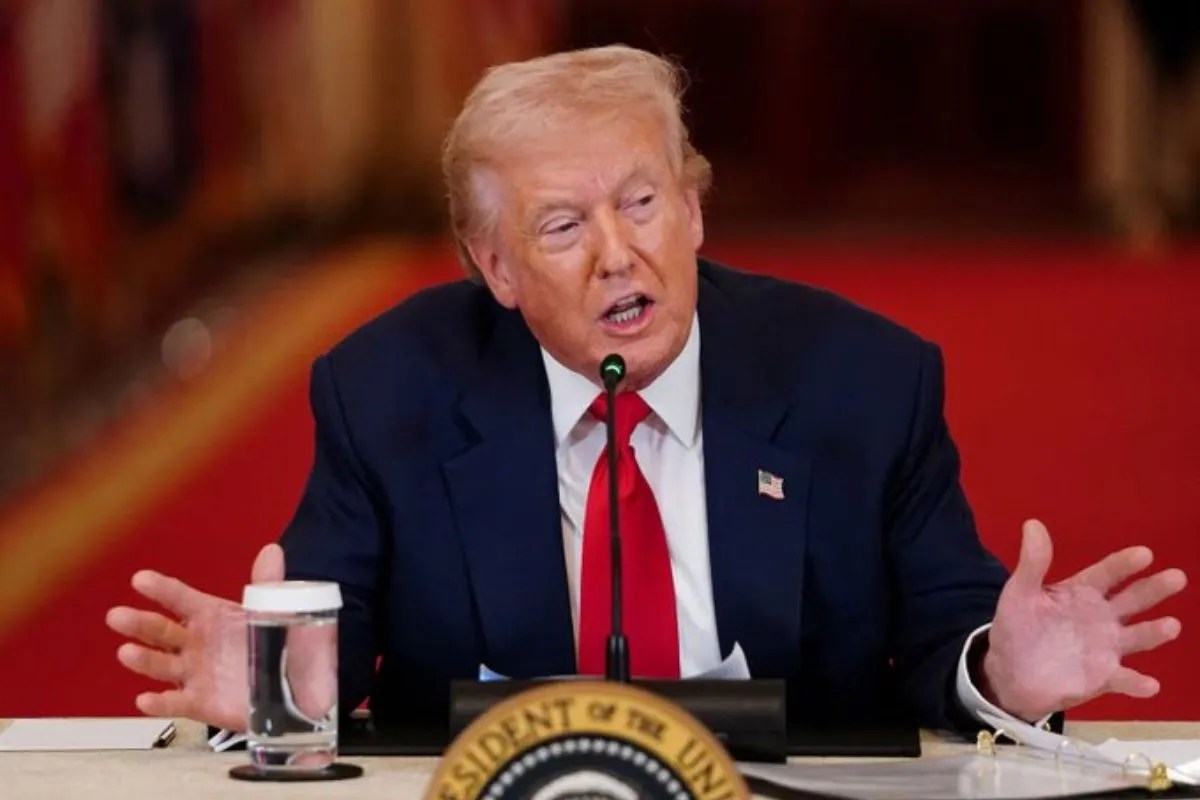
The friction between diplomatic de-escalation in the Middle East and the hard reality of Iranian nuclear ambitions has reached a point of structural gridlock. While political rhetoric often frames the delay in a regional ceasefire as a matter of personality or "begging" for terms, the underlying calculus is driven by a specific set of security guarantees that neither side can currently verify. Donald Trump’s recent assertions regarding the Iranian position underscore a fundamental principle of international relations: domestic economic collapse is a powerful motivator for negotiation, but it is rarely sufficient to force a state to abandon its ultimate deterrent.
The Triad of Iranian Strategic Constraints
To understand why a regional peace remains elusive despite significant economic pressure on Tehran, one must analyze the three specific pillars holding the current Iranian regime in its current posture. In other developments, we also covered: The Sabotage of the Sultans.
1. The Nuclear Insurance Policy
For the Iranian leadership, the nuclear program is not a bargaining chip; it is an existential insurance policy. The logic is derived from the "Libyan Precedent." After Muammar Gaddafi voluntarily dismantled his nuclear program in exchange for sanctions relief and reintegration into the global community, his regime was eventually toppled with the support of the same powers that negotiated the deal. Tehran views the possession of—or the immediate capability to produce—a nuclear weapon as the only absolute guarantee against foreign-led regime change.
2. The Proxy Infrastructure Sunk Cost
Iran has spent decades and billions of dollars cultivating the "Axis of Resistance." This network, spanning Lebanon, Yemen, Iraq, and Syria, serves as a forward-defense mechanism. De-escalating without a reciprocal guarantee that these assets will remain intact would represent a total loss on a forty-year investment. The current conflict in Gaza and Lebanon has stressed this network, but from Tehran's perspective, abandoning these proxies under duress would invite a direct kinetic conflict on Iranian soil. The Guardian has provided coverage on this critical issue in extensive detail.
3. The Currency and Inflation Feedback Loop
The "begging" referenced in political discourse is a colloquialism for a catastrophic failure in macroeconomics. Iran’s Rial has faced consistent devaluation, and internal inflation has stripped the middle class of its purchasing power. However, a state can remain functional under extreme economic duress if it maintains a monopoly on force. The Iranian strategy involves weathering the economic storm until they can secure a "Grand Bargain" that includes both sanctions relief and the retention of their regional influence—a combination the United States currently finds unacceptable.
The Trump Doctrine of Maximum Pressure 2.0
The return of a "Maximum Pressure" philosophy shifts the negotiation from a technical discussion about centrifuge counts to an existential choice for the Iranian state. The strategy operates on a specific cost-benefit function:
$C(a) > B(s)$
Where $C$ is the cost of continued aggression (sanctions, targeted strikes, internal unrest) and $B$ is the perceived benefit of the nuclear/proxy status quo.
The primary failure of previous iterations of this strategy was the lack of an "off-ramp" that the Iranian leadership found credible. If the cost of surrender (regime collapse) is perceived as higher than the cost of resistance (economic misery), the state will choose resistance every time. Trump’s current positioning suggests a belief that the "Cost of Resistance" has finally peaked, driven by the degradation of Hezbollah’s leadership and the increasing frequency of direct Israeli strikes on Iranian military infrastructure.
The Verification Bottleneck
Even if a political will to stop the war exists, the technical execution of a ceasefire is hampered by a lack of trust in verification mechanisms. There are three specific bottlenecks:
- The Breakout Time Variable: Intelligence estimates on Iran's "breakout time"—the duration required to produce enough weapons-grade uranium for a single device—have shrunk significantly. This creates a "hair-trigger" environment where any pause in military pressure could be viewed by Israel or the U.S. as a window for Iran to cross the nuclear threshold.
- The Transparency Deficit: Iran’s history of undeclared sites and the intermittent disabling of IAEA monitoring equipment makes a "paper-only" agreement impossible.
- The Shadow War Paradox: Even if a formal ceasefire is signed between primary state actors, the decentralized nature of proxy groups (such as the Houthis or various Iraqi militias) allows for plausible deniability. A state-level agreement does not necessarily guarantee a cessation of kinetic activity at the non-state level.
The Strategic Shift from Deterrence to Compellence
Current U.S. policy, as articulated by the incoming administration's rhetoric, is moving from deterrence (preventing an action) to compellence (forcing an action).
Deterrence failed to stop the expansion of the Iranian nuclear program. Compellence requires a much higher level of credible threat. The claim that Iran is "begging" to talk is a signal to the international community that the U.S. believes the Iranian leadership is now in a reactive state. In this phase of the conflict, the U.S. strategy is to use the threat of total economic isolation to force Tehran to make concessions on its "permanent" interests—specifically, its long-term nuclear enrichment rights and its ballistic missile program.
The Role of Regional Intermediaries
The geopolitical landscape is further complicated by the shifting roles of Qatar, Oman, and the UAE. These nations serve as the "pressure valves" for the region. While they facilitate communication, they also profit from a level of regional stability. If the U.S. moves toward a binary "with us or against us" stance regarding Iranian trade, these intermediaries will be forced to choose sides, potentially closing the final diplomatic channels available to Tehran.
The current situation is not a stalemate; it is an escalation ladder where the top rungs have been removed. Iran cannot afford to continue the war indefinitely, but it cannot afford the price of peace currently being demanded. The result is a high-stakes waiting game where the primary variables are the survival of the Iranian currency and the speed of Israeli military operations against Hezbollah.
The strategic play for the West is to increase the precision of economic pain while maintaining a military posture that makes the cost of a nuclear "dash" (the attempt to build a bomb before being detected) prohibitively high. For Iran, the play is to survive the current administration's first 100 days without a total internal collapse, hoping to leverage regional instability into a more favorable negotiating position.
Strategic success in this theater depends on recognizing that "peace" is not a singular event but a series of verified de-escalation steps. The first step remains the most difficult: decoupling the Iranian regime's survival from its nuclear ambitions. Until a credible pathway for the former is provided without the latter, the regional war will continue to simmer, punctuated by periods of intense kinetic exchange.
The next tactical phase will involve a systematic targeting of Iran's remaining oil export routes to China, the final lifeline of the Iranian economy. If this "Ghost Fleet" of tankers can be effectively neutralized through maritime enforcement and diplomatic pressure on Beijing, the Iranian "begging" will transition from political rhetoric to a desperate, and perhaps final, diplomatic necessity.