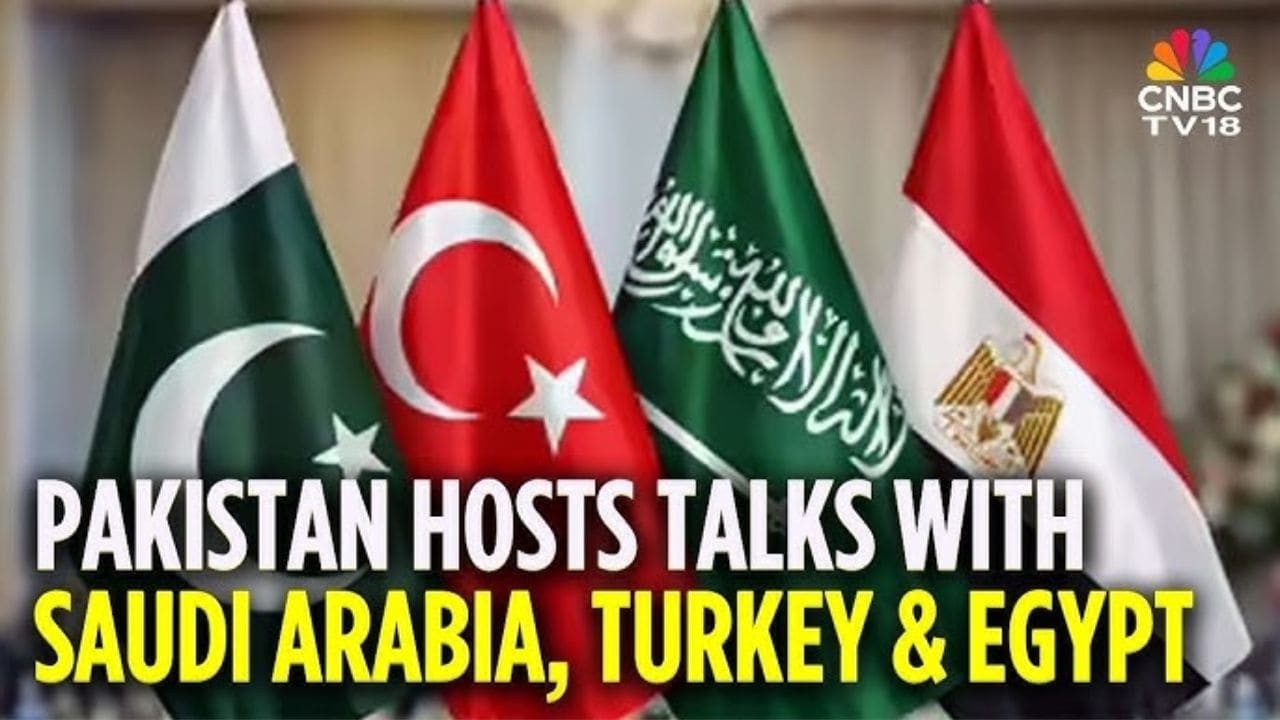
The diplomatic map of South and West Asia is shifting faster than most observers realized. When the foreign ministers of Saudi Arabia, Egypt, and Turkiye touched down in Islamabad this week, it wasn't for a ceremonial photo op or a routine exchange of pleasantries. They came because the region is on a knife-edge. Tensions in West Asia have reached a boiling point that threatens to spill over traditional borders, and Pakistan finds itself in the unlikely position of a central mediator.
You've probably seen the headlines about rising escalations. But what's happening behind closed doors in Pakistan is about more than just "discussing" problems. It's a high-stakes attempt to prevent a total regional meltdown. These four nations represent a massive chunk of the Islamic world's military and economic weight. If they can align their positions, they might just have enough leverage to pull the brakes on a wider conflict.
The Islamabad Push for Regional Stability
The timing of this gathering isn't accidental. With the situation in Gaza and the broader Levant remains volatile, the risk of a miscalculation between major regional powers is at an all-time high. Saudi Arabia, Egypt, and Turkiye aren't just looking for a ceasefire; they're looking for a long-term security architecture that doesn't involve constant proxy battles.
Pakistan's role here is specific. It's the only nuclear-armed Muslim nation and has deep, long-standing military ties with the Gulf and Ankara. By hosting these talks, Islamabad is trying to signal that the Muslim world can provide its own security solutions without always waiting for a green light from Washington or Brussels.
The discussions focused heavily on maritime security in the Red Sea and the potential for a humanitarian corridor that actually works. We've seen plenty of promises before. This time, there’s a sense of urgency because the economic fallout is starting to hit everyone's bottom line. Egypt is losing Suez Canal revenue. Turkiye is dealing with trade disruptions. Saudi Arabia wants a stable environment for its Vision 2030 projects. Chaos is bad for business, and everyone at the table knows it.
Why Pakistan Matters in the West Asia Equation
It’s easy to wonder why these ministers flew to Islamabad instead of Cairo or Riyadh. The answer lies in Pakistan’s "neutral-plus" policy. Over the last decade, Pakistan has managed to maintain a delicate balance between competing interests in the Middle East. It’s one of the few places where Saudi and Turkish interests can meet on neutral ground without the baggage of direct regional rivalry.
During the sessions, the ministers reportedly looked at a joint diplomatic roadmap. This isn't about empty rhetoric. They’re talking about synchronized voting blocs at the UN and shared intelligence on extremist groups that thrive when states are distracted by war. Pakistan’s military experience in counter-terrorism provides a practical blueprint that the other three nations are keen to utilize.
The presence of Egypt's top diplomat is particularly telling. Cairo has been the traditional gatekeeper for Mediterranean and Levantine diplomacy. Their participation in an Islamabad-led forum suggests a broadening of the diplomatic front. It's an admission that the old ways of handling West Asian crises—relying solely on Western intervention—aren't cutting it anymore.
Breaking the Cycle of Failed Interventions
If you look at the history of the last twenty years, external interventions in West Asia usually leave things worse. This meeting represents a shift toward "regional ownership." The idea is simple: the people who live in the neighborhood should be the ones fixing the fence.
Saudi Arabia’s Foreign Minister emphasized that regional security is indivisible. You can't have peace in Riyadh if there's fire in Beirut or Gaza. This holistic view is a departure from the segmented diplomacy of the past. The ministers discussed ways to de-escalate the "shadow war" between regional rivals that has been simmering for years.
There’s also a heavy economic component to these talks. Pakistan is desperate for foreign direct investment, and the "Special Investment Facilitation Council" (SIFC) was a major talking point. Saudi Arabia and the UAE have already pledged billions, but Turkiye and Egypt are now looking at how they can plug into this emerging economic corridor. Security and money are two sides of the same coin here. You don't get one without the other.
Challenges to the Quadruple Alliance
Don't think for a second this is a perfect union. Significant friction points remain. Turkiye and Egypt have had a rocky relationship over the years, though it's thawing. Saudi Arabia and Turkiye have competed for leadership of the Sunni world. Pakistan is constantly balancing its relationship with Iran, which wasn't at this specific table but looms large over every discussion about West Asian tensions.
The elephant in the room is always how these nations navigate their relationships with the United States and China. While this meeting was about regional autonomy, nobody is ready to cut ties with the global superpowers. It’s a tightrope walk. They want to show they can lead, but they still need the global financial system to stay afloat.
The real test will be what happens next week. Talk is cheap. If we don't see a joint statement or a coordinated diplomatic move at the next UN General Assembly, then this was just another high-level brunch. However, the level of technical detail in the briefings suggests they’re moving toward a formal coordination mechanism.
Monitoring the Fallout
For anyone watching the geopolitical space, the next steps are clear. Keep an eye on the joint naval exercises rumored to be in the works between these four nations. Watch the trade volume between Ankara and Islamabad. Most importantly, see if Riyadh starts using Pakistan as a more frequent backchannel for its more sensitive regional negotiations.
If you’re invested in regional stability—whether for business or just to understand the world—you can't ignore this shift. The center of gravity is moving. The old "hub and spoke" model where everything went through a Western capital is dying. In its place, we're seeing these "mini-lateral" groupings where countries with shared interests just get in a room and hammer things out.
Stay updated on the official communiqués from the Pakistan Ministry of Foreign Affairs and the Saudi Press Agency. These sources will give you the raw data before it gets filtered through the lens of Western media outlets. Pay attention to the specific language used regarding "sovereignty" and "non-interference." Those are the code words for a new era of Middle Eastern and South Asian self-reliance. The map is being redrawn, and for once, the pens are in the hands of the people who actually live there.