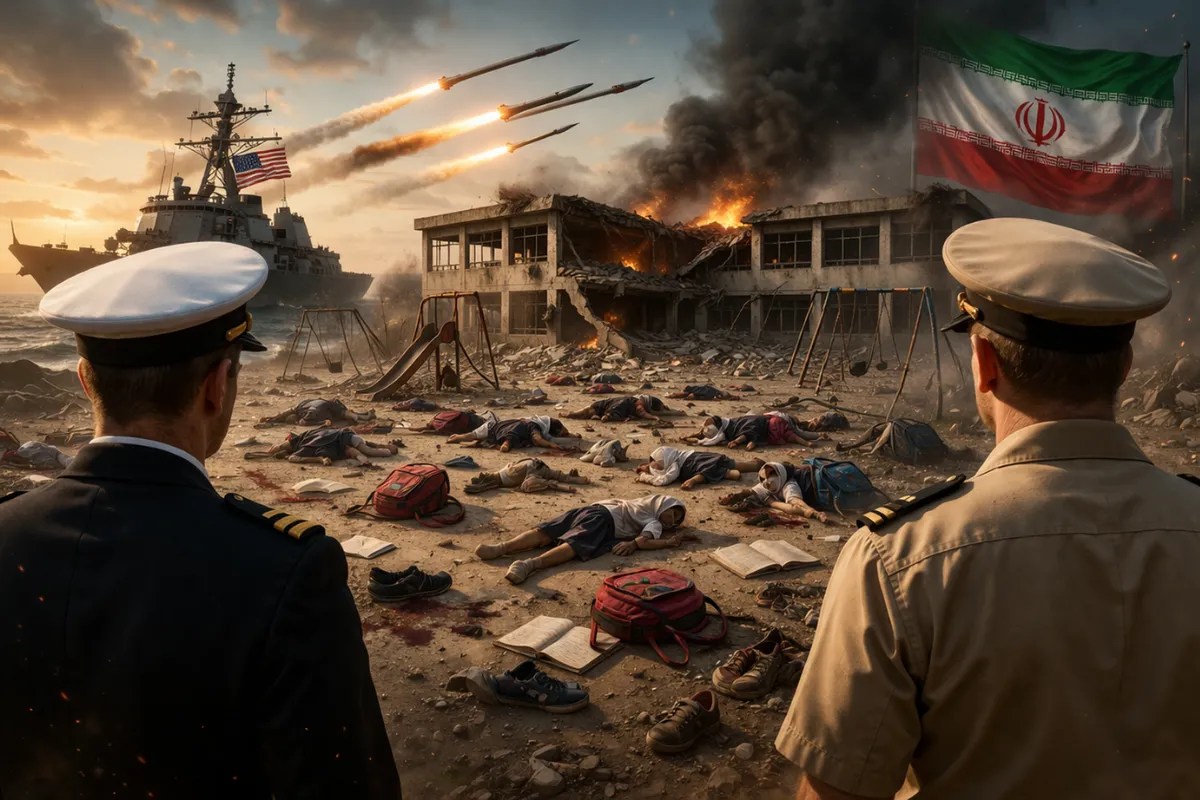
The rhetorical posturing from Tehran—specifically the assertion that their military is "fully prepared" to inflict catastrophic costs on American assets—is not a mere outburst of nationalist fervor. It is a calculated communication within the framework of Escalation Dominance. To understand the current friction between Iran and the United States, one must look past the incendiary language and analyze the structural components of Iranian regional strategy: the integration of proxy-based attrition, anti-access/area-denial (A2/AD) hardware, and the exploitation of democratic political cycles in the West.
The fundamental tension resides in a mismatch of military objectives. While the United States operates on a doctrine of rapid decisive operations and technological overmatch, Iran operates on a doctrine of Strategic Patience and Cost Imposition. Their goal is not to win a conventional war, which they recognize as a physical impossibility, but to make the status quo of American presence in the Middle East fiscally and politically untenable.
The Triad of Iranian Asymmetric Capability
Iranian military readiness is built upon three distinct pillars that function as a cohesive ecosystem designed to nullify traditional carrier-based power projection.
1. The Proliferation of Low-Cost Precision Strike (LCPS)
The emergence of the Shahed-series loitering munitions and the advancement of short-to-medium range ballistic missiles (SRBMs) have fundamentally altered the cost-exchange ratio of Middle Eastern conflict. When a $30,000 drone requires a $2,000,000 interceptor missile (such as the SM-2 or Patriot PAC-3) to neutralize it, the defender faces a mathematical certainty of exhaustion. Iran’s "readiness" refers to their ability to saturate defensive envelopes. If 100 drones are launched at a single high-value target, a 98% intercept rate still results in a successful strike. This saturation logic is the primary mechanism through which Iran threatens to "set fire" to regional stability.
2. The Gray Zone and Proxy Interdependence
The "Axis of Resistance" provides Iran with a geographic depth that the United States cannot easily target without triggering a wider regional conflagration. By utilizing decentralized command structures in Lebanon, Iraq, Yemen, and Syria, Tehran maintains plausible deniability while exerting kinetic pressure. This creates a strategic bottleneck for American planners:
- Kinetic retaliation against proxies often fails to degrade the core Iranian command structure.
- Direct strikes on Iranian soil risk a total war scenario for which there is currently no Western political appetite.
3. Maritime Chokepoint Leverage
The Strait of Hormuz remains the most potent economic weapon in the Iranian arsenal. Approximately 20% of the world's liquid petroleum passes through this 21-mile-wide waterway. Iranian naval doctrine utilizes "swarm tactics"—large numbers of fast-attack craft armed with cruise missiles and mines—to counter the qualitative superiority of the U.S. Fifth Fleet. In a high-intensity conflict, the goal is not to sink the entire fleet but to sink a single commercial tanker or damage one destroyer, causing global insurance premiums to spike and effectively closing the strait through economic risk alone.
The Logic of the "Total Readiness" Narrative
When Iranian officials claim their soldiers are "ready to set fire" to the region, they are targeting specific psychological vulnerabilities in the American strategic posture. This is a form of Reflexive Control, a technique where information is transmitted to an adversary to lead them to make a voluntary decision that is favorable to the initiator.
The Iranian leadership identifies two primary constraints on American action:
- The Casualty Aversion Constraint: The Iranian military is prepared to absorb high levels of attrition to achieve a political objective. The U.S. military, operating under the scrutiny of a 24-hour news cycle and a polarized electorate, has a much lower threshold for sustained casualties.
- The Pivot to the Indo-Pacific: Tehran understands that every Tomahawk missile fired in the Middle East and every carrier strike group stationed in the Gulf is a resource diverted from the "pacing challenge" of China. Iran uses the threat of escalation to trap the United States in a theater it is trying to deprioritize.
The Kinetic Reality of Iranian Ballistic Evolution
Beyond the rhetoric, the technical evolution of the Iranian Revolutionary Guard Corps (IRGC) Aerospace Force provides the empirical basis for their confidence. The transition from liquid-fueled missiles to solid-fueled variants (like the Fattah or Kheibar Shekan) has significantly reduced launch preparation times. This increases "survivability through mobility."
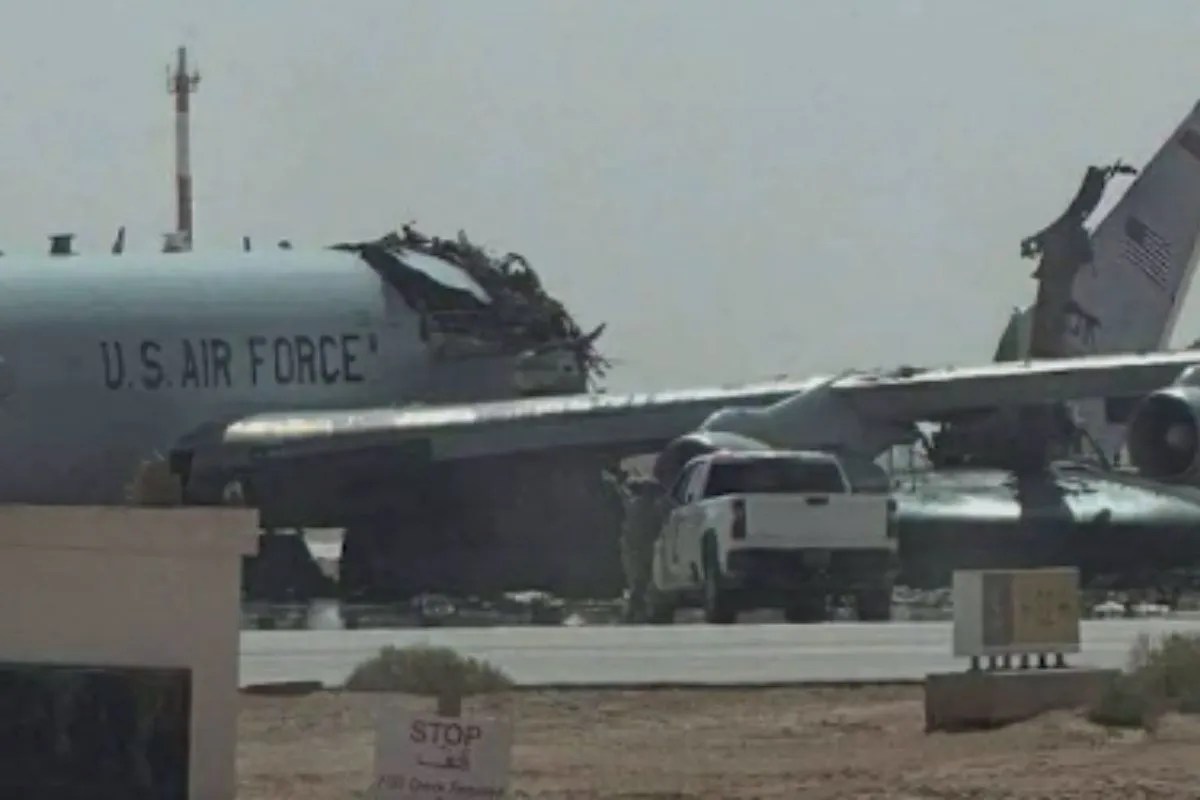
The tactical advantage of solid-fuel technology is the ability to fire and relocate before an adversary can complete the "kill chain"—the process of detecting, identifying, and striking a target. When combined with terminal guidance systems that allow for maneuverability in the final stage of flight, Iranian missiles have moved from being "area-wide" threats to "point-target" threats. They can now credibly target specific hangers, radar arrays, or command centers on U.S. bases throughout Qatar, the UAE, and Saudi Arabia.
Operational Limitations and Risk Factors
While the Iranian "threat" is structurally sound, it is not without significant vulnerabilities. A clinical analysis must acknowledge the "Glass Shield" problem facing Tehran.
- Intelligence Penetration: The recent history of targeted eliminations of high-ranking IRGC officials suggests a deep intelligence vacuum within the Iranian security apparatus. Kinetic readiness is negated if the adversary knows the location and timing of movements before they occur.
- Air Defense Deficits: Despite the deployment of the Bavar-373 and the acquisition of Russian systems, Iran lacks a comprehensive integrated air defense system (IADS) capable of contesting fifth-generation stealth assets like the F-35 or B-21. Their "readiness" is primarily offensive; their defensive capacity remains fragile.
- Economic Fragility: A "total war" scenario requires a robust industrial base and domestic stability. With hyperinflation and civil unrest, the Iranian state risks internal collapse if a conflict extends beyond a 30-day window.
The Escalation Ladder: A Structural Forecast
The current standoff is not a binary choice between peace and war, but a sophisticated climb up an escalation ladder. The Iranian strategy is to remain at a level of "Permanent High-Tension"—high enough to deter an American or Israeli strike on their nuclear infrastructure, but low enough to avoid a full-scale invasion.
The "readiness" they signal is designed to move the "Red Line." By demonstrating that they can strike American assets with precision (as seen in the 2020 Al-Asad airbase attack), they have successfully raised the cost of American "maximum pressure" campaigns.
Future stability depends on whether the United States can develop a "Left-of-Launch" capability—using cyber and electronic warfare to disable Iranian systems before they are fired—or if it will continue to rely on the increasingly expensive and permeable "Right-of-Launch" kinetic interception.
The strategic play for the United States is to decouple Iranian proxy actions from direct Iranian state interests. By creating a framework where the "Axis of Resistance" becomes a liability rather than an asset—through targeted financial isolation and the disruption of the logistical "land bridge" across Iraq—the U.S. can degrade Iranian readiness without firing a shot on Iranian soil. Conversely, Iran will continue to use its missile and drone programs as a form of "Kinetic Diplomacy," using the threat of fire to negotiate for the lifting of sanctions. The battlefield is not just the desert; it is the global oil market and the legislative floors of Washington.