The frost in eastern Finland doesn’t just bite; it silences. When you stand in the deep woods near Joensuu, the world usually feels like it has been placed under a heavy, white velvet cloth. You hear the rhythmic snap of a frozen branch or the distant, muffled crunch of a reindeer moving through the brush. It is a stillness that feels ancient, a geographic certainty that has defined life on the edge of the European Union for generations.
But on Sunday, the silence broke.
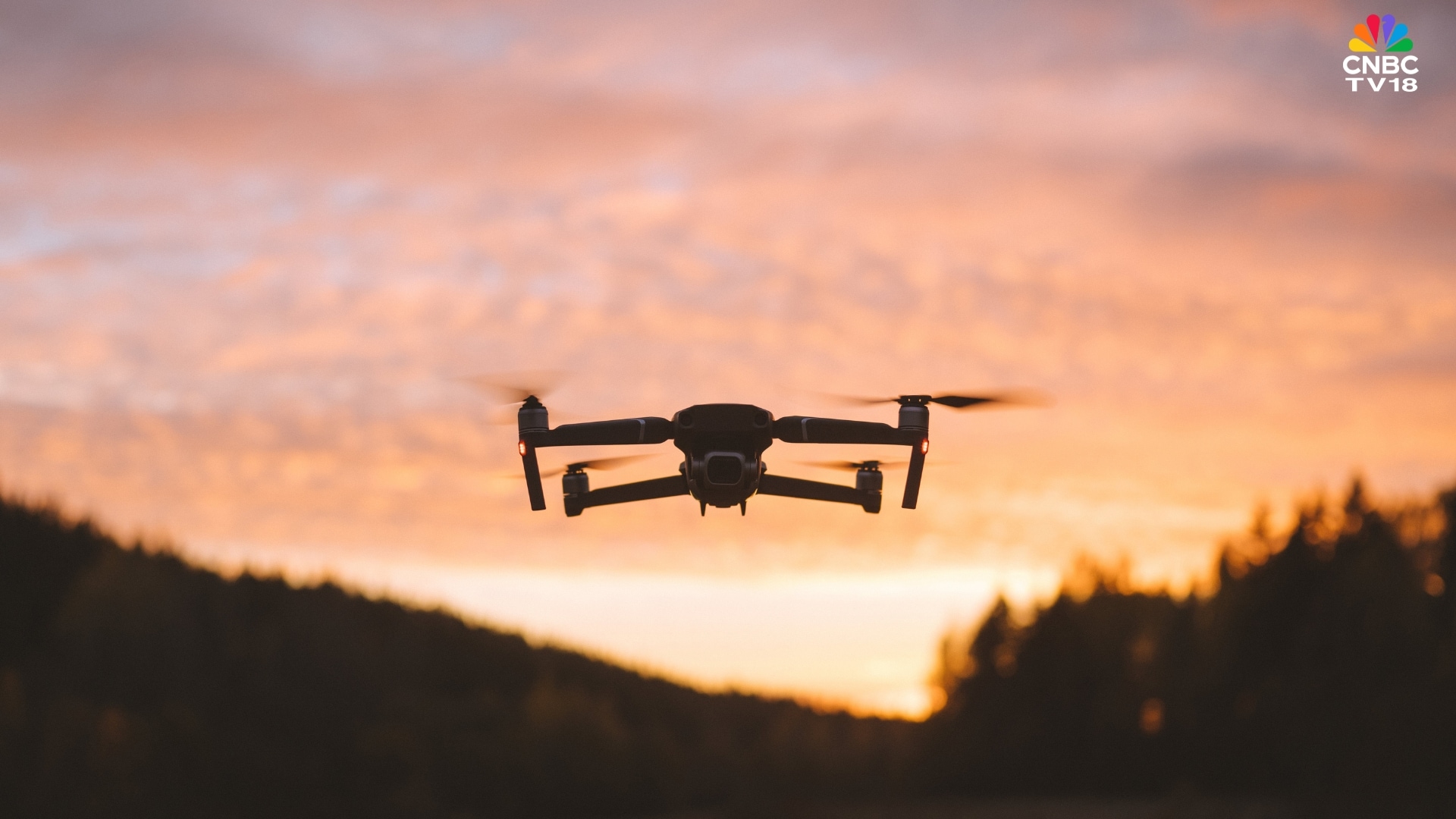
It wasn't the roar of a jet engine or the familiar thrum of a local tractor. It was a high-pitched, synthetic whine—a sound that belongs more to a hobbyist’s backyard than a geopolitical frontier. Then came the impact. Somewhere in the dense thicket of spruce and pine, gravity reclaimed two pieces of sophisticated machinery.
The drones didn't just fall from the sky. They fell into a new reality.
The Anatomy of an Intrusion
When the Finnish Border Guard confirmed they were investigating the crash of two unmanned aerial vehicles (UAVs) in their airspace, the official report was, as expected, surgically dry. It spoke of coordinates, recovery efforts, and ongoing technical analysis. It did not speak of the shiver that ran down the spine of the local farmer who might have heard the final, sputtering whine of a battery failing in the sub-zero air.
Finland shares an 830-mile border with Russia. For decades, this was a border of pragmatic silence and regulated crossings. Today, it is a focal point of "hybrid" tension. To understand why two small drones crashing in the woods is a national security event, you have to look past the carbon fiber and the circuit boards. You have to look at the intent.
Drones are the scouts of the modern age. They are cheap, they are often difficult to track on traditional radar, and most importantly, they offer plausible deniability. If a fighter jet crosses a border, it is an act of war. If a drone crosses, it is a "technical error" or a "navigation glitch."
But data doesn't glitch.
The investigators currently hovering over the wreckage in Helsinki aren't just looking at the engines. They are digging into the flight logs. They are tracing the origin of the components. They are asking a singular, haunting question: Was this a mistake, or was it a test?
The Invisible Stakes of a Cold Border
Consider a hypothetical resident—let’s call him Matti. Matti has lived ten miles from the border his entire life. He remembers when the biggest concern was a stray bear or a timber truck moving too fast on the icy roads. Now, Matti looks at the sky differently.
Every unidentified light is a potential sensor. Every buzz is a potential breach.
This is the psychological toll of gray-zone warfare. It isn’t about bombs falling; it’s about the erosion of certainty. When the Finnish government moves to investigate these crashes, they are performing a delicate ritual of sovereignty. They are telling the world—and their neighbors—that the velvet cloth of the Finnish woods is not a shroud. It is a boundary.
The technical reality of these drones is equally chilling. Modern UAVs used for surveillance often carry multi-spectral cameras that can see through the very forest canopy that once provided cover. They can map out troop movements, identify new border fortifications, or simply test how long it takes for Finnish interceptors to reach a specific coordinate.
Every second of flight time is a data point harvested.
The Technology of the Trespass
To the untrained eye, a crashed drone looks like expensive trash. To a signals intelligence officer, it is a library.
The investigation focuses on three pillars:
- Signal Intelligence (SIGINT): Were the drones communicating with a satellite or a ground station? The frequency used tells a story of who owns the remote.
- Geofencing Overrides: Most commercial drones have software that prevents them from flying near airports or across sensitive borders. If these drones crossed into Finland, that digital leash was likely cut.
- Payload Analysis: Were they carrying cameras, or were they carrying "electronic sniffers" designed to map out Finnish cellular and emergency radio networks?
The challenge for Finland—and by extension, NATO—is that these incursions are designed to be annoying but not quite "enough" to trigger a full-scale military response. It is the death by a thousand cuts. Or, in this case, the surveillance by a thousand drones.
A History Written in the Air
Finland’s history is a long lesson in the price of vigilance. The 1939 Winter War taught the Finnish people that their terrain is their greatest ally, but only if they can see what is coming. Back then, it was white-clad snipers on skis. Today, it is an operator sitting in a climate-controlled room hundreds of miles away, staring at a high-definition feed of a Finnish forest.
The shift in the Nordic security landscape over the last few years has been seismic. Finland’s entry into NATO wasn't just a political pivot; it was an admission that the old ways of "neutrality" were no longer enough to guard the silence of the North.
These drones are a symptom of that friction.
They represent the physical manifestation of a digital standoff. When we read about a "crash investigation," we are actually reading about a forensic search for a fingerprint in a room where everyone is wearing gloves.
The Weight of the Unknown
The investigation will likely take weeks. The results may never be fully public. National security often requires a quiet tongue.
But for the people living in the shadow of the border, the "facts" are secondary to the feeling. There is a sense that the world has become smaller, and the sky has become heavier. The drones that fell on Sunday are no longer just pieces of plastic and wire; they are the debris of a changing world order.
As the sun sets over the taiga, casting long, blue shadows across the snow, the silence returns. But it is a fragile silence now. It is a silence that listens for the hum.
The investigation continues, but the verdict is already written in the crisp, cold air: the border is no longer just a line on a map. It is a vertical space, contested and watched, where the smallest machine can cast the longest shadow.
In the end, it doesn't matter if the drones were lost or sent. They arrived. And in the high north, arrival is a message that requires no translation.
The spruce trees still stand tall, their branches heavy with snow, masking the scars where the machines tore through the needles. They remain the silent witnesses to a century of tension, watching as the latest intruders are packed into crates and driven away toward the city. The forest knows how to keep a secret, but the modern world is obsessed with uncovering them.
The sky is clear for now, but the watchers are still there, hidden behind screens and signals, waiting for the next whine to break the frost.