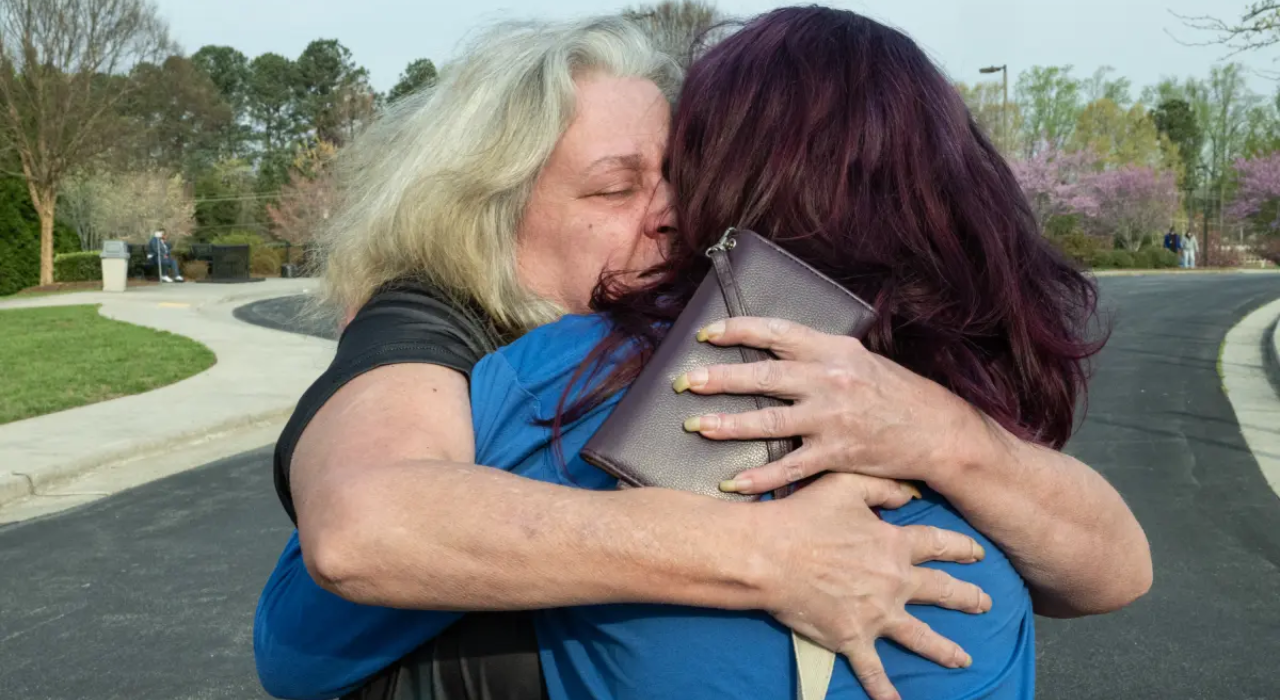
The reappearance of a missing person after a 22-year hiatus disrupts the standard biological and social assumptions regarding "cold" disappearance cases. While traditional investigative models prioritize immediate recovery within the first 48 to 72 hours, the case of a mother found alive two decades later reveals a failure in long-term surveillance and cross-jurisdictional data verification. Recovery is not merely a human interest event; it is a breakdown of the social death hypothesis, where an individual is legally or socially categorized as deceased despite a lack of forensic evidence.
The Three Pillars of Persistent Disappearance
For an individual to remain undetected for over two decades within modern bureaucratic systems, three specific conditions must be met: identity obfuscation, geographic displacement, and social isolation.
- Identity Obfuscation: This involves the transition from a verified legal identity to an unverified or stolen identity. In the pre-digital era of 2001, the "paper trail" was fragmented. Physical documentation—drivers' licenses, social security cards, and birth certificates—could be manipulated or bypassed more easily than in the current era of biometric integration.
- Geographic Displacement: Moving across state lines or international borders creates a jurisdictional vacuum. Law enforcement agencies typically operate within localized databases. Unless a missing person’s data is actively pushed into federal systems like NCIC (National Crime Information Center) with high-frequency updates, the individual becomes "invisible" the moment they exit their home precinct.
- Social Isolation: The individual must sever all ties with their previous social graph. Any contact with family, friends, or former employers creates a data point that can be tracked. Maintaining a 20-year disappearance requires a total lack of digital footprint and a reliance on cash-based or informal economies.
The Cognitive Dissonance of Survival
The "Missing Person" archetype often assumes foul play or accidental death when a timeline exceeds five years. This assumption creates a systemic bias in law enforcement resource allocation. When a person is found alive after two decades, it exposes the flaws in the Probability of Life (PoL) metric.
Most investigative frameworks use a decaying PoL curve. The logic dictates that as time ($t$) increases, the probability ($P$) that the individual is alive decreases exponentially. This leads to the "Cold Case" designation, where active investigation ceases and the file moves to a maintenance state. However, cases of voluntary disappearance or undetected survival suggest that PoL does not hit zero; it reaches a baseline where the individual has successfully integrated into a new environment.
The reunion in a courthouse setting highlights the legal friction of these cases. When a person "returns from the dead," they face a complex web of legal reinstatements:
- Rescission of Death Certificates: If the individual was declared dead in absentia, the legal system must nullify that declaration, affecting inheritance, life insurance payouts, and marital status.
- Identity Restoration: The individual must prove their original identity to federal agencies to regain access to social services, a process hindered by two decades of missing biometric and documentary updates.
Structural Failures in Inter-Agency Data Transfer
The fact that a woman could live undetected for 22 years while her family searched suggests a disconnect between civil registries and criminal databases. In 2001, the lack of centralized, real-time facial recognition and DNA databases meant that an individual could be arrested for a minor infraction in one state without triggering a "Missing Person" alert in another.
The bottleneck exists in the Data Latency of Recovery. Even if a person's name or likeness is entered into a system, the match depends on:
- Input Quality: The original 2001 photos are often low-resolution, making modern AI-driven facial matching difficult without significant aging-progression modeling.
- Search Frequency: Most systems are reactive rather than proactive. They check a name against a list during an encounter but do not constantly scan all living persons against the missing person database.
The Psychological Reintegration Debt
Reunions are frequently framed as emotional triumphs, yet they represent a massive "reintegration debt." This debt is composed of the psychological trauma of the abandoned parties (the daughter) and the survival-driven trauma of the missing person.
The daughter’s experience is defined by Ambiguous Loss, a term coined by Pauline Boss to describe a situation where a loved one is physically absent but psychologically present. There is no closure because there is no body. When the person reappears, the Ambiguous Loss is replaced by a reality that may not align with 22 years of idealized memories.
From the mother's perspective, the logic of "finding" is often a logic of "surrendering." Reappearance often happens because the effort to maintain a false identity becomes more taxing than the risk of being caught, or because a medical or legal crisis forces a contact with formal institutions.
The Cost Function of Long-Term Search Efforts
Quantifying the resources spent over two decades reveals the inefficiency of current search models. Private investigators, law enforcement man-hours, and the emotional labor of family members represent a massive sunk cost.
$$C_{total} = \int_{0}^{t} (R_f + R_l + E) dt$$
Where:
- $R_f$ is the recurring financial cost of private searches.
- $R_l$ is the allocated labor hours of public agencies.
- $E$ is the emotional and social impact on the survivors.
As $t$ approaches 22 years, the cost becomes astronomical, yet the "recovery" often happens by chance rather than by the direct result of the $C_{total}$ expenditure. This suggests that investment should shift from active search to passive detection systems—integrating missing person databases into every high-level touchpoint of civil life (healthcare, tax filings, housing).
Forensic Genealogy and the Death of Disappearance
The emergence of forensic genealogy and widespread DNA testing (Direct-to-Consumer kits like 23andMe or Ancestry) has fundamentally changed the landscape of long-term disappearance. It is increasingly difficult to remain hidden when distant relatives are uploading their genetic profiles.
If a missing person’s child or sibling is in a database, any relative the missing person has in their "new life" (such as a child born during their disappearance) could inadvertently flag their existence. This creates a Genetic Perimeter that individuals can no longer easily escape. The courthouse reunion is the end-state of this perimeter closing in.
The strategic play for law enforcement and families is to stop treating long-term disappearances as static files. The transition must be toward dynamic data monitoring. Instead of hoping for a tip, agencies must employ:
- Automated Age-Progression: Updating visual files every 24 months.
- Cross-Sector Data Scraping: Searching for the disappearance of "ghost" identities—people who appear in records without a prior history before a certain date.
- Genetic Crowdsourcing: Encouraging families of the missing to maintain active profiles in public-access genomic databases.
The resolution of a 22-year-old case is not a miracle; it is a statistical inevitability in an era of increasing data transparency. The objective now is to decrease the time-to-recovery by narrowing the gap between "disappeared" and "detected" through integrated digital surveillance.