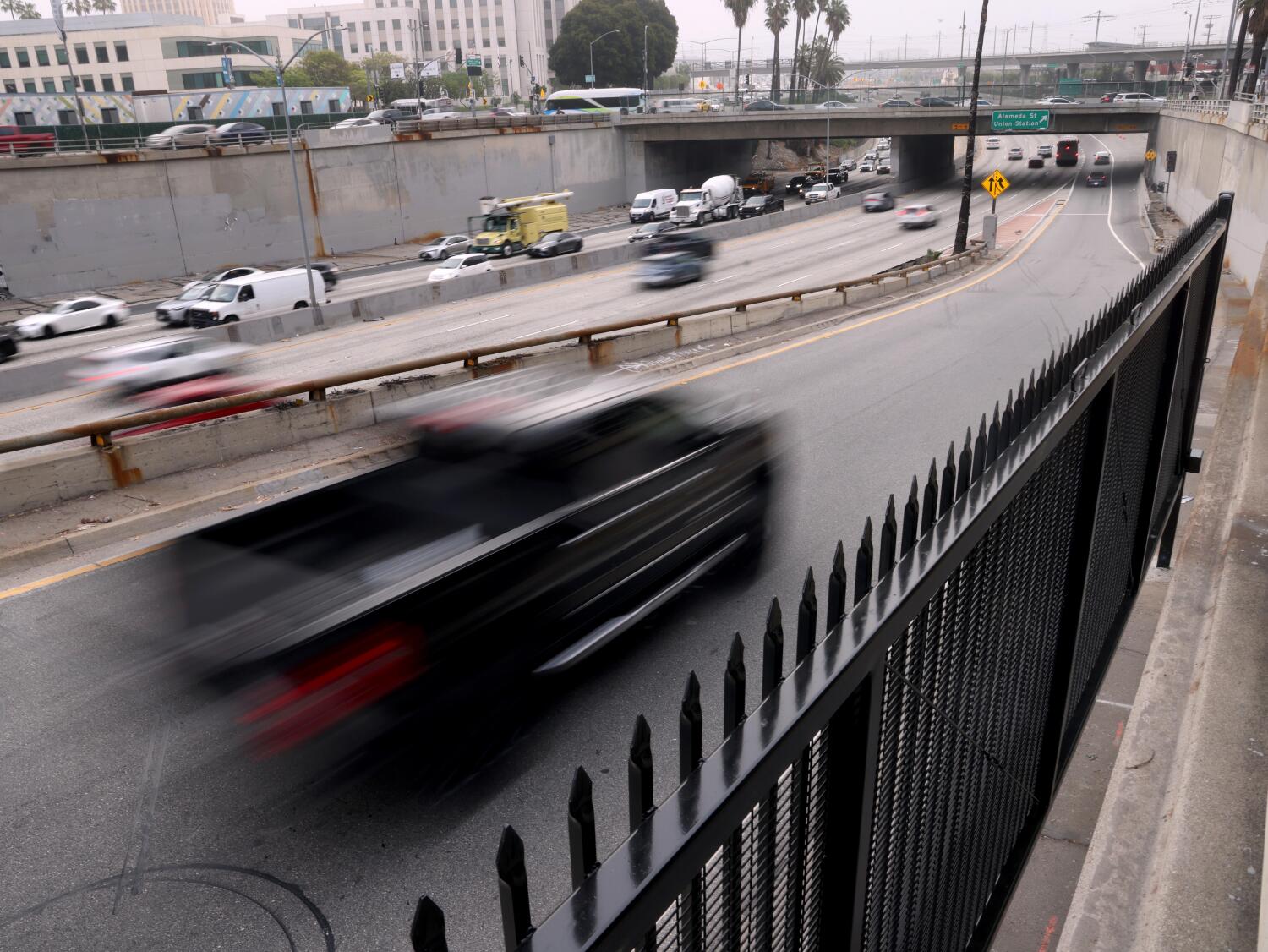
If you've driven past the 101 Freeway in downtown Los Angeles lately, you've seen the heavy machinery. Caltrans crews aren't fixing potholes this time. They're installing massive K-rails and high-fencing near the overpasses. The city is bracing for the "No Kings" demonstrations, and the visual shift is impossible to ignore. It looks less like a public thoroughfare and more like a fortified zone.
The "No Kings" movement has been bubbling under the surface of L.A. politics for months. It's a decentralized group of activists, labor organizers, and housing advocates who’ve rallied around a singular, aggressive message: the rejection of what they call "monarchic" corporate influence over local government. They aren't just holding signs on a sidewalk. They're targeting the city's infrastructure to make a point.
The Real Reason for the 101 Freeway Barriers
Law enforcement hasn't been shy about why these barriers are going up now. During previous waves of civil unrest, the 101 became a strategic chokepoint. Protesters discovered that a few dozen people standing across the lanes could paralyze the entire city's logistics in minutes. It's a nightmare for the LAPD. It's an even bigger nightmare for the thousands of people trying to get home to the Valley or Echo Park.
The new barriers are designed to prevent "pedestrian incursions." That's the polite government term for people jumping onto the freeway. By reinforcing the fencing and adding concrete K-rails, the city is trying to keep the protest contained to the surface streets. They want to ensure the 101 remains a high-speed artery, even if the heart of downtown is at a standstill. It's a move of pure pragmatism, though critics call it a preemptive strike against the right to assemble.
What No Kings Actually Represents
You might wonder why this specific movement is causing such a stir compared to the dozens of other protests L.A. sees every week. "No Kings" is different because it's a coalition. It isn't just one issue. You have people angry about the skyrocketing cost of rent sitting next to people demanding transparency in the City Council after the scandals of the last few years.
The "Kings" they’re talking about aren't literal royalty. They're the real estate developers, the billionaire donors, and the career politicians who seem to hold onto power regardless of who actually votes. The rhetoric is sharp. It’s loud. And it’s specifically designed to be disruptive. When the group announced their "Day of Action," the LAPD shifted into a high-alert posture immediately.
Infrastructure as a Battlefield
Using the freeway as a protest site is a classic L.A. move. In a city built for cars, the road is the only place where you can't be ignored. When the 101 shuts down, the economic impact is immediate. Deliveries stop. Port traffic slows. The "No Kings" organizers know this. They've stated that "business as usual" is the enemy.
Caltrans hasn't given a specific date for when the barriers will come down. Honestly, they probably won't. This looks like a permanent shift in how the city manages its public spaces. We're seeing a trend where the "defensive architecture" of downtown—the stuff meant to keep people moving and prevent loitering—is being scaled up to a massive level. It’s not just about a single protest anymore. It’s about a city that’s constantly on edge.
How to Navigate the Upcoming Disruptions
If you live or work in DTLA, you need to change your habits for the next week. The area around Grand Avenue, Temple Street, and the 101 on-ramps will be a mess. Don't rely on your GPS to give you the fastest route in real-time. By the time a "road closed" notification hits your phone, you'll already be stuck behind a line of tactical vehicles.
The LAPD has already authorized increased patrols. Expect "no parking" signs to appear overnight on streets that are usually open. If you're parked in a tow-away zone when the demonstrations start, your car is gone. No questions asked. The city's priority is keeping the lanes clear for emergency vehicles and, more importantly, keeping the protesters away from the highway.
The Cost of Fortification
Taxpayers are footing the bill for this. Every K-rail moved and every extra shift for a Caltrans worker adds up. Some estimates suggest the security preparations for this month alone will top seven figures. It's a massive investment in "just in case."
Is it overkill? Maybe. But the city's leadership is terrified of a repeat of the 2020 lockdowns or the 2023 transit strikes that caught them off guard. They’d rather be criticized for being too prepared than for losing control of the 101. The message from the Mayor’s office is clear: protest in the designated zones, but stay off the asphalt.
Staying Safe and Informed
Check the official Caltrans District 7 social media feeds before you leave the house. They’re usually faster than the local news at reporting sudden ramp closures. Avoid the area around City Hall and the Hall of Justice if you aren't looking to get caught in a crowd.
The "No Kings" movement isn't going away after one weekend. This is a long-term tension between a frustrated population and a city government trying to maintain order. Watch the barriers. They’ll tell you exactly how much the people in charge are worried about what’s coming next.
Download a secondary navigation app like Waze and set it to avoid freeway segments in the 90012 and 90013 zip codes. If you see a crowd forming near an overpass, don't wait for the police to tell you to move. Take the nearest exit immediately. Traffic will back up for miles within seconds of a disruption, and being the first person to find a side street is the only way you’re getting home before midnight. Keep your gas tank at least half full. You don't want to be the person who runs out of fuel while sitting idle on a barricaded freeway.