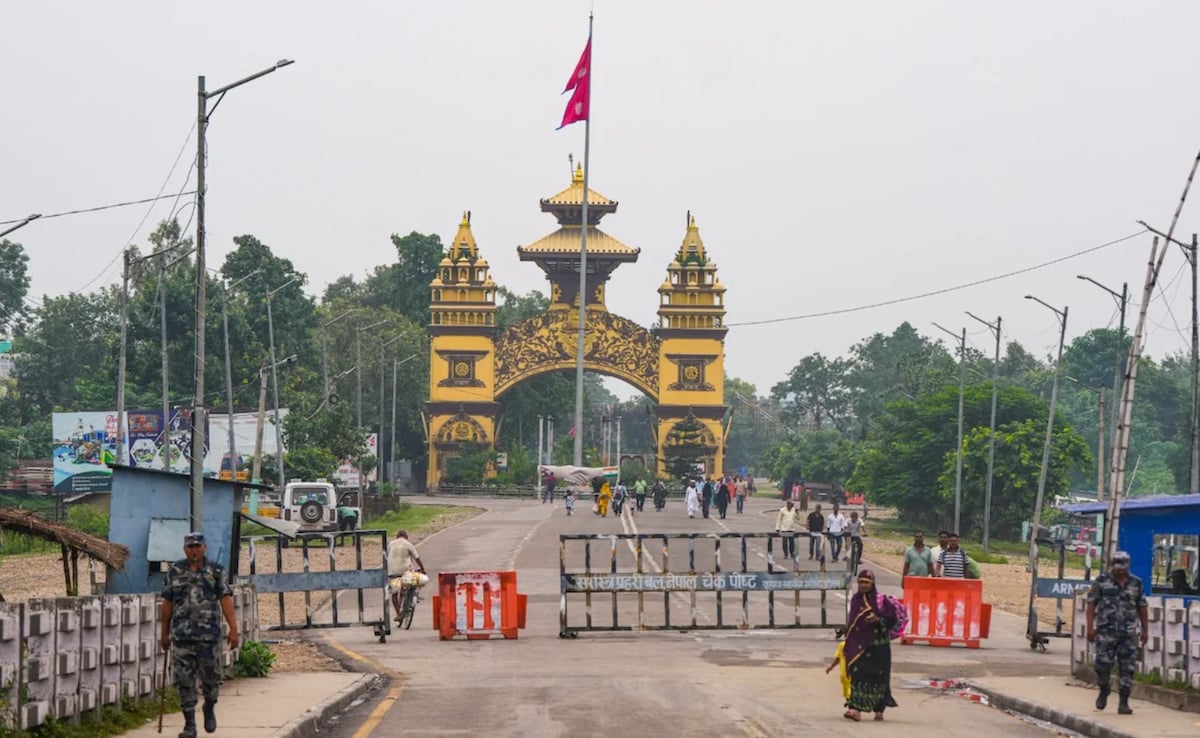
The 2026 general election in Nepal is frequently framed as a binary conflict between a "Gen Z" uprising and an entrenched gerontocracy. However, this narrative oversimplifies the structural reality of Nepalese power. While the September 2025 protests successfully triggered an early dissolution of the House of Representatives, the subsequent electoral race reveals that political authority in Nepal does not merely reside in parties, but in a sophisticated system of geographic and familial incumbency. Despite the rise of the Rastriya Swatantra Party (RSP) and the populist candidacy of Balendra Shah, the "dynastic floor"—the minimum threshold of seats secured through hereditary networks—remains the primary obstacle to systemic realignment.
The resilience of these political families is not a product of simple name recognition. It is an operationalized strategy involving the control of local patronage networks, the vertical integration of party committees, and the weaponization of the First-Past-The-Post (FPTP) system. Meanwhile, you can read other events here: The Calculated Silence Behind the June Strikes on Iran.
The Three Pillars of Dynastic Continuity
The survival of Nepal’s political families through the 2025 unrest and into the March 2026 polls rests on three distinct mechanisms of power.
- Patronage-Based Resource Allocation: In constituencies like Jhapa-5 and Morang-6, families have spent decades embedding themselves in the local economy. This creates a "cost of switching" for voters. If a local community’s access to state-subsidized fertilizer, infrastructure contracts, or administrative bypasses depends on a specific familial intermediary, voting for a "new wave" reformer represents a calculated economic risk rather than just a political choice.
- Vertical Committee Capture: Established families do not just hold the seat; they hold the party apparatus that selects the candidate. This "closed-loop" nomination process ensures that even when public sentiment shifts, the institutional mechanism to challenge a family member from within the party is non-existent.
- Constituency Personalization: Over multiple electoral cycles, certain districts have been transformed into "fiefdoms" where the identity of the family is indistinguishable from the identity of the constituency. The Koirala family in Biratnagar and the Deuba influence in the Far-West are examples where the family name acts as a brand of regional pride, insulating the candidate from national-level anti-incumbency trends.
The Koirala Legacy: A Case Study in Institutional Resilience
The Koirala family remains the most potent example of hereditary political capital in Nepal. Despite the internal shift within the Nepali Congress (NC) that saw Gagan Thapa assume leadership, the Koirala "brand" has pivoted to survive. To explore the full picture, we recommend the excellent analysis by Associated Press.
The current strategy centers on Shekhar Koirala in Morang-6. Unlike his predecessors, Shekhar has attempted to synthesize legacy with reformist rhetoric. This creates a "Hybrid Incumbency." By branding himself as a "leader with an agenda for change" while simultaneously utilizing the deep-rooted Koirala network in Biratnagar, he manages to capture both the traditional base and a segment of the undecided reformist vote. The family’s decision to have Shashank and Sujata Koirala step back from the 2026 race is not a sign of decline, but a strategic consolidation. By narrowing the field to a single, high-probability candidate, the family reduces the risk of vote splitting and focuses its financial and organizational resources.
The Cost Function of Political Disruption
The entry of Balendra Shah into Jhapa-5 to challenge KP Sharma Oli represents a direct attack on one of Nepal’s most formidable geographic strongholds. To quantify the difficulty of this challenge, one must look at the Incumbency Delta.
In the 2022 election, KP Sharma Oli secured 52,319 votes, while his nearest rival trailed by nearly 29,000 votes. For a newcomer to bridge this gap, they must not only win over 100% of the previous opposition but also trigger a "defection rate" of at least 25% from the CPN-UML’s core cadre.
This creates a high Barrier to Entry for new parties. While the RSP and independent candidates dominate the digital discourse, their lack of a "ground-game"—the physical presence of cadres in every ward of a rural municipality—means their reach is often limited to urban clusters. In contrast, the CPN-UML and NC families maintain a presence in every "tea shop" and "local committee," providing a persistent psychological nudge to voters that digital campaigns cannot replicate.
Structural Bottlenecks in the 2026 Race
The primary reason families continue to control constituencies is the FPTP-PR Split. While the Proportional Representation (PR) system allows for the rise of new voices (the "New Wave" parties), the 165 FPTP seats are essentially "High-Cap" markets.
- Capital Intensity: Running a competitive FPTP campaign in 2026 requires significant liquidity. Established families often have diversified business interests or "crony-capitalist" ties that provide the necessary war chest.
- Voter Psychology in Crisis: Historically, in times of extreme socio-economic instability, a segment of the electorate reverts to "the devil they know." The 2025 protests created a vacuum; families offer a sense of predictable, albeit flawed, stability.
Tactical Forecast: The Coalition Trap
The data suggests that while the "old guard" may lose their supermajorities, they are unlikely to be purged. The most probable outcome for the March 5 polls is a highly fractured parliament where no single party crosses the 138-seat threshold.
This leads to the Strategic Action: For the first time, the "Families of Nepal" are not fighting for absolute power, but for "Kingmaker Status." By holding onto 15–20 key constituencies through dynastic loyalty, these families can dictate the terms of the next coalition. The strategic play for a family-controlled seat is no longer to lead the government, but to become the indispensable partner that any new Prime Minister—be it Gagan Thapa or Balen Shah—must negotiate with. To truly dismantle this system, reformers must move beyond "celebrity candidacies" and begin the decade-long process of building ward-level infrastructure that offers a viable alternative to the patronage networks of the traditional elite.
Would you like me to analyze the specific economic manifestos of these three major political blocs to see how they plan to address the $1 billion IT export target?