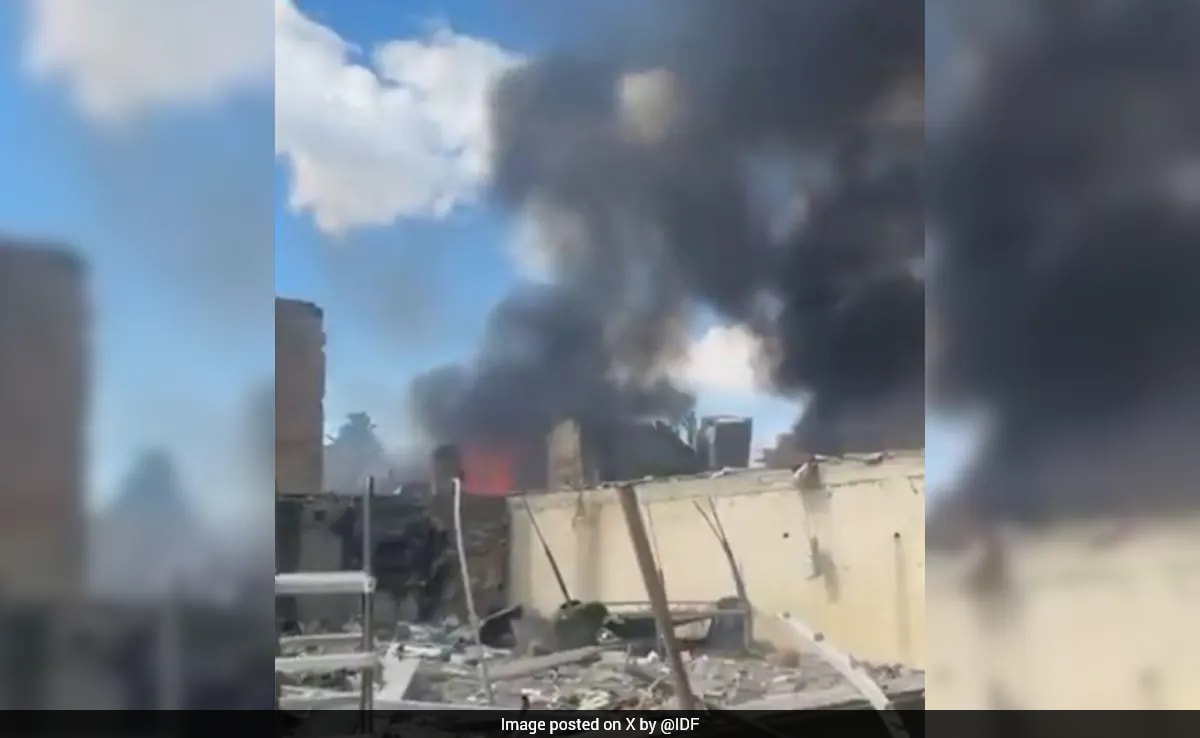
The Middle East is currently witnessing a military escalation that has effectively shattered the regional order. On Wednesday, March 4, 2026, the conflict entered its fifth day with a fresh barrage of 40 missiles launched by the Islamic Revolutionary Guard Corps (IRGC) against United States and Israeli targets. This 17th wave of "Operation Honest Promise 4" is not merely a retaliatory gesture; it is the desperate gasp of a regime whose command structure was decapitated in the opening hours of the war.
While headlines focus on the raw number of projectiles, the strategic reality is far more grim. Since the coordinated U.S.-Israeli strikes began on February 28—codenamed Operation Epic Fury and Operation Roaring Lion—the Iranian military apparatus has been systematically dismantled. The initial "Shock and Awe" style bombardment was double the scale of the 2003 Iraq invasion. It successfully eliminated Supreme Leader Ali Khamenei, the Defense Minister, and the IRGC commander in a single, surgical strike during a leadership meeting in Tehran.
The Myth of Iranian Missile Supremacy
For decades, Tehran leaned on its missile program as a primary deterrent. However, the last 120 hours have exposed a significant gap between rhetoric and results. Despite launching over 500 ballistic missiles and 2,000 drones across the region, the impact on primary military objectives has been marginal.
- Interception Rates: NATO air defenses recently downed an Iranian ballistic missile over the eastern Mediterranean that was heading toward Turkey.
- Technological Mismatch: An Israeli F-35 "Adir" recorded the first-ever manned air-to-air kill for the platform, downing an Iranian YAK-130 over Tehran.
- Naval Losses: The U.S. Navy has effectively neutralized the Iranian presence in international waters, including the sinking of the frigate IRIS Dena off the coast of Sri Lanka by a U.S. submarine.
The IRGC's claim of "complete control" over the Strait of Hormuz is increasingly divorced from the tactical truth. While they have successfully disrupted commercial shipping and sent oil prices surging, they lack the sustained naval power to hold the waterway against the current U.S. and Israeli air supremacy.
The AI Engine Behind the Firestorm
This is the first high-intensity conflict where the U.S. military has fully integrated advanced artificial intelligence into its targeting cycles. In the first 24 hours alone, the coalition struck 1,000 targets. This pace of operations is impossible for human planners to maintain manually.
The Pentagon is using predictive algorithms to map the Iranian "Law Enforcement Command" (LEC) and IRGC infrastructure. By analyzing satellite imagery and signal intelligence in real-time, the coalition is hitting mobile launchers before they can reset for a second volley. This explains why the "waves" of Iranian attacks have dropped from 62 on Day 2 to just 7 on Day 4. The math of the war is turning against Tehran: they are losing launchers faster than they can fire them.
Regional Contagion and the Human Cost
The "Why" behind this war is a lethal cocktail of failed diplomacy and nuclear brinkmanship. After indirect talks collapsed in February 2026, intelligence suggested Iran was within two weeks of 90% uranium enrichment. The Trump administration and the Netanyahu government chose a preemptive decapitation over a nuclear-armed Islamic Republic.
The fallout is now bleeding into neighboring states.
- The UAE and Qatar: Both have faced heavy drone and missile strikes. A drone recently struck near the U.S. Consulate in Dubai, and the Al-Udeid airbase in Qatar has been a recurring target.
- Lebanon: Israel has issued massive evacuation orders for southern Lebanon as it pushes inland to silence Hezbollah's rocket fire, which has targeted Haifa and Tel Aviv.
- Domestic Chaos: Inside Iran, the death toll has surpassed 1,000. With the Supreme Leader dead, the regime is struggling to maintain internal security while university students resume protests in the streets of Tehran.
Western officials estimate that Iran can maintain its current fire rate for only a few more days. As the U.S. shifts its focus from suppressing air defenses to "striking progressively deeper" into the Iranian interior, the window for a diplomatic off-ramp has slammed shut. President Trump has already stated it is "too late" for talks. The coalition is no longer looking for a deal; they are looking for a new map.
Monitor the status of the Strait of Hormuz and regional airspace closures, as the "Second Iran War" is now transitioning from a series of strikes into a sustained campaign for regional regime change.


