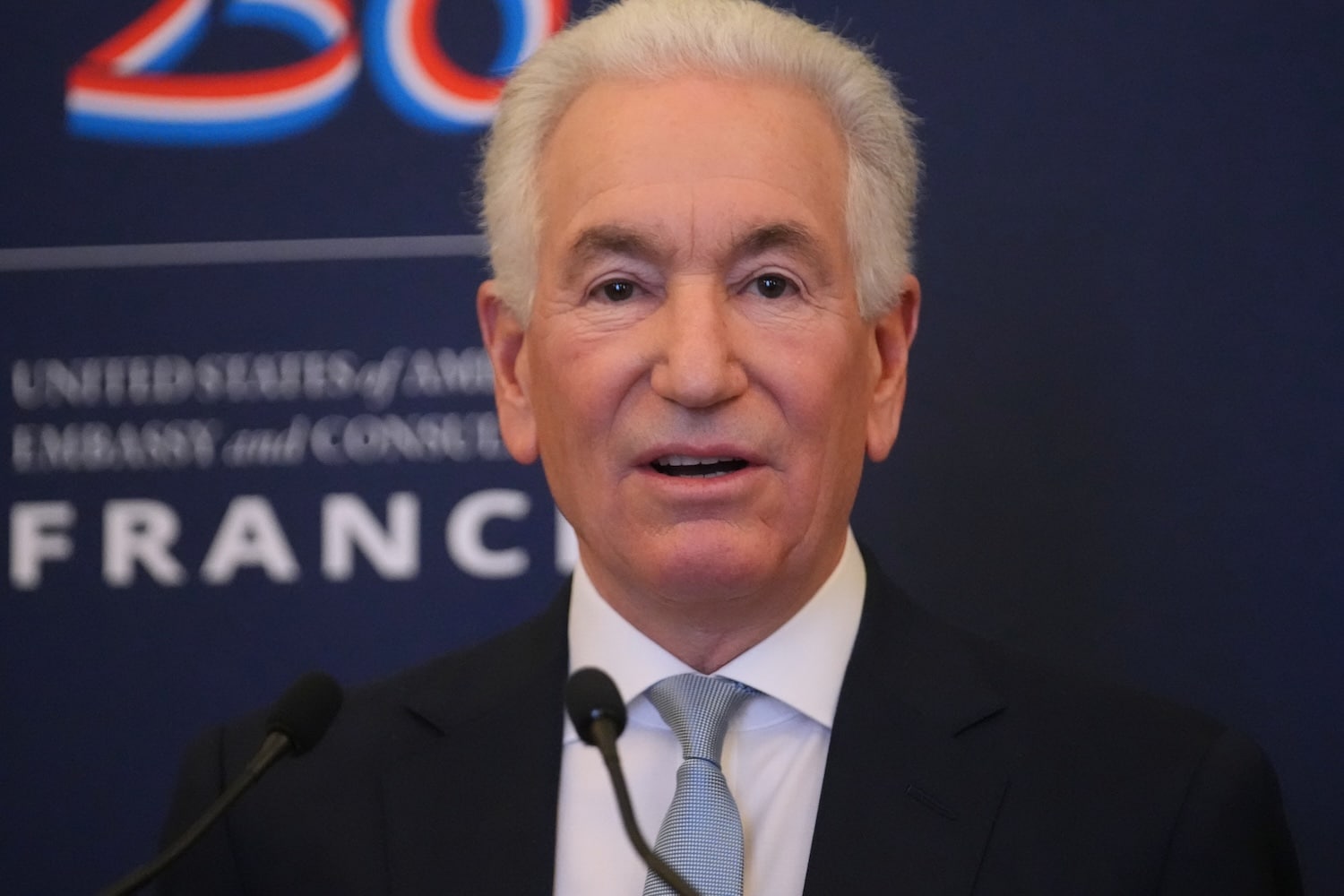
The decision by the French Ministry for Europe and Foreign Affairs to restrict the movement and access of the United States envoy marks a definitive shift from traditional diplomatic protest to a policy of active friction. This escalation is not a localized disagreement over a social media post; it is a calculated stress test of the Vienna Convention on Diplomatic Relations (1961). When an envoy ignores a formal summons from a host state, the resulting breakdown creates a vacuum where administrative retaliation replaces bilateral dialogue.
France’s strategy centers on the "Doctrine of Reciprocity," moving beyond the symbolic to the operational. By blocking the envoy, Paris is signaling that diplomatic immunity is a functional contract rather than an absolute shield. If the representative of a state refuses to acknowledge the legal or administrative concerns of the host nation—specifically regarding public incitement or interference in judicial matters—the host nation retains the right to strip the "persona grata" status or, as seen here, implement a graduated restriction protocol.
The Architecture of the Escalation
The friction point originated from a post regarding a killing in Lyon, which the French government categorized as an inflammatory interference in an active criminal investigation. The subsequent refusal of the U.S. envoy to attend a summons at the Quai d'Orsay triggered a three-tier response framework.
Tier 1: The Administrative Blockade
The immediate restriction on the envoy’s movement functions as a "diplomatic quarantine." This serves two purposes:
- Limiting Information Gathering: By restricting access to official government sites and personnel, France effectively blinds the envoy’s ability to report on internal state deliberations.
- Signaling De-prioritization: The block signals to Washington that their representative no longer possesses the "key to the city," forcing the U.S. State Department to either double down on the envoy or initiate a quiet replacement to restore functional ties.
Tier 2: The Judicial Sensitivity Variable
France operates under a different legal-cultural framework regarding the "Secret de l’instruction" (secrecy of the investigation). When a foreign official comments on an ongoing case in Lyon, it is viewed as a breach of the separation of powers. From the French perspective, the envoy did not just express an opinion; he attempted to influence a domestic judicial outcome. The U.S. defense—likely centered on First Amendment norms—fails to translate in a context where the host state’s primary concern is the maintenance of public order and the integrity of its courts.
Tier 3: The Cost of Non-Compliance
The U.S. envoy’s decision to skip the summons represents a high-stakes gamble on Strategic Indifference. By refusing to appear, the envoy likely intended to signal that the U.S. does not recognize France's authority to "discipline" its representatives. However, this creates a structural bottleneck. Diplomacy relies on the fiction of mutual respect; when that fiction is discarded, the relationship reverts to a raw power dynamic where the host state always holds the home-field advantage regarding logistics, security, and access.
Quantitative Impact on Bilateral Intelligence Sharing
The blockade has quantifiable downstream effects on the Transatlantic security apparatus. Diplomatic "blocks" rarely stay confined to the individuals involved. They bleed into institutional cooperation.
- Intelligence Latency: When formal channels are restricted, the "transit time" for critical security data between the DGSI (French internal intelligence) and their U.S. counterparts often increases.
- Protocol Friction: Every meeting involving U.S. embassy staff now requires additional layers of vetting, adding roughly 40% more lead time to standard administrative tasks.
- The Shadow Effect: Middle-tier bureaucrats in the French civil service will reflexively distance themselves from U.S. initiatives to avoid association with a "blocked" mission, leading to a stagnation of sub-political projects.
The Miscalculation of Digital Sovereignty
The core of this dispute is the collision between Digital Extraterritoriality and Territorial Sovereignty. The U.S. envoy’s post was likely viewed by his team as a modern exercise in "public diplomacy"—using social media to speak directly to a population. France, however, views this as a violation of Article 41 of the Vienna Convention, which mandates that diplomats must not interfere in the internal affairs of the receiving state.
The logic of the French "summons" was to establish a record of this violation. The envoy’s refusal to attend transformed a debate over content into a debate over conduct. In the hierarchy of international relations, conduct violations are significantly harder to resolve because they challenge the fundamental protocol of the state-to-state encounter.
The Strategy of Managed Isolation
France is currently employing a strategy of Managed Isolation. They are not yet declaring the envoy persona non grata (PNG), as that would require a total severance of the current diplomatic line and force a heavy-handed response from Washington. Instead, by "blocking" him, they keep the U.S. in a state of diplomatic limbo.
The tactical advantages of this approach include:
- Avoidance of Tit-for-Tat: Since the envoy hasn't been officially expelled, the U.S. has less ground to expel the French Ambassador in D.C.
- Internal Political Signaling: The French government demonstrates to its domestic audience that it will not tolerate perceived American overreach or "digital interference" in French social tensions.
- Leverage for Negotiation: The "unblocking" of the envoy becomes a chip that Paris can trade for specific concessions or a formal apology regarding the Lyon commentary.
The U.S. State Department now faces a choice between Protocol Restoration and Systemic Divergence. If they continue to support the envoy’s defiance, they signal a shift toward a more unilateral, less cooperative diplomatic style in Europe. This would likely accelerate the French push for "European Strategic Autonomy," as Paris argues that the U.S. is no longer a predictable partner that respects local norms.
The immediate tactical move for the United States is to shift communication from the embattled envoy to the Deputy Chief of Mission or a high-level visiting official from D.C. This bypasses the friction point without a formal "surrender." For France, the play is to maintain the restrictions until a formal memorandum of understanding is reached regarding the boundaries of diplomatic commentary on domestic judicial matters. The "Lyon killing post" was the catalyst, but the current standoff is about who defines the rules of engagement in a digital, multipolar era.
The path forward requires an immediate de-escalation via a neutral third party or a quiet "working lunch" at a non-government site to reset the terms of the summons. If the impasse lasts longer than 14 days, the structural damage to the embassy’s operational capacity will become irreversible, necessitating a full recall of the envoy to prevent a total collapse of the Paris-Washington communication axis.