The probability of a successful ground operation in Iran is governed not by troop counts or immediate fire superiority, but by the physical geography of the Iranian plateau and the asymmetric doctrinal response known as "Mosaic Defense." Standard geopolitical commentary focuses on the rhetoric of "warnings" and "readiness." A rigorous strategic analysis, however, reveals that any US-led ground initiative would face a cost function that scales exponentially rather than linearly with every mile of penetration.
The strategic deadlock between Washington and Tehran is defined by two competing military philosophies: Technical Overmatch versus Territorial Saturation.
The Topographic Tax and the Logistics of Verticality
Iran is a natural fortress. Unlike the relatively flat terrain of Iraq or the coastal plains of Kuwait, the Iranian heartland is shielded by the Zagros and Alborz mountain ranges. These formations impose a "topographic tax" on any invading force.
- The Zagros Barrier: Stretching 1,600 kilometers, these mountains create a series of chokepoints where modern mechanized divisions lose their maneuverability. Armor becomes a liability in narrow defiles where elevation creates "dead zones" for direct-fire weapons.
- The Central Plateau: Beyond the mountains lies a high-altitude desert. Logistics in this region require a massive footprint for water, fuel, and cooling systems, all of which are vulnerable to long-range precision fires.
The cost of maintaining a supply line through the Zagros mountains is estimated to be five times higher than maintaining one over open desert. This creates a bottleneck where the rate of consumption for an expeditionary force quickly exceeds the throughput of its logistical tail.
Mosaic Defense: The Architecture of Decentralized Resistance
Tehran’s "Mosaic Defense" is a structural response to the US military’s reliance on Network-Centric Warfare. While the US seeks to decapitate centralized command and control (C2), the Iranian doctrine assumes the C2 will be destroyed in the opening hours. Consequently, the Iranian Revolutionary Guard Corps (IRGC) has divided the country into 31 independent commands—one for each province.
Each "mosaic cell" is equipped to operate autonomously for months without instructions from Tehran. This structure negates the "OODA Loop" (Observe, Orient, Decide, Act) advantage typically held by high-tech militaries. If you destroy the head, the body continues to fight as 31 independent organisms.
- Weaponization of Civil Infrastructure: Iran has integrated its military assets into civilian and industrial sectors, making "clean" strikes nearly impossible without catastrophic collateral damage.
- Asymmetric Attrition: The goal of the mosaic is not to win a set-piece battle, but to force the adversary into a "war of a thousand cuts," where the political cost of personnel losses outweighs the strategic objectives.
The Strait of Hormuz as a Kinetic Off-Switch
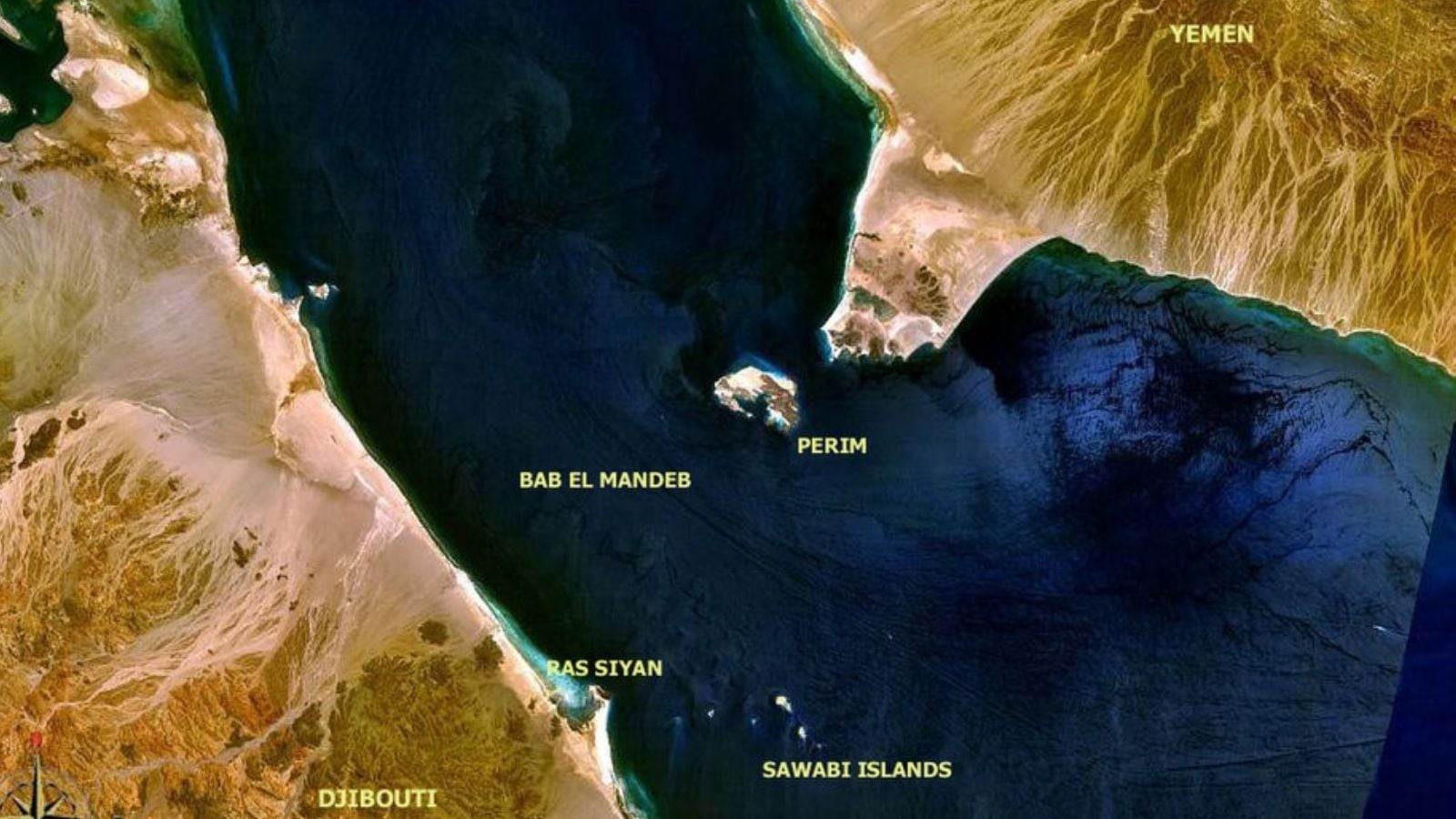
The threat of a ground operation cannot be decoupled from the maritime reality of the Strait of Hormuz. Roughly 20% of the world’s petroleum liquids pass through this 21-mile-wide chokepoint daily.
Iran’s "anti-access/area denial" (A2/AD) strategy utilizes a swarm of fast-attack craft, smart mines, and shore-to-ship missiles like the Noor and Khalij Fars. In a scenario where ground operations commence, the kinetic closure of the Strait becomes an inevitability. The global economic shock—a projected 30-50% spike in oil prices—acts as a non-military deterrent that the US must factor into its ground war calculus. This is not a "threat" in the traditional sense; it is a structural reality of the global energy supply chain.
The Three Pillars of Iranian Deterrence
To understand why Tehran remains defiant despite overwhelming US conventional superiority, one must quantify the three pillars that support their defensive posture:
1. Strategic Depth and Proxies
Iran utilizes a "Forward Defense" model. By supporting entities in Lebanon, Iraq, Yemen, and Syria, Iran ensures that any strike on its soil triggers a multi-front regional conflagration. This forces the US to dilute its resources across thousands of miles rather than concentrating force on the Iranian border.
2. Missile Proliferation as a Substitute for Air Power
Lacking a modern air force, Iran has invested in the largest missile arsenal in the Middle East. These systems serve as a "poor man's air force," capable of striking US bases in Qatar, Bahrain, and the UAE with high circular error probable (CEP) accuracy. The ability to saturate US Aegis and Patriot defense systems through volume is a core component of their deterrence math.
3. The Legitimacy of Domestic Defense
A ground invasion historically triggers a "rally 'round the flag" effect. In Iran, the memory of the Iran-Iraq War (1980-1988) is baked into the national psyche. A foreign ground presence would likely bridge internal political divides, transforming a fragmented population into a unified defensive force.
The Attrition Function: Why Ground Operations Fail the Risk-Reward Test
In quantitative terms, a ground operation in Iran would require a force-to-space ratio that the US is currently unable to sustain without a total national mobilization.
$$Force Ratio = \frac{Combat Power_{Invader}}{Complexity_{Terrain} \times Density_{Insurgency}}$$
As terrain complexity increases (mountains) and insurgency density increases (urban mosaic), the required combat power for the invader grows exponentially. The US would likely require a force exceeding 500,000 personnel to effectively seize and hold key urban centers—a number that exceeds current active-duty deployment capabilities without compromising other global theaters like the Indo-Pacific.
The Cyber and Electronic Warfare Variable
Future conflict on the Iranian plateau will not just be kinetic. Iran has demonstrated significant growth in cyber capabilities, focusing on industrial control systems and banking infrastructure. A ground operation would be met with "Digital Guerrilla Warfare," targeting the civilian infrastructure of invading coalition members. This creates a domestic political vulnerability that was not present in 20th-century conflicts.
Furthermore, Iranian electronic warfare (EW) units have focused on GPS jamming and spoofing, specifically designed to degrade the precision-guided munitions (PGMs) that the US relies on to minimize collateral damage. If PGMs lose 30% of their accuracy due to EW interference, the "clean war" model collapses, forcing a return to high-casualty carpet bombing or risky low-altitude close air support.
The Strategic Play: Containment Over Confrontation
Given the prohibitive costs of a ground invasion, the US strategy is shifting toward "Integrated Deterrence." This involves:
- Economic Strangulation: Leveraging the USD-denominated global financial system to isolate the Iranian economy, a process that is more sustainable than kinetic warfare.
- Technological Containment: Restricting the flow of dual-use technologies (semiconductors, carbon fiber) to degrade Iran’s long-term missile and drone manufacturing capabilities.
- Regional Integration: Building a defensive architecture between Israel and Arab states to share radar data and interceptor batteries, effectively neutralizing Iran’s missile advantage without crossing their borders.
The most effective move for a rational actor in this scenario is not to engage in the vertical terrain of the Zagros, but to maintain a "Dynamic Force Employment" posture. This keeps Iranian planners guessing while avoiding the logistical trap of a permanent ground presence. Any entity seeking to "wait for" a ground operation should recognize that the US has identified the diminishing returns of traditional land seizure. The future of this conflict is likely to remain in the "gray zone"—a space where economic, cyber, and proxy actions define the winner, while the ground war remains a theoretical nightmare that neither side can afford to actualize.